
Unbiased headlines. Facts, not spin.
Every story is an unbiased news briefing written from 110+ sources across the spectrum — sources linked so you can verify it yourself.
 health
Low Interest (3/10)
July 11, 2026 at 03:31 PM
health
Low Interest (3/10)
July 11, 2026 at 03:31 PM
India Pilots Free Reading-Glasses Screenings Inside Post Offices, Reaches Over 5,000 People
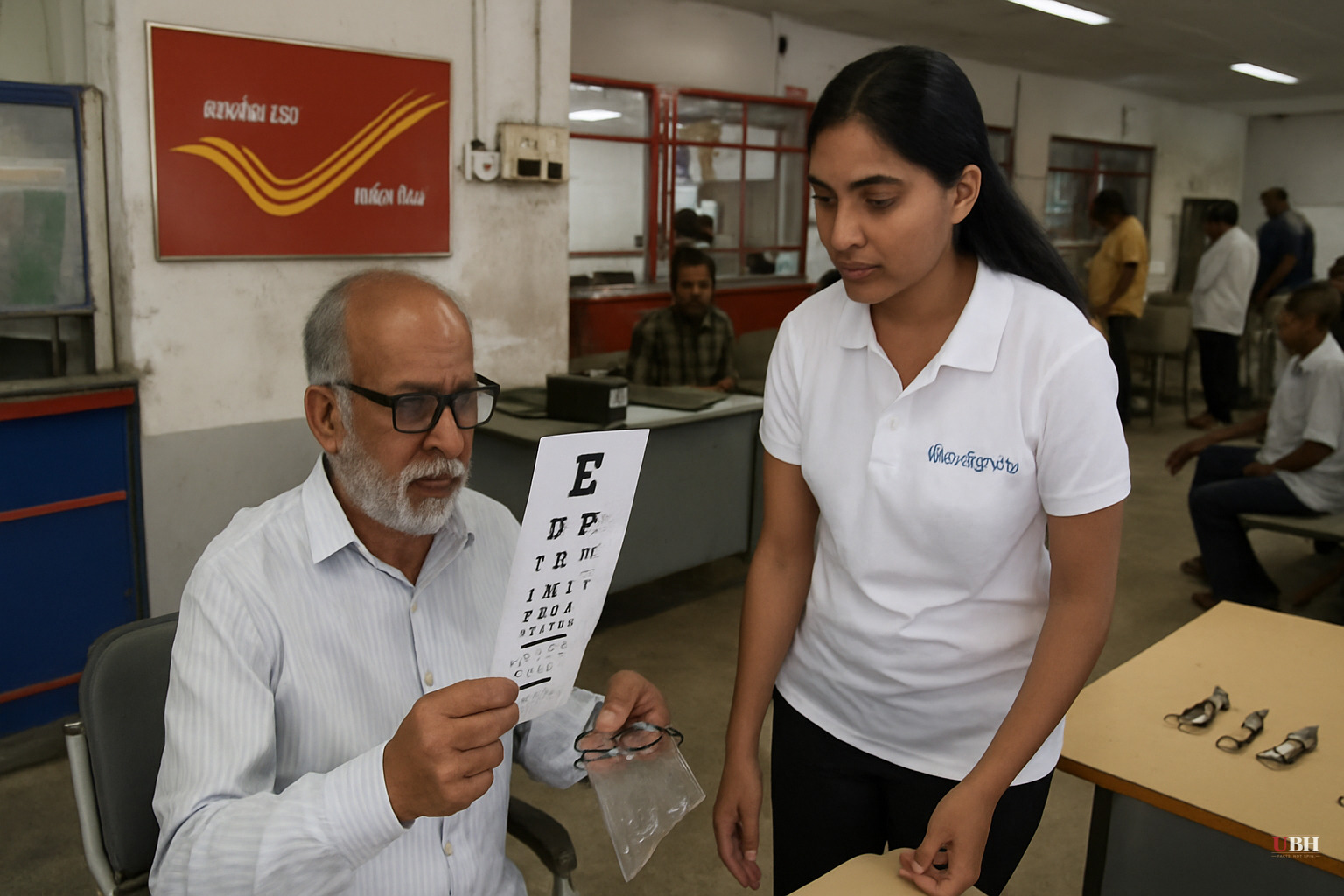
A post office that checks your eyes, not just your mail
Sangita Kalita used to be a schoolteacher in Assam State, India. Now she sits at a kiosk inside the post office in the town of Rangiya, watching customers fill out deposit slips.
When she sees someone squinting at the small print, struggling to write, she offers a free eye test. If they need reading glasses, they walk out with a pair, no charge, according to NPR.
Kalita's own mother and mother-in-law inspired the effort. For years they went to the local naamghar, a Hindu temple, hoping to read sacred texts, but couldn't make out the small letters, Kalita told NPR. Getting glasses meant a trip to a hospital or specialty optical shop, usually in a big city. For a lot of families, that's too expensive and too far.
The scale of the problem
The World Health Organization says more than 800 million people worldwide have presbyopia, the age-related loss of close-up vision that basic reading glasses fix. In many lower-income countries, WHO says, fewer than one in four people who need glasses actually have them.
It's a massive, solvable gap, and the fix isn't complicated technology. In many high-income countries, readers are available off the shelf in all kinds of stores. In lower-resourced settings like the one Kalita grew up in, that same simple product has been out of reach.
Why the post office
The idea came out of a partnership between WHO and the Universal Postal Union, which estimates there are roughly 680,000 post offices operating globally. India Post alone runs more than 150,000 branches, many in towns and villages that have no eye clinic within reach.
"The whole thinking was that we look at an established channel, which has a reach, which has infrastructure, which has people," Shweta Verma, deputy director for programs and operations at VisionSpring, told NPR.
VisionSpring, the nonprofit running the screenings, decided to try out the model late last year. According to NPR's reporting, more than 5,000 people have been screened across five post offices so far. That's real infrastructure already built and paid for, being put to a second use instead of some new agency getting stood up from scratch.
In Assam, where tea production is a major part of the local economy, Verma noted that eyesight affects income directly. Workers need to be able to see which delicate leaves to pick. A pair of reading glasses isn't charity for its own sake here, it's a tool that keeps people working.
Not the only country trying this
VisionSpring says this is the first time post offices have been used specifically for eyeglass distribution, but it's not the first time postal networks have been repurposed for health checks. Elisabeth Rosenthal, a physician and editor at KFF Health News, told NPR that France runs a service called "Watch Over My Parents," where letter carriers check in on elderly residents for a small fee, seeing whether there's food in the house and whether people can get around on their own. Japan has a similar arrangement. In parts of the United States, mail carriers already flag piled-up mail to trigger a welfare check.
None of these programs require a new federal bureaucracy. They lean on workers and buildings that already exist, doing a job the government is already paying for anyway.
What's unresolved
The United Nations has expressed interest in expanding the postal-glasses model beyond India, according to NPR, but no timeline, funding commitment, or list of target countries has been announced. It's a pilot with promising early numbers: five post offices, 5,000-plus screened, not yet a global program.
The open question is whether VisionSpring and its partners can scale this without turning a lean, volunteer-driven idea into another slow-moving international bureaucracy. One former teacher in Rangiya is watching for people who squint at a form and handing them a fix that, for years, was out of reach for her own family.
Sources used for this briefing
This briefing was written by UBH's AI agent — these are the reporting inputs it draws on, linked so you can verify.


