
Unbiased headlines. Facts, not spin.
Unbiased Headlines is an independently owned news organization. We bring you the facts, not opinions, written fresh from 110+ named sources. Sources linked so you can verify it yourself.
 tech
Notable (6/10)
Event date: October 15, 2026 ·
India Orders Carriers to Show Callers' Registered Names on 4G and 5G Phones Starting Nov. 1
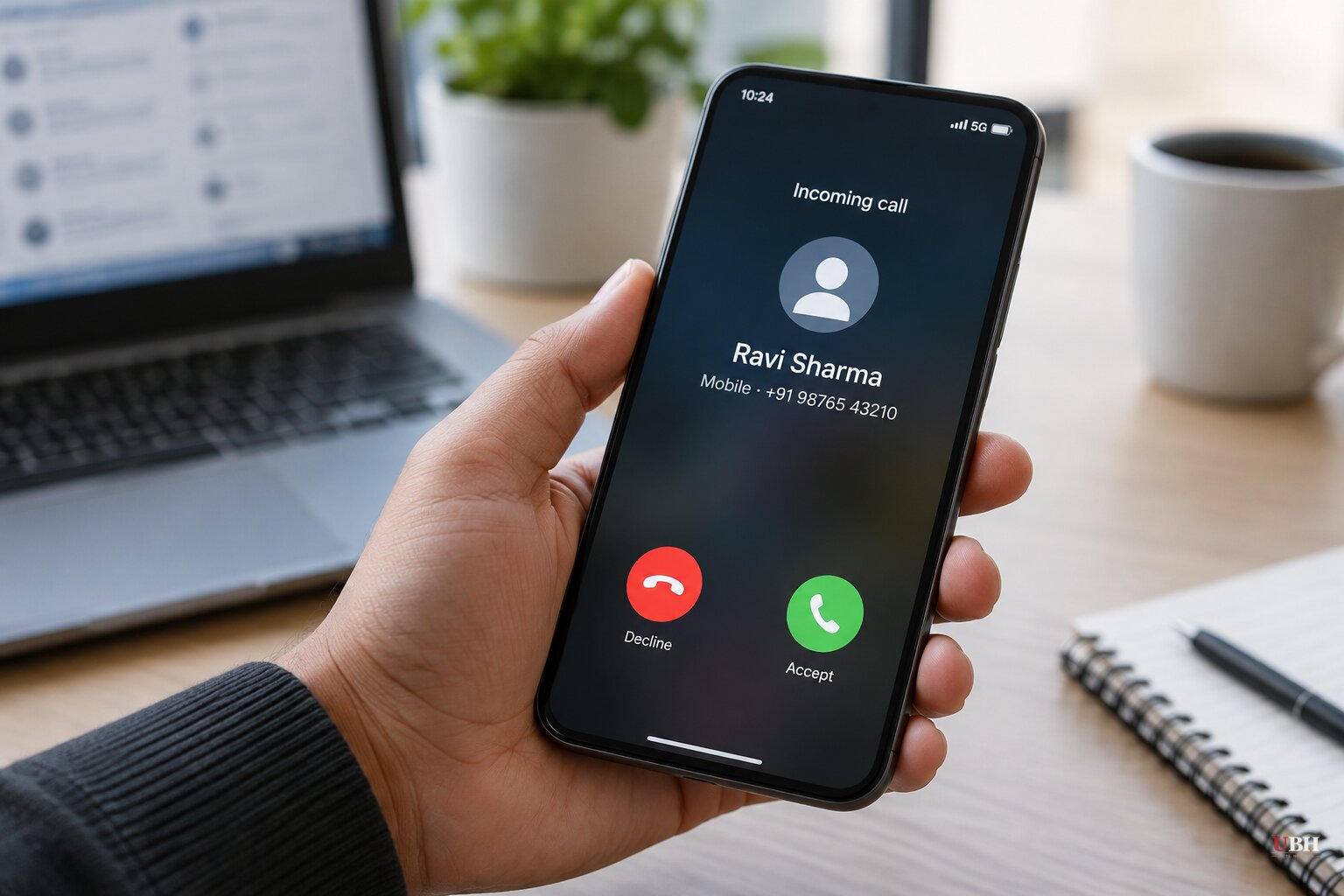
India's phone screens change tomorrow. From Sunday, Nov. 1, 2026, telecom operators must show the registered name of a caller alongside the number on incoming calls.
The Department of Telecommunications (DoT) has directed every carrier holding an access-services authorisation or licence to roll out Calling Name Presentation, or CNAP, across its service areas. The service is on by default. Users do not have to sign up.
What shows up on the screen
The first field still shows the caller's number. The second shows a name, chosen in this order:
- Saved contact: the name stored in the recipient's own contacts.
- Unsaved domestic number: the name recorded in the caller's subscriber data with the originating carrier.
- Unsaved international number: the words "International Call."
The mandate initially covers 4G and higher networks, including 5G. The DoT said rollout on 2G, 3G and landline networks will be considered separately after examination.
How the system works
Each carrier must build and maintain a database linking subscribers' names to their numbers. When a call reaches the recipient's network, the receiving carrier queries the originating carrier's database and displays the result.
The DoT told carriers to build the system "secure by design." Under that requirement, the caller's name cannot be retained through the query-response mechanism after the call ends. Carriers must also keep the feature from degrading call quality.
The legal hook is a Unified License amendment, No. 01/Licensing Policy/2026, dated Oct. 13, 2026. It rewrites the definition of Calling Line Identification in the Unified License Agreement. The old definition covered a subscriber's phone number, IP address or other prescribed identifier. The new one adds "the name of the user as recorded in subscriber data record."
The DoT invoked Condition 5.1 of the licence, which lets the government modify terms in the public interest, in the interest of state security, or for the proper conduct of telegraphs. The amendment takes effect Nov. 1 and leaves all other licence terms unchanged.
Who gets exempted
Users who have opted for the Calling Line Identification Restriction (CLIR) will not have their names displayed. The Hindu reported that those covered include Prime Minister Narendra Modi, President Droupadi Murmu, other senior officials and intelligence agencies.
Businesses and bulk-connection holders can ask their carrier to display a preferred name instead of the name in their subscriber records. They must meet verification requirements. For new connections, the circular says the preferred name must be recorded on the customer application form and the subscriber data record. Original documents proving the user is registered under that name must be presented to the carrier, which attaches true copies to the form.
The KYC problem
The displayed name is only as good as the registration behind it. The Hindu reported that people who got their SIM cards as minors under a parent's name will show the parent's name. Fixing that requires an ownership transfer. Depending on the carrier, it may need the cooperation of the adult family member who holds the registration.
The DoT's instructions cite its Nov. 21, 2025 guidance on handling KYC issues during implementation. The circular also requires every carrier to set up a grievance process and resolve complaints "in a time bound manner." The central government may issue further instructions and clarifications.
Privacy objections and the government's answer
CNAP has been on the table since 2022, when the Telecom Regulatory Authority of India (TRAI) issued a consultation paper. TRAI's recommendations on introducing the service are dated Feb. 23, 2024. Some civil society and industry bodies raised privacy concerns during that process, according to The Hindu.
TRAI and the government argued the measure was needed to stop spam callers from assuming fraudulent identities. They also pointed out that only the person receiving the call sees the other party's identity, not the person placing it.
Carriers ran pilots inside their own networks in 2025. In recent months, some were already showing names for calls between their own subscribers.
The stated target is the stream of unsolicited loan, insurance and credit-card calls, a share of which are fraudulent.
What to watch
The DoT has not set a date for extending CNAP to 2G, 3G and landline networks. Those users will keep getting calls from unnamed numbers for now. What happens after Nov. 1 depends on how fast carriers clear mismatched registrations and how many complaints reach their grievance desks.
Sources used for this briefing
7 links from 6 independent newsrooms (syndicated copies of the same report count once)
These are the sources it draws on, linked so you can verify.


