
Unbiased headlines. Facts, not spin.
Unbiased Headlines is an independently owned news organization. We bring you the facts, not opinions, written fresh from 110+ named sources. Sources linked so you can verify it yourself.
 tech
Major Story (7/10)
Google and Meta Push Back on Some ICE Subpoenas for User Data as Midterms Near
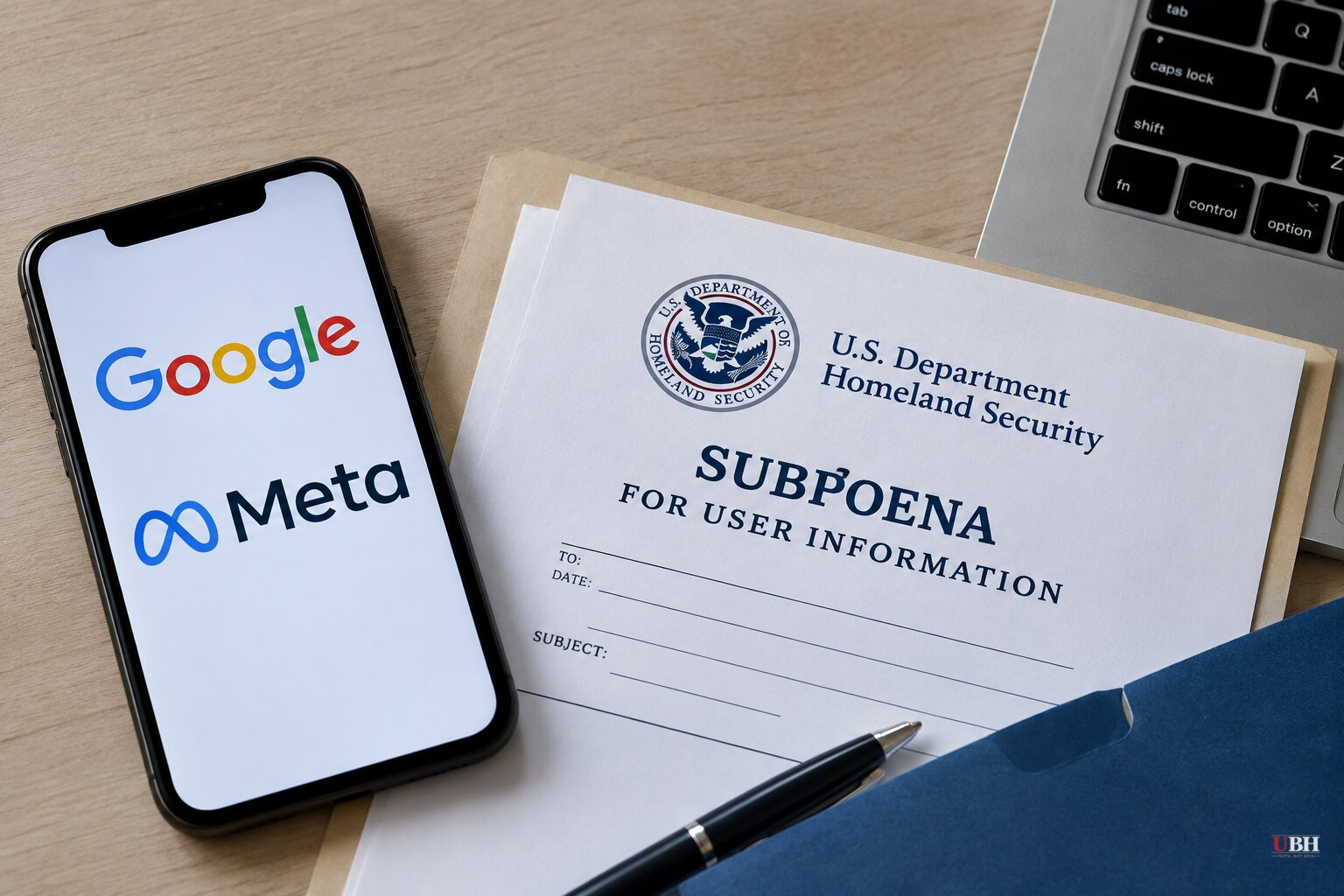
Google and Meta have been pushing back on some federal demands for information about social media users who criticize the Trump administration's immigration policies, according to a Wall Street Journal report published Oct. 29.
The Journal, citing current and former employees, executives and advisers, reported that the companies have challenged requests they view as overbroad from the Department of Homeland Security and have delayed responses to some. TikTok and others have updated user notification policies to tell customers more about when their data goes to law enforcement.
The common thread is the administrative subpoena.
A subpoena no judge signs
Over the past year, Immigration and Customs Enforcement, a DHS agency, has scoured Google, Facebook, Instagram, Reddit, TikTok and X for speech it deems a threat to federal agents or enforcement actions, the Journal has reported. According to legal filings, ICE has asked Google about specific YouTube channels and asked Meta about anonymous accounts that post about immigration enforcement.
Many of those requests came as administrative subpoenas. Unlike a judicial search warrant or a grand jury subpoena, an administrative subpoena is issued directly by agency officials, with no prior review by a judge.
Former Democratic and Republican officials both describe the surge in their use as a departure from standard federal practice, the Journal reported.
The records at stake are basic but powerful: names, addresses, phone numbers and IP addresses. For an anonymous account, that data can reveal who is behind it.
The Minnesota dispute
Court records cited by the Journal show one fight in Minnesota. DHS sought subscriber details and IP addresses tied to YouTube channels, including those of commentator Megyn Kelly and the Milwaukee Journal Sentinel. Google questioned whether the legal provision DHS used was appropriate for the request.
A national commentator and a daily newspaper are not obvious threats to federal agents. The filings show the government asked anyway.
Some companies, including Meta and Google, have also noticed DHS in recent weeks working more with the Justice Department to send grand jury subpoenas, the Journal reported. Those at least involve a grand jury.
Why now
The Journal, citing people familiar with the matter, reported that board members and top executives are trying to insulate their companies from possible Democratic-led congressional investigations while still keeping the Trump administration placated. According to those people, corporate executives expect Democrats to gain power in Congress after the midterms.
That motive comes from anonymous sourcing. The companies have not been quoted confirming it.
The pressure from Capitol Hill is on the record. Rep. Shri Thanedar, a Michigan Democrat who co-launched an investigation into tech companies' compliance earlier this year, said: "They need to be prepared to say, under oath, why they did what they did." Other Democratic lawmakers are lining up their own inquiries into how user data is shared, the Journal reported.
The Journal also reported pressure from inside the companies, citing concerns among employees and users.
The legal limits on resistance
The companies cannot simply refuse. An administrative subpoena is enforceable, and ignoring one can carry consequences. What a company can do is ask whether the statutory basis fits, seek clarification, or contest the demand in court.
For the people whose data is sought, the ability to fight back depends on being told in time and finding a lawyer. That is why the notification changes matter more than the delays. A user who learns about a subpoena can challenge it. A user who never hears about it cannot.
The government's side of this is a law enforcement argument: ICE says it is looking at speech it classifies as threatening to agents or enforcement activity, and administrative subpoenas are a tool Congress authorized. The sources do not include a DHS or ICE response on the Minnesota requests or on the pushback.
What comes next
The companies' own record is the open question. Lawmakers are already asking why sensitive customer details were handed over in the first place, and the pushback described now comes after a year of ICE requests. Whether the new notification policies and slower responses hold up under a changed Congress will be tested after November's midterm elections, when Thanedar and his Democratic colleagues could gain the power to demand answers under oath.
Sources used for this briefing
3 links from 3 independent newsrooms (syndicated copies of the same report count once)
These are the sources it draws on, linked so you can verify.


