
Unbiased headlines. Facts, not spin.
Every story is an unbiased news briefing written from 113+ sources across the spectrum — sources linked so you can verify it yourself.
 tech
Major Story (7/10)
September 29, 2026 at 10:27 AM
tech
Major Story (7/10)
September 29, 2026 at 10:27 AM
India Lines Up $25 Billion for Deep Tech to Cut Dependence on U.S. and Chinese Technology
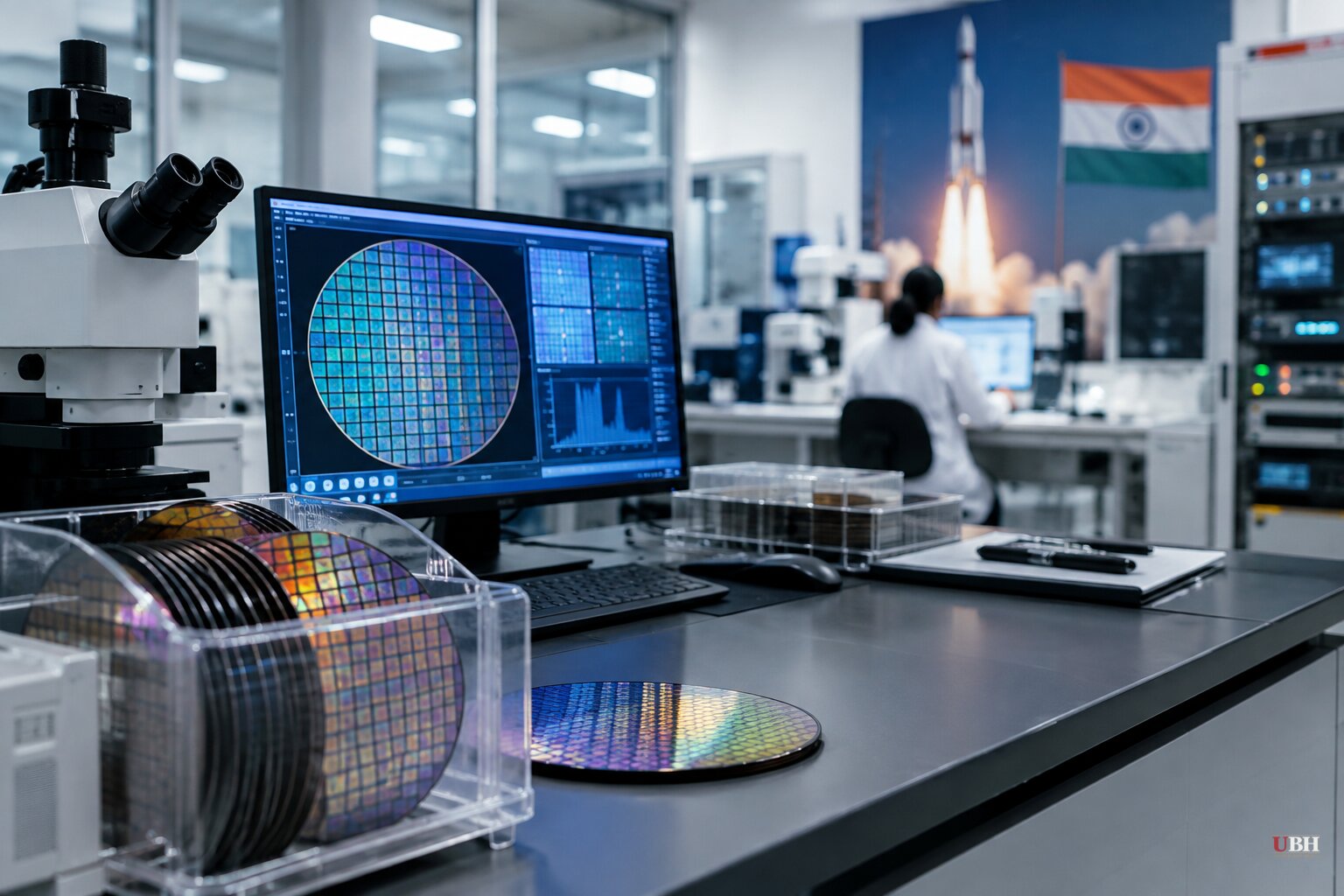
India is putting together roughly $25 billion in government and private capital to build up its Deep Tech sector, according to Rajat Tandon, president of the Indian Venture and Alternative Capital Association, who spoke with CNBC. The goal is blunt: stop depending on American and Chinese technology that New Delhi worries could get cut off.
Tandon told CNBC the government has committed $11 billion through a Research Development Infrastructure Fund, which private venture capital and equity managers are expected to match. Add another $3 to $4 billion, he said, and the total available for Deep Tech hits $25 billion. That fund appears to match what Free Press Kashmir described as India's Research, Development and Innovation Fund, a 1 lakh crore rupee program (roughly $11-12 billion) spread over six years covering AI, quantum technology, robotics, biotech and space.
India spent $11.6 billion on Deep Tech over the past decade, per Tandon's figures. The new commitment more than doubles that in one push.
Why now
The timing isn't random. China leads research in about 70% of 13 frontier technologies tracked by NITI Aayog, India's policy think tank, according to Free Press Kashmir's reporting on the assessment, which warned of intellectual-property risk and lost market share if India waits.
Meanwhile Washington's own export controls have spooked Indian tech planners. Anthropic disabled access to certain of its newer AI models for foreign nationals in June to comply with a U.S. export-control directive, according to CNBC. Anandamoy Roychowdhury, managing director of Crane Venture Partners, told CNBC that episode is exactly the kind of risk driving Indian capital toward domestic alternatives. "Tariffs from the U.S. actually help this segment a lot," he said, arguing India fears "important technology can get cut off at any point." Roychowdhury said 80% of his firm's $150 million Asia-Pacific fund is now concentrated in India.
The money on the ground
Beyond the government fund, the India Deep Tech Alliance, a public-private coalition formed in September 2025, has committed more than $2.5 billion, up from an initial $1 billion pledge, with $1 billion earmarked specifically for AI, according to Crypto Briefing. As of mid-2026, alliance members had deployed about ₹2,170 crore, or roughly $260 million, across 56 companies.
India's government has also earmarked ₹10,371.92 crore for its national AI Mission and ₹6,003.65 crore for its National Quantum Mission, per Free Press Kashmir. Separately, the IIT Madras Unicorn Frontier Fund closed its first round at ₹450 crore, about $54 million, in September 2026, targeting a total corpus of ₹1,000 crore, Crypto Briefing reported.
India's startup rules changed too. Under an expanded Startup India framework, the recognition period for deep tech startups doubled to 20 years, with higher turnover thresholds, acknowledging these companies often burn a decade or more in R&D before making money, according to Crypto Briefing. India now counts more than 3,600 recognized deep tech startups.
Deep tech startups raised an estimated $2.96 billion across 189 deals in 2025, led by AI, semiconductors, space tech and climate/energy ventures, per Crypto Briefing. An August survey of 100 funds by the Indian Venture and Alternative Capital Association found nine in ten were deploying capital into Deep Tech, with 37% holding stakes in 11 to 20 companies.
Three companies crossed $1 billion valuations this year: vibe-coding startup Emergent, space tech firm Skyroot, and sovereign AI company Sarvam, according to CNBC.
The skeptical case
A market strategist cited by Hello Entrepreneurs argued much of the government money to date has gone into semiconductor fabrication plants rather than actual research and development, and that big-ticket deals with Microsoft, Amazon and Google have mostly built data centers and cloud infrastructure, not homegrown deep tech companies.
That's a fair concern. Building fabs and data centers is capital-intensive and visible, which makes it politically easy to point to as progress. Whether it produces globally competitive Indian-owned AI, chip, or robotics firms, as opposed to just more real estate for foreign hyperscalers, is a separate question the current spending mix doesn't automatically answer.
Even at full deployment, $25 billion is a fraction of what the U.S. spends annually across public and private R&D channels, Crypto Briefing noted. And the $2 to $3 billion India's Deep Tech sector pulled in during 2025 is still dwarfed by capital flowing into consumer internet and fintech startups.
Shweta Rajpal Kohli, president and CEO of the Startup Policy Forum, told CNBC there's a "dramatic acceleration of innovation" underway, with companies moving from prototype to real commercialization. Whether that acceleration outruns the concern about fabs-over-research, or whether the IIT Madras fund and similar vehicles actually reach their full targeted corpus, is the open question analysts will be watching over the next several fund cycles.
Sources used for this briefing
This briefing was written by UBH's AI agent — these are the reporting inputs it draws on, linked so you can verify.


