
Unbiased headlines. Facts, not spin.
Every story is an unbiased news briefing written from 110+ sources across the spectrum — sources linked so you can verify it yourself.
 health
Notable (6/10)
July 25, 2026 at 01:05 PM
health
Notable (6/10)
July 25, 2026 at 01:05 PM
In Nairobi's Kibera Slum, Women Say They're Coerced Into Sex to Get Water
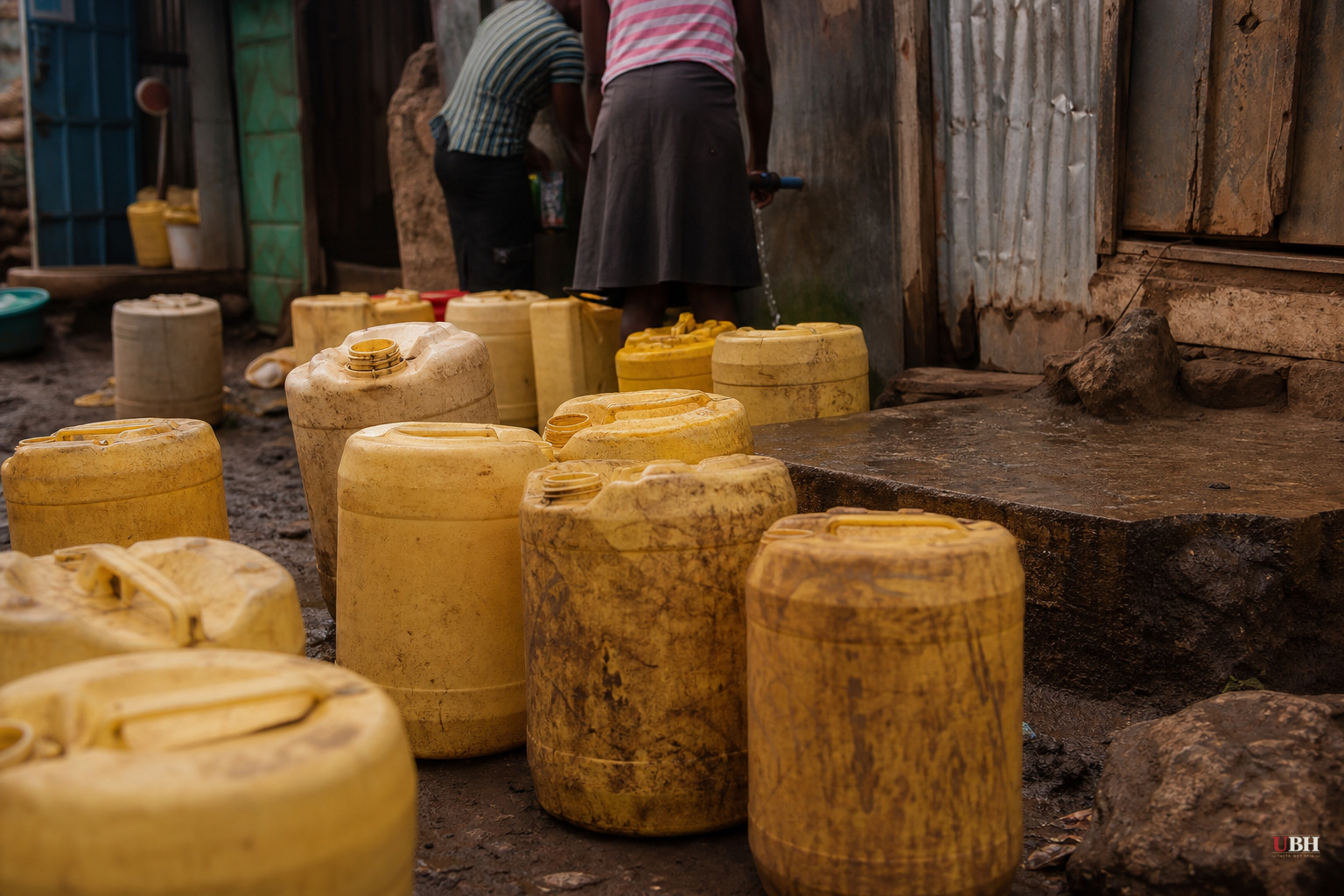
Saly Amutwayi runs a small hair salon in Kibera, on the edge of Nairobi. Before her first clients show up each morning, she talks with her friend Mariam Hassan about the same problem they've both faced for years: getting water.
"When there is no water," Amutwayi told NPR, "everything becomes dangerous."
Kibera is the largest informal settlement in Kenya and one of the largest in Africa. Residents there have no legal title to their land, and the government has never built out formal infrastructure like piped water, according to NPR. That means households buy water by the jerrycan from private vendors who control supply and set their own prices.
Rights groups say that arrangement creates an opening for abuse. Women who can't afford water are sometimes pressured into sex in exchange for it, a practice advocates call "sextortion," NPR reported. Hassan told the outlet she won't let her 8-year-old daughter fetch water in the evening because of what she's experienced herself.
Zubedah Hassan, a 32-year-old resident of Kibera who works with the Stop Sex for Water program, told NPR the root causes are straightforward: poverty and drought. "A girl tries to save money on water by doing favors for a vendor," she said. She also described a second danger: children walking long distances on foot paths to find water, sometimes before dawn, where they're vulnerable to assault.
A Global Pattern, Not Just a Kenyan Problem
The term "sextortion" isn't new, and it isn't confined to Kibera. The International Association of Women Judges first used it in 2009, according to the Water Integrity Network (WIN), a group that has researched the issue since 2021 alongside partners in Bangladesh, Mexico and Kenya.
WIN defines sextortion as a form of corruption where sex, instead of money, becomes the currency of a bribe. It happens whenever someone in a position of authority, a government official, a landlord, an employer, a service provider, exploits people who depend on them for something essential.
WIN's research, done with partner organizations DORP and Change Initiative in Bangladesh, points to poverty, low literacy and inadequate access to water and sanitation as the main drivers. That study is among the largest focused specifically on sextortion in the water sector, and follow-up research is underway in Mexico, according to WIN.
The group is blunt about why this form of abuse gets less attention than other kinds of gender-based violence. Because there's an actual transaction involved, victims get blamed more often, and reporting becomes harder. WIN's fact sheet, produced with groups including ANEW, End Water Poverty, SIWI and Sanitation for All, states plainly that despite the exchange, sextortion is "inherently non-consensual due to its coercive nature" and counts as a severe form of sexual violence.
Why Women Bear the Brunt
WIN's research explains why women and girls are disproportionately exposed. They typically carry the burden of managing household water, which means more contact with vendors and more trips to shared facilities. Add in lower literacy rates, less awareness of legal rights, and fewer financial resources, and the vulnerability compounds.
Kenya's own Constitution guarantees the right to clean and safe water, NPR noted. In Kibera, that guarantee simply doesn't reach people's homes. The gap between the legal right on paper and the physical infrastructure on the ground is where the exploitation happens.
What's Changed, and What Hasn't
Credit where it's due: Kenyan water-sector advocacy groups pushed this issue for more than a decade before it reached Parliament in 2024, according to NPR. That's a genuine milestone, campaigners say, for a problem that's historically been ignored or dismissed as too shameful to discuss openly.
But a parliamentary hearing isn't a law, and a law isn't enforcement. Nothing in the available reporting indicates Kenya has passed specific legislation criminalizing water sextortion or funded piped infrastructure to eliminate the vendor dependency that enables it in the first place.
Hassan told NPR she wants boys and men brought into the education effort, not just girls. "The boys need classes," she said. "All these lessons, most women understand, but men need to learn." That's a fair, practical ask. It points to where any real fix has to start: not just punishing individual vendors, but building the water infrastructure that removes the leverage altogether.
Whether Kenya's Parliament follows the 2024 hearing with actual funding for piped water in places like Kibera, or with legal penalties targeting vendors who demand sex for service, remains an open question. For now, women in Kibera are still buying water by the jerrycan, from vendors who set the terms.
Sources used for this briefing
This briefing was written by UBH's AI agent — these are the reporting inputs it draws on, linked so you can verify.


