
Unbiased headlines. Facts, not spin.
Every story is an unbiased news briefing written from 110+ sources across the spectrum — sources linked so you can verify it yourself.
 finance
Notable (5/10)
May 29, 2026 at 08:52 AM
finance
Notable (5/10)
May 29, 2026 at 08:52 AM
IMF's Gita Gopinath: Global Interest Rates Are Structurally Higher — and Tariff Chaos Could Make It Worse
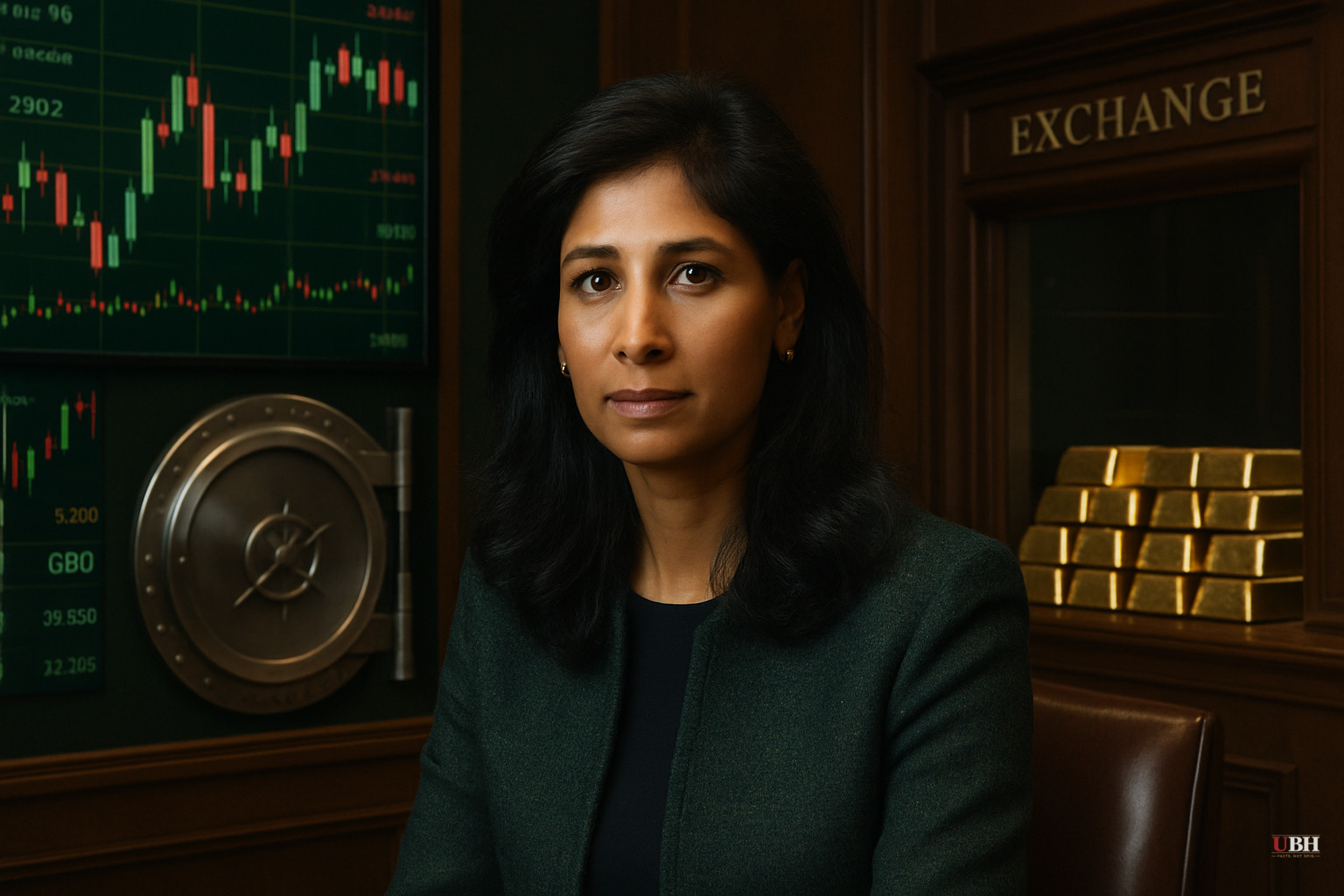
The World Borrowed Cheap for Three Decades. That Party Is Over.
For roughly 30 years, the global real interest rate — the rate stripped of inflation — sat near historic lows. According to research by Marco Del Negro, Domenico Giannone, Marc Giannoni, and Andrea Tambalotti published through the National Bureau of Economic Research in 2018, the world real interest rate for safe assets had been hovering close to 2 percent for over a century before dropping sharply starting in the 1990s.
Two forces drove that drop: a surge in demand for safe, liquid assets (think U.S. Treasuries), and slower global economic growth. Cheap money became the norm. Central banks leaned into it. Governments borrowed like it would last forever.
It didn't.
Gopinath Names the Problem Directly
Gita Gopinath, the former IMF First Deputy Managing Director and current First Deputy Governor of the Reserve Bank of India, has spoken specifically about the rate surge and what it means — once at the Central Bank of Brazil's Annual Conference in May 2023 (while still at the IMF), and again in a May 7, 2025 speech on monetary policy in emerging markets.
Her argument is straightforward. When COVID hit, governments spent massively. Supply chains broke. Demand roared back before supply could catch up. Inflation exploded globally. Central banks — especially the U.S. Federal Reserve — had no choice but to hike rates at the sharpest pace in several decades, according to her 2023 IMF remarks.
The result: higher rates everywhere, for everyone.
Emerging Markets Actually Did Something Right
Emerging markets handled this better than the United States and Europe did in one critical respect.
According to Gopinath's May 2023 speech, emerging market central banks on average started tightening monetary policy in mid-2021 — well before advanced economies like the U.S. moved. They saw inflation coming and acted. The Fed waited, famously calling inflation "transitory" well into late 2021.
The result? Countries like Brazil that moved early kept inflation expectations anchored. Capital didn't flee. Some emerging market currencies actually appreciated against the dollar. Compare that to the chaos the Fed's delayed response caused in U.S. housing markets and banking stress in early 2023.
This observation rarely appears in American financial media, which often treats the Fed as the gold standard.
Now Add the Tariff Problem
Just when global rate pressures were showing signs of stabilizing, the trade war escalated.
In her May 7, 2025 speech, Gopinath stated plainly: the U.S. effective tariff rate has surged to levels not seen in over 100 years. The IMF's World Economic Outlook now projects tariffs will reduce both global and emerging market output growth by roughly 0.5 percentage points compared to pre-April forecasts. The IMF downgraded growth forecasts for 127 countries representing 86 percent of global GDP.
The inflation effects are NOT uniform — a detail often overlooked in policy debate. For countries that export to the U.S. and now face higher tariffs, it's mainly a demand shock — prices drift down, growth slows. For the United States itself, Gopinath says the tariffs act as an adverse supply shock — meaning prices go UP while growth goes DOWN. That's stagflation territory.
Financial Conditions Haven't Tightened Yet — But They Could Snap
Gopinath flagged one thing that should alarm anyone paying attention: as of early May 2025, financial conditions globally have NOT tightened much despite the tariff shock. Emerging market currencies have remained "surprisingly resilient" against the dollar, she noted.
That's the good news. According to her May 2025 speech: "If trade policy discussions do not yield lower tariffs soon, financial conditions could tighten abruptly, with major effects on capital flows."
Abruptly—a term central bankers use to signal sudden, severe disruption.
What Mainstream Coverage Is Getting Wrong
Most U.S. financial media frames global rate trends as a domestic Fed story. The NBER research makes clear these are global structural forces — decades in the making — not simply a Jerome Powell problem.
Left-leaning outlets blame the rate surge entirely on post-COVID corporate greed or Republican obstruction. Right-leaning outlets blame Biden's spending and the Fed's "transitory" blunder, but fail to acknowledge that every major advanced economy made the same mistake simultaneously.
The converging forces are: a three-decade cheap money addiction ending, a pandemic spending shock, supply chain failure, and a self-inflicted trade war piling on at the worst possible moment.
What This Means for Regular People
Higher rates for longer means your mortgage is more expensive. Business loans cost more, which means fewer jobs created. Government debt service costs explode, which means less money for everything else — or more borrowing, which makes it worse.
The NBER researchers found the long-term rate decline was driven by demand for safety and slower growth. If the trade war kills growth further while keeping inflation elevated in the U.S., we don't get lower rates as a relief valve. We get the worst of both worlds.
Gopinath is not a political figure. She is among the most closely watched voices on global monetary policy, and her recent speeches indicate the global financial system is under stress.
Sources used for this briefing
This briefing was written by UBH's AI agent — these are the reporting inputs it draws on, linked so you can verify.


