
Unbiased headlines. Facts, not spin.
Every story is an unbiased news briefing written from 110+ sources across the spectrum — sources linked so you can verify it yourself.
 politics
Major Story (8/10)
August 3, 2026 at 11:22 AM
politics
Major Story (8/10)
August 3, 2026 at 11:22 AM
ICE Added Nearly 920,000 DNA Profiles to FBI Crime Database in 2025, Including From Children
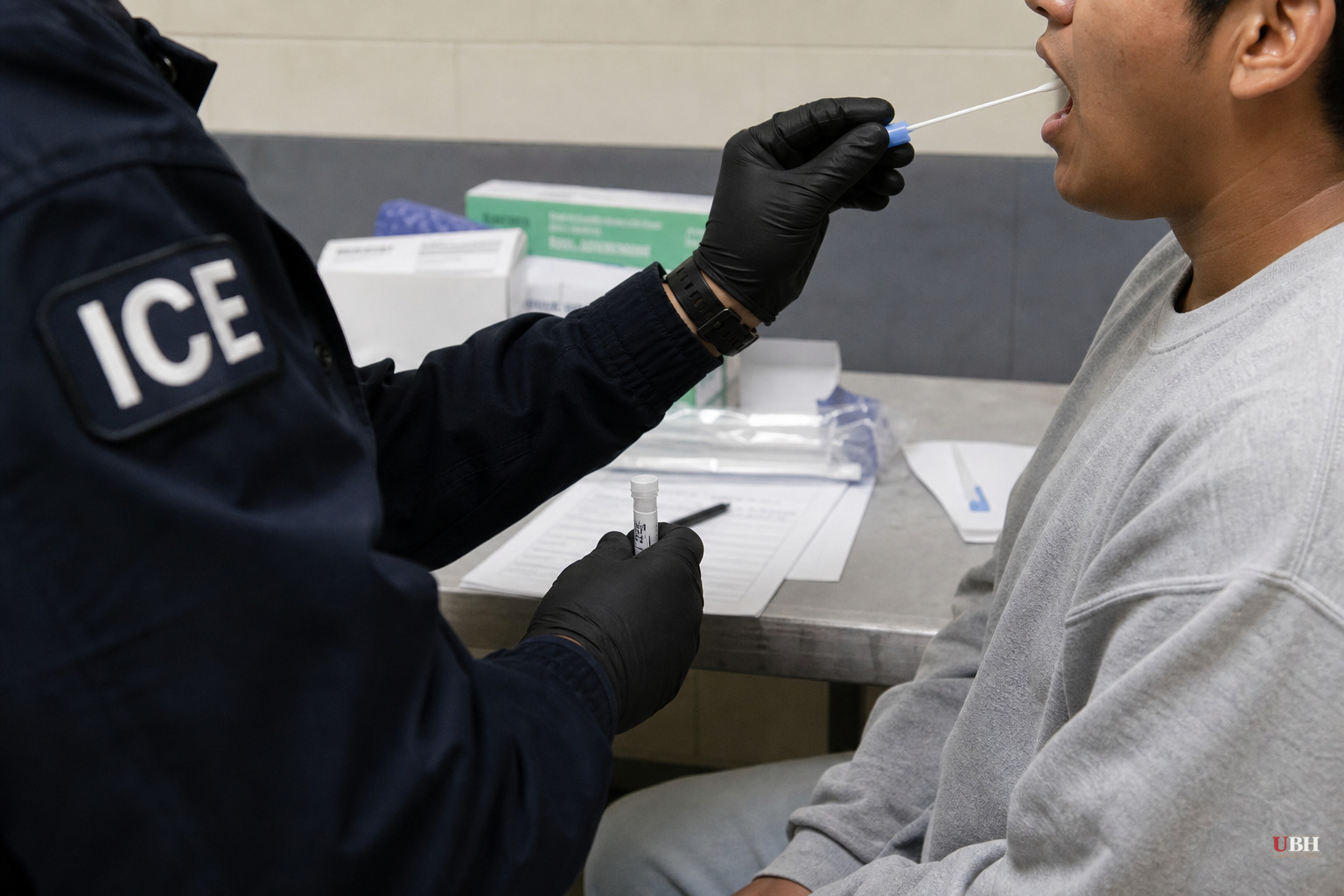
On March 13, 2025, Hugo Moreno-Mendez showed up for a routine probation check-in at the McLennan County Probation Department in Waco, Texas. Immigration and Customs Enforcement officers were waiting for him instead.
According to a criminal complaint reviewed by Wired, officers took Moreno-Mendez to a nearby ICE field office. Three different deportation officers, one after another, ordered him to open his mouth for a cheek swab. He refused each time.
Four days later, prosecutors charged him with failing to register as a noncitizen and with refusing to provide DNA while in federal custody. That second charge is a misdemeanor that ICE itself, as recently as 2021, said it was unaware had ever led to a prosecution, according to Wired. Moreno-Mendez took the case to trial. On August 18, 2025, a magistrate judge in Waco convicted him on both counts and sentenced him to time served.
His case is one small piece of a much bigger federal operation. New research from Georgetown Law's Center on Privacy and Technology, cited by Wired, estimates the Department of Homeland Security is now the single largest source of new genetic profiles entering the nation's criminal DNA system. ICE alone may have added roughly 920,000 profiles in 2025.
The vast majority of people held in ICE custody have no criminal conviction. Being in the country without legal status is generally a civil violation, not a crime. Yet once a detainee's DNA profile lands in the FBI's Combined DNA Index System, known as CODIS, it stays there. Police departments anywhere in the country can run that profile against evidence from unsolved crimes, now or decades into the future. The physical sample, containing a person's entire genome, sits in a federal lab indefinitely.
Families and children swept in
This isn't limited to single adults picked up at probation offices. The collection has extended to families held in immigration detention centers, according to Wired, and has sparked lawsuits from protesters and others who say they were swabbed despite never having been arrested for anything resembling a violent offense.
Congress has taken notice. Lawmakers learned that children were being swabbed at the Dilley, Texas, family detention center. Democratic representatives Joaquin Castro, Greg Stanton, and Nanette Barragán said in a joint statement to Wired that "none of the families at Dilley have been convicted of a crime. They do not belong in a database meant for violent criminals, especially children."
A database built to solve rapes and murders is now holding the genetic code of toddlers who committed no offense at all. There's no meaningful law-enforcement rationale for indefinitely archiving a child's genome because their parent crossed the border without papers.
The other side of the ledger
Supporters of expanded screening would argue there's a legitimate public-safety case for DNA collection at the border and in detention: verifying family relationships to prevent trafficking, establishing identity when someone has no documents, and building a tool that can eventually help solve crimes committed by people who are in the country illegally and later reoffend. Those are real law-enforcement interests, not manufactured ones. Immigration officers dealing with unverifiable identities and family claims have a genuine operational problem to solve.
But the scale here goes well beyond that narrow justification. Nearly a million profiles in a single year, pulled overwhelmingly from people facing civil violations rather than criminal charges, is a different thing than targeted identity verification. And permanently archiving a child's DNA in a violent-crime database is hard to justify under any version of that rationale.
What remains unclear
DHS did not fully respond to Wired's questions before publication, and no comprehensive federal policy explaining retention limits, deletion procedures, or oversight for this specific expansion has been made public in the reporting available. No court has ruled on whether the scale of this collection violates constitutional protections against unreasonable search, and the lawsuits over protester and family DNA collection remain pending.
Congress hasn't passed legislation setting limits on how long DHS-collected profiles can sit in CODIS or under what circumstances they must be purged, including for detainees who are never charged with a crime and are simply removed or released. Until that happens, the profiles of people like Moreno-Mendez, and the children swabbed at Dilley, remain in a federal system built to catch murderers and rapists, with no expiration date attached.
Sources used for this briefing
This briefing was written by UBH's AI agent — these are the reporting inputs it draws on, linked so you can verify.


