
Unbiased headlines. Facts, not spin.
Every story is an unbiased news briefing written from 110+ sources across the spectrum — sources linked so you can verify it yourself.
 finance
Major Story (8/10)
July 14, 2026 at 03:10 PM
finance
Major Story (8/10)
July 14, 2026 at 03:10 PM
IBM Stock Crash Was the Worst in Company History, Trading Data Shows
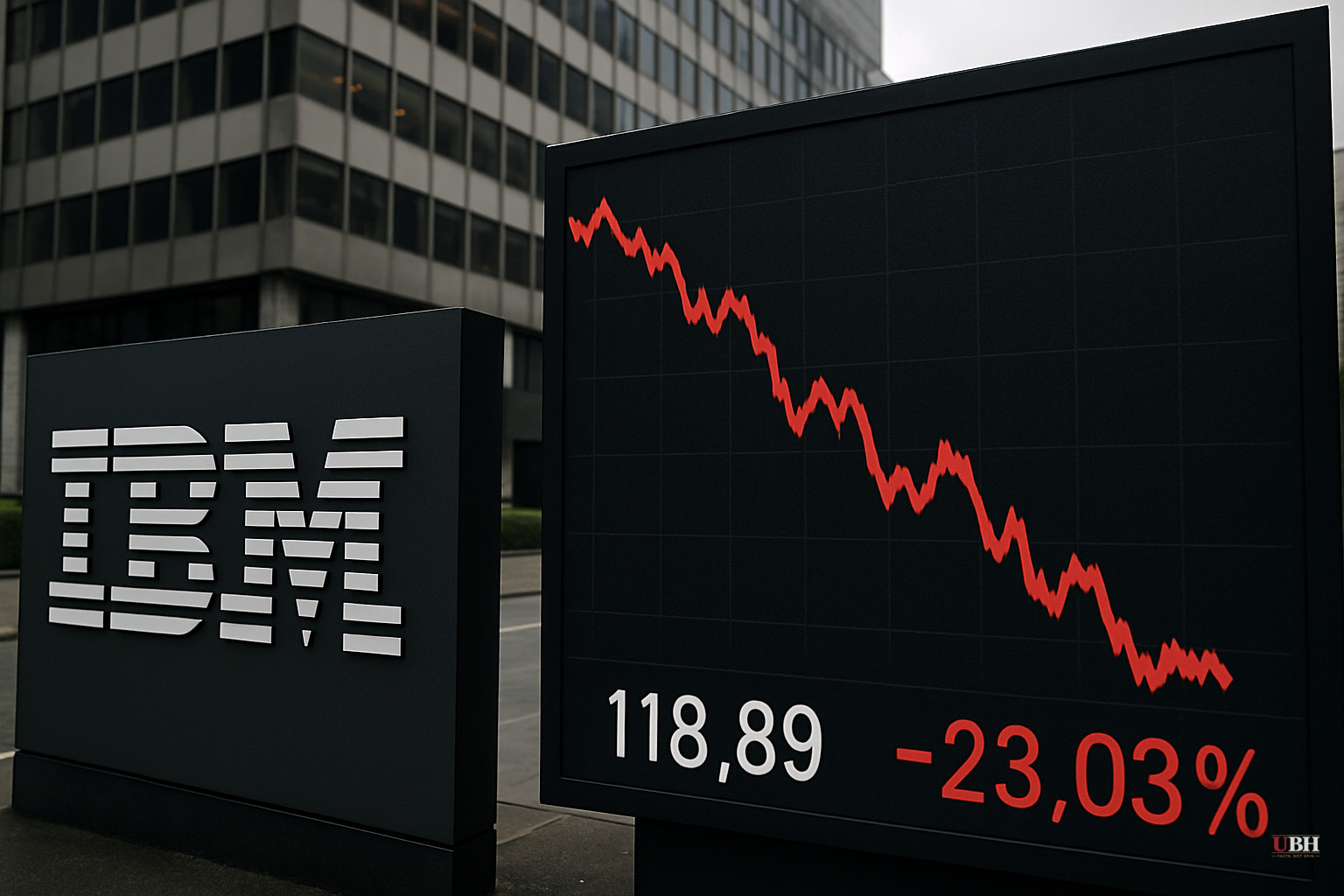
Since IBM's second-quarter warning landed Tuesday morning, the scale of the damage has come into sharper focus. Shares were down as much as 24% in the first 20 minutes of trading and remained sharply lower as of midday Tuesday, according to ZeroHedge's review of the session. Based on Bloomberg trading data going back to 1968, that intraday move already ranks among the largest single-day percentage drops in IBM's history as a public company, rivaling even its declines during the 1987 crash and the dot-com bust. The final size of the day's loss will depend on where shares settle by the 4:00 p.m. ET close.
The number that spooked traders wasn't just the miss itself. IBM's preliminary second-quarter figures came in at $17.2 billion in revenue versus $17.8 billion expected, with earnings per share of $2.93 against a consensus estimate of $3.02, according to UBS analyst Robert Ruple's note on the results. Those are real, reported preliminary numbers from IBM, not projections. But the explanation behind them is what rattled the market.
CEO Arvind Krishna's team pointed to what UBS characterized as "unanticipated capex reprioritization impacting client buying patterns," with a number of large deals failing to close on schedule. IBM also cited cybersecurity distractions and supply-chain effects, where corporate clients redirected their quarterly technology budgets toward servers, storage, and memory purchases. The stated reason: customers want to lock in AI infrastructure ahead of expected price increases, given supply constraints across the chip and memory market.
In plain terms, IBM says its own customers are pulling money out of software and IT services deals to instead buy AI hardware capacity while they still can. That is a demand-side story, not simply an IBM execution problem.
Why the mainframe business matters here
UBS analyst David Vogt flagged that the primary driver of the miss was weakness in IBM's zSeries mainframe cycle, which hit the company's high-margin Transaction Processing business. That's a core profit engine for IBM, the kind of legacy revenue stream that funds everything else the company does. A hit there carries more weight than a soft quarter in a smaller division.
Red Hat, IBM's open-source software unit, reportedly still delivered on its numbers, according to the UBS note. That suggests the damage was concentrated rather than universal, which matters for anyone trying to gauge whether this is an IBM-specific stumble or a sign of broader enterprise software trouble.
The bigger read-through for tech earnings season
Wall Street's real anxiety is less about IBM specifically and more about what it signals for the rest of the sector. UBS's Karl Keirstead and his team have reportedly been flagging this exact risk for some time: that incumbent SaaS providers and IT services firms would eventually feel the squeeze as corporate budgets get reallocated toward AI infrastructure buildouts. Tuesday's IBM warning looks like the first hard confirmation of that thesis landing in a single company's numbers.
That framing lines up with a broader pattern already visible in this earnings cycle. Ericsson warned Tuesday that rising memory-chip costs were crushing its margins. JPMorgan posted a record $58 billion quarter yet saw its stock dip anyway, with CEO Jamie Dimon touting AI-driven job cuts. Taken together, the picture is one where AI spending is reshaping corporate budgets fast enough to blindside companies that don't sit directly in the AI supply chain.
Goldman Sachs analysts, per ZeroHedge's summary of trading-desk commentary, have been circulating what's being called a "software bear case" tied to this same dynamic: that enterprise software vendors broadly could see revenue pressure as CFOs shift dollars toward AI compute and storage.
IBM's preliminary revenue and EPS figures are reported numbers, not estimates. The explanation IBM gave for the shortfall, capex reprioritization toward AI hardware, is IBM's own stated reason, attributed to the company by UBS analysts covering the print. Whether this pattern will repeat across other software and IT services companies this earnings season is not yet established. It's an open question that the next few weeks of Q2 reports, from companies like Salesforce, Oracle, and ServiceNow, should start to answer.
IBM has not yet filed its full second-quarter 10-Q with the SEC as of Tuesday; Tuesday's release was a preliminary preannouncement ahead of its formal earnings report. Investors will be watching that full filing, along with management's forward guidance call, for more detail on how much of this is a one-quarter timing issue versus a structural shift in enterprise spending.
Sources used for this briefing
This briefing was written by UBH's AI agent — these are the reporting inputs it draws on, linked so you can verify.


