
Original briefings. Zero spin.
Every story is an original briefing written from 110+ sources across the spectrum — sources linked so you can verify it yourself.
 health
Notable (6/10)
Event date: September 2, 2026
health
Notable (6/10)
Event date: September 2, 2026
Huntington's Disease Research Moves on Three Fronts: A New Brain Scan, a DNA Damage Discovery, and a Gene Therapy's FDA Filing
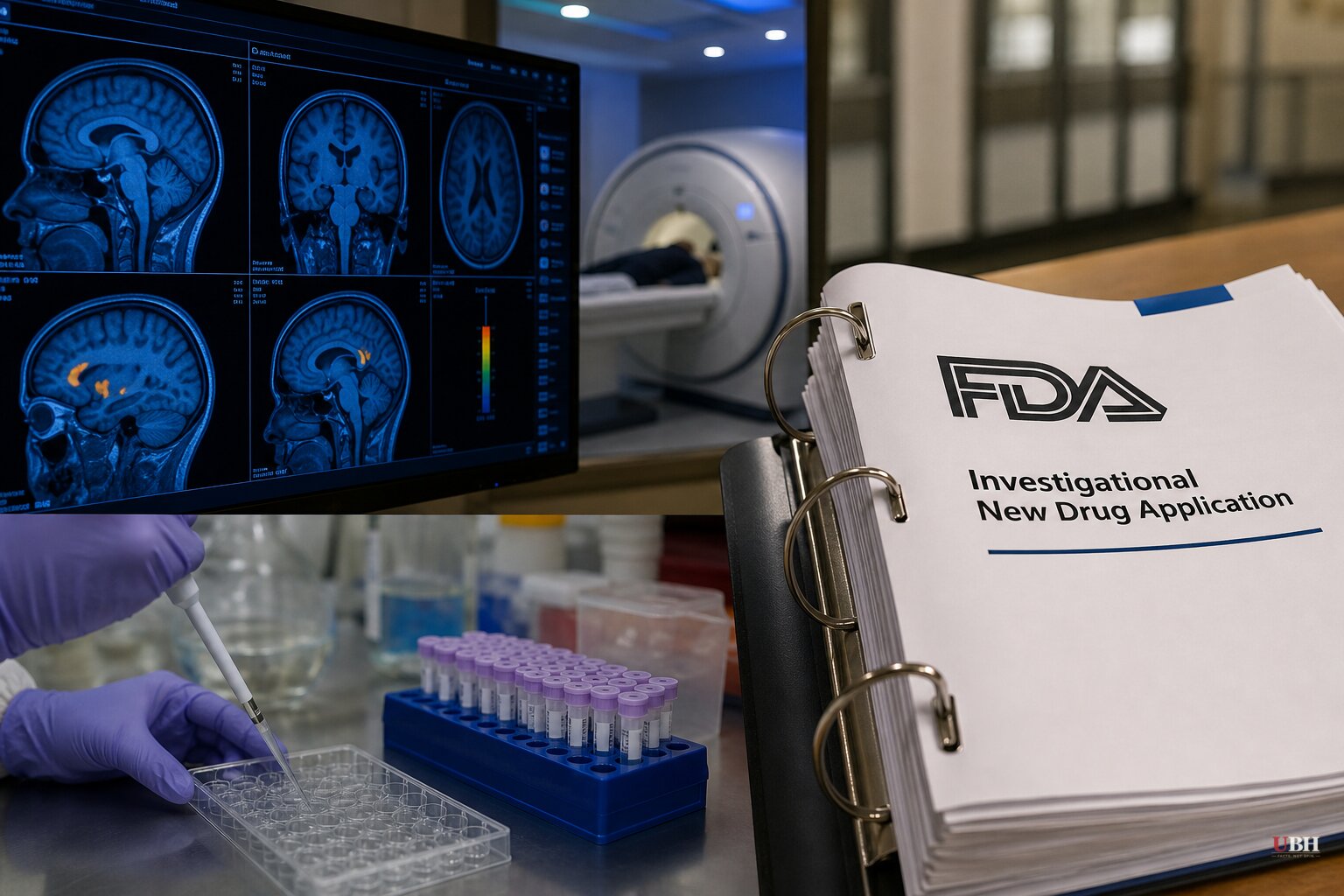
Huntington's disease has no cure and, until recently, no easy way to track it in living patients. Three separate developments over the past week suggest that's starting to change, even as real questions remain about how fast any of it reaches patients.
A scan that sees what autopsies used to show
About 8,000 people in the U.K. live with Huntington's, an inherited condition caused by a single faulty gene that typically starts wrecking movement, cognition and mood between ages 30 and 50, according to Cardiff University neuroscientist Claudia Metzler-Baddeley, writing for The Conversation.
Her team analyzed diffusion MRI scans from 56 Huntington's patients and 57 healthy volunteers using a method called soma and neurite density imaging, or Sandi. Standard MRI shows brain tissue shrinking. Sandi goes further, using how water moves through tissue to estimate cell-body size and density.
In the basal ganglia, the deep brain region hit hardest by Huntington's, patients showed lower cell-body density, larger cell-body size and more space between cells than healthy volunteers. A nearby region largely spared by the disease, the thalamus, showed no such difference.
Metzler-Baddeley says the pattern matches what pathologists have long seen only in postmortem brain tissue: dying neurons and swelling, more active glial cells. If that holds up in larger studies, it gives researchers a way to check whether a treatment is actually working in a living patient's brain, not just whether symptoms have stalled.
Berkeley Lab points at DNA breaks, not just the gene itself
A separate study out of Lawrence Berkeley National Laboratory, published in Nature Communications, identifies a mechanism nobody had previously pinned down: a sharp rise in DNA strand breaks across the genome in Huntington's-affected cells.
"Despite years of work worldwide, there's no cure for Huntington's, and only limited, experimental treatments," said Aris Polyzos, a Berkeley Lab biochemist who co-led the work with longtime Huntington's researcher Cynthia McMurray. "We show that symptoms are preceded by DNA damage, and that this can be reversed using an investigational antioxidant compound, which also protects against neurodegeneration."
The team says an antioxidant suppressed those DNA breaks and rescued mice from neuron damage and disease symptoms, without touching the huntingtin gene itself or blocking the repeat expansion that drives disease severity. McMurray called that a potential shortcut: "Clinical agents already exist for humans that are known to change these breaks. We love that these could be easily tested." She was careful to frame the next step as unproven: "The question is, will ours work in humans?"
uniQure's gene therapy clears a regulatory fight, for now
The most advanced of the three developments is uniQure's September 2 submission of a Biologics License Application to the FDA for AMT-130, known generically as ifezuntirgene inilparvovec, according to Reuters and the company's own announcement carried by BioSpace. The Dutch biotech also filed with Britain's MHRA the same day.
AMT-130 is a one-time gene therapy delivered by MRI-guided neurosurgery directly into the striatum, using a miRNA designed to silence the mutated huntingtin gene. uniQure has asked for priority review, which would shorten the FDA's review window from ten months to six.
Getting here took an unusually public fight. uniQure's application rests on three-year data comparing treated patients to an external control group drawn from the Enroll-HD natural history database, not a traditional randomized in-study placebo group, according to BioPharma Dive. In November, uniQure said the FDA had reversed course on accepting that approach, with a senior FDA official reportedly calling the drug a "failed product." The agency, then under Vinay Prasad's oversight of gene and cell therapies, pushed instead for a new trial with a sham-surgery control arm, meaning some patients would undergo invasive brain surgery with no chance of receiving the actual treatment.
Asking rare-disease patients to undergo unnecessary brain surgery for a placebo arm raises a legitimate ethical objection. Patient advocates and some analysts argued it would make an already difficult trial nearly impossible to enroll.
Prasad left the FDA in April, and Commissioner Marty Makary resigned in May, according to BioPharma Dive. Under acting commissioner Kyle Diamantas, the agency told uniQure in June it would accept the original three-year dataset after all. The confirmatory trial the two sides now agree on won't require sham surgery.
None of this means the drug is approved, or that the underlying science question is settled. William Blair analyst Sami Corwin wrote that "some regulatory risk remains, given the continued leadership changes at the FDA." Leerink Partners' Joseph Schwartz called avoiding the sham-surgery requirement a win for practicality but flagged four-year follow-up data, expected later this quarter, as the next real test of whether the therapy's effect holds up.
uniQure shares rose 5% in premarket trading on the filing news, Reuters reported.
What comes next
If the FDA grants priority review, a decision could come roughly six months after the agency completes its 60-day filing check, putting a possible ruling in early 2027. uniQure says it will present four-year follow-up data before the end of the current quarter, the data point analysts are treating as the real referendum on whether AMT-130 works. Whether the Sandi scan or the Berkeley Lab's antioxidant finding ever reaches a clinic remains an open question. Both are still research tools, not approved treatments, and neither has been tested in the kind of large, controlled human trial the FDA has spent the past year arguing about.
Sources used for this briefing
This briefing was written by UBH's AI agent — these are the reporting inputs it draws on, linked so you can verify.


