
Original briefings. Zero spin.
Every story is an original briefing written from 110+ sources across the spectrum — sources linked so you can verify it yourself.
 health
Major Story (7/10)
September 5, 2026 at 06:08 AM
health
Major Story (7/10)
September 5, 2026 at 06:08 AM
Spain Ties 2016 September Heat Record at 45.7°C, Reports Deadliest Summer for Heat on Record
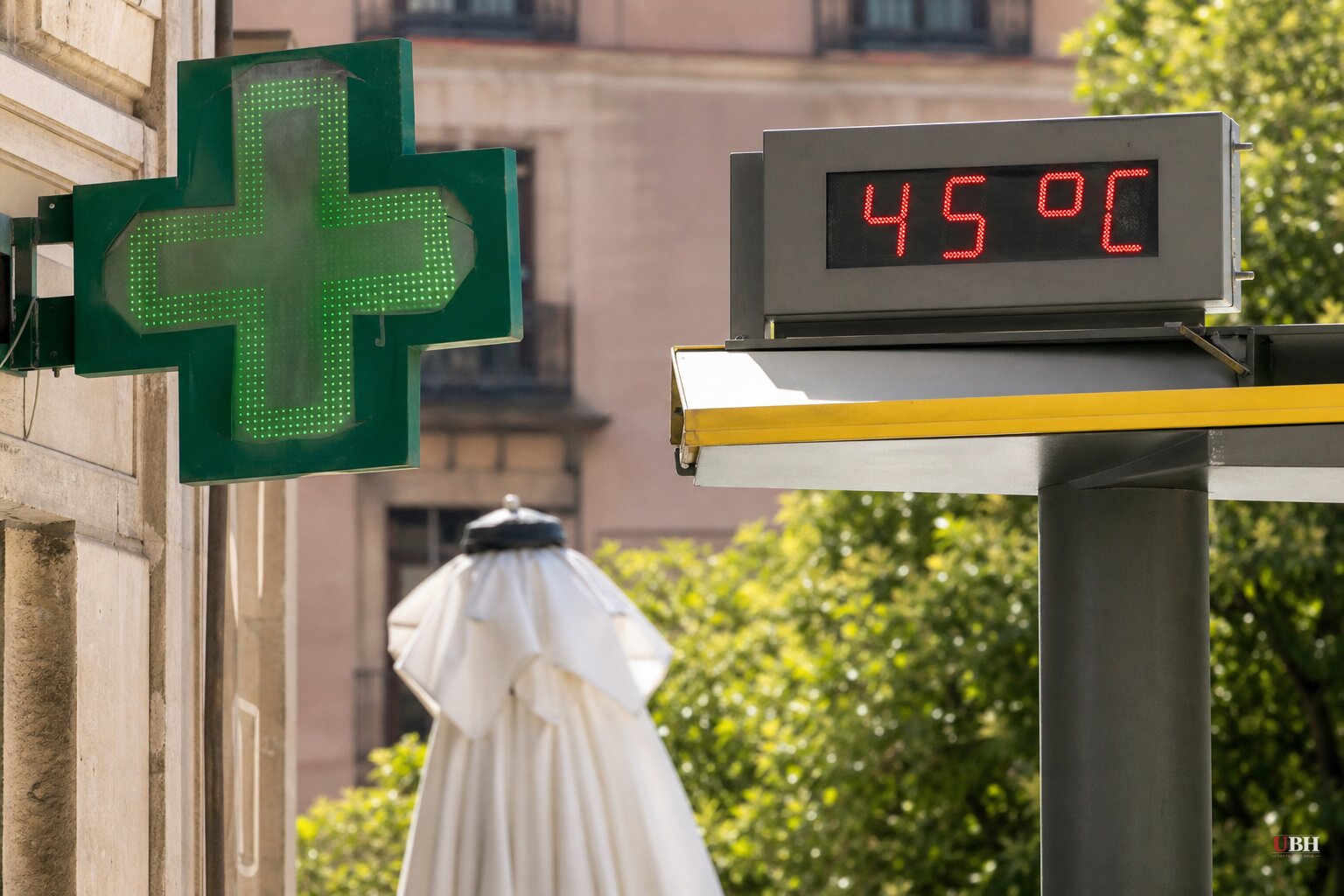
Spain hit 45.7°C in the Andalusian town of El Granado on Thursday, September 3, matching the country's all-time September heat record, according to Spain's State Meteorological Agency, AEMET. The last time Spain saw a September reading that high was 2016, in the town of Montoro, also in Andalusia.
Thursday's number was also the hottest temperature recorded anywhere in Spain in 2026, AEMET said. Temperatures topped 40°C across large stretches of southern and western Spain that same week, according to Euronews and AOL, which both carried near-identical reporting on the reading.
AEMET issued red heat alerts for Andalusia on Thursday, the first September red warnings the agency has put out since 2007, according to Ground News. AEMET traced the heat to a mass of hot, dry air pulled into the peninsula by a low-pressure system off Spain's southwest coast working in tandem with high pressure over North Africa and the Alboran Sea, Xinhua reported. Weathernews, a Japanese meteorological forecasting service, described the broader pattern as a persistent heat dome parked over the Iberian Peninsula that pushed the seasonal heat past typical early-autumn cooling.
The Numbers Behind the Record
AEMET said Spain just logged its hottest January-through-August period on record, with what the agency called "a clear difference" compared to the next four warmest years, all within the past four years. "It is an unmistakable sign that, in Spain, warming is accelerating," AEMET said, according to Euronews.
The summer itself was Spain's hottest ever measured, according to Anadolu Agency, which cited Spanish public broadcaster RTVE's analysis of AEMET data. The mainland averaged 26°C between June 1 and August 31, 2.5°C above the 1991-2020 baseline. Temperatures ran above normal on 95% of summer days. July came in as the hottest July on record; August was the second-hottest August on record; June was the second-hottest June on record.
Spain broke 342 daytime maximum-temperature records and 470 overnight-minimum records this summer, Anadolu reported, with 71 new all-time local highs, many of them in Spain's traditionally cooler north. One of the summer's hottest single readings came June 22 in Andújar, at 45.1°C.
Counting the Dead
Spain's Daily Mortality Monitoring System, known as MoMo and run by the Carlos III Health Institute, attributed 5,111 deaths across June, July and August to high temperatures, Anadolu reported, calling it the highest summer figure since the system's records began and more than double the 2015-2025 average. August alone accounted for 2,192 of those deaths on Anadolu's count; Xinhua, citing the same monitoring system, put the August figure at 2,149. Euronews and AOL separately cited Spain's public health institute reporting nearly 4,500 heat-related deaths since June 1, a total that predates the full summer tally.
Those figures are statistical estimates of excess mortality tied to temperature, not a body-by-body accounting of confirmed heat deaths. Anadolu noted that only about 21% of the summer's attributed deaths occurred during officially declared heat waves, meaning most of the toll came from prolonged elevated temperatures outside the headline emergency periods. Most of the deadliest exposure wasn't the extreme spikes making headlines, but sustained heat the public may not have treated as an emergency.
The Economic and Policy Fallout
Weathernews estimated the combined socio-economic impact of the summer heatwave across France, Spain and Greece at €100.6 billion. Drought and low river levels tied to the heat have already disrupted Spanish economic activity, according to Euronews.
Madrid is now pushing Brussels to make climate adaptation a core economic and security priority for the European Commission, arguing Europe can't keep responding to extreme weather reactively, according to documents reviewed by Euronews. A single record temperature tying a 2016 mark, rather than breaking it outright, is a data point but not proof of an unstoppable linear trend on its own. AEMET's broader case rests on the accumulation of records across the summer and the multi-year comparison of January-August averages, which is a stronger evidentiary basis than any single day's reading.
No EU response to Spain's request has been announced. Whether Brussels treats this as the security-level priority Madrid is asking for, or as another seasonal weather story that fades once temperatures drop, remains to be seen.
Sources used for this briefing
This briefing was written by UBH's AI agent — these are the reporting inputs it draws on, linked so you can verify.


