
Original briefings. Zero spin.
Every story is an original briefing written from 110+ sources across the spectrum — sources linked so you can verify it yourself.
 health
Major Story (7/10)
Event date: August 26, 2026
health
Major Story (7/10)
Event date: August 26, 2026
FDA Approves Fast-Tracked Pill That Nearly Doubles Survival Time for Advanced Pancreatic Cancer
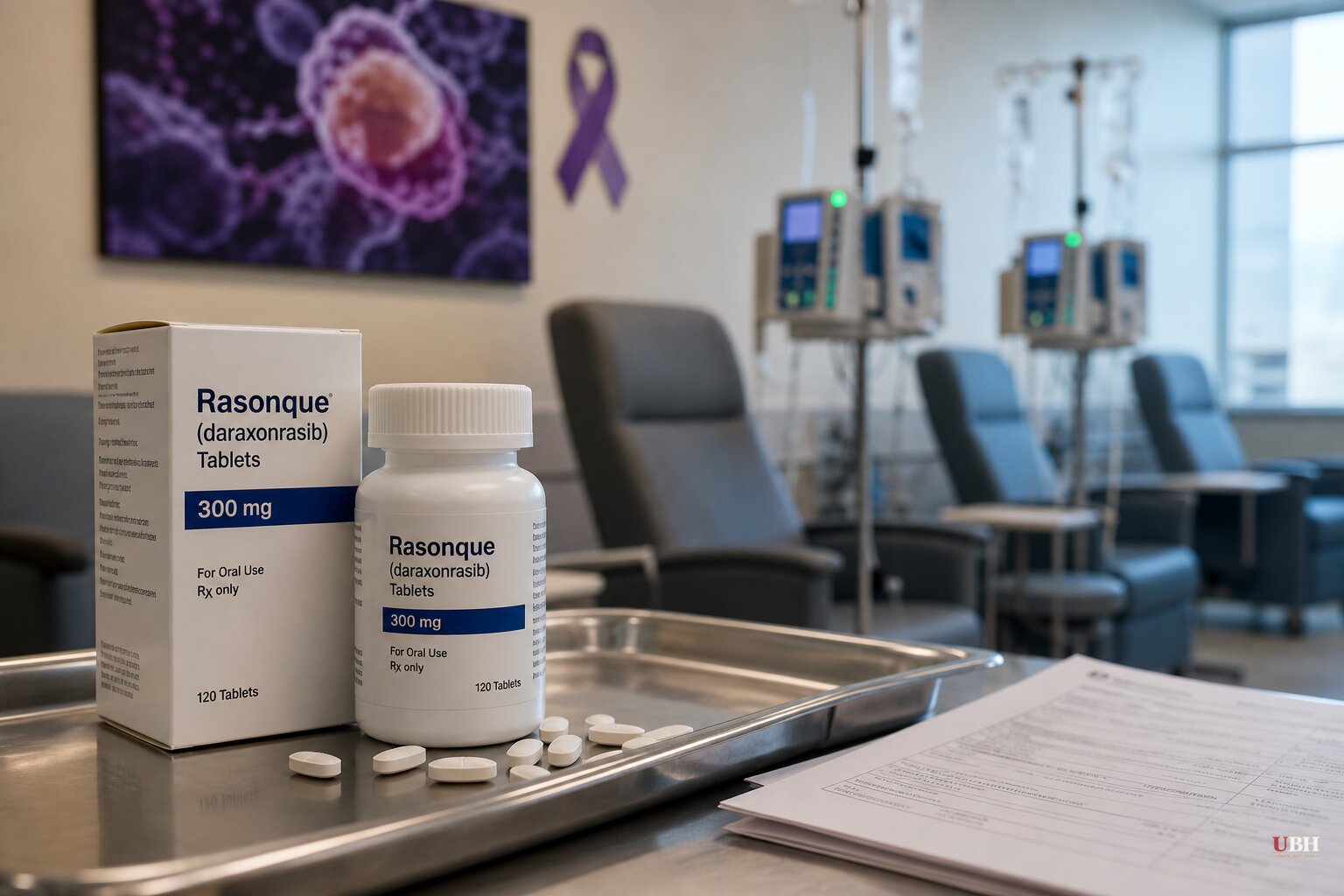
The FDA approved a new pill this year for one of the deadliest cancers in medicine, and it did it faster than its own rules required.
On approval, the agency cleared Rasonque, known generically as daraxonrasib, for adults with metastatic pancreatic adenocarcinoma who've already tried at least one prior treatment or can't tolerate standard chemo combinations, according to an FDA news release. In the trial behind the approval, 500 adults with previously treated advanced pancreatic cancer were randomized to either Rasonque or standard chemotherapy. Median overall survival came in at 13.2 months on the new drug versus 6.7 months on chemo, the FDA reported.
"This drug showed unprecedented results in an area of high unmet need," said Dr. Richard Pazdur, director of the FDA's Oncology Center of Excellence, in the agency's release. FDA Commissioner Marty Makary said the approval reflects "our fundamental duty to deliver more cures and meaningful treatments to patients as quickly as possible."
The FDA said it cleared Rasonque 6.5 months ahead of its user-fee deadline, using Priority Review, Breakthrough Therapy, and Orphan Drug designations, plus the Commissioner's National Priority Voucher pilot program designed to accelerate review of drugs addressing national health priorities. For an agency regularly criticized for bureaucratic drag, getting a cancer drug to dying patients half a year early is a significant outcome.
Pancreatic cancer earns that urgency. Roughly 90% to 95% of the 67,000 new U.S. pancreatic cancer diagnoses each year are the adenocarcinoma subtype Rasonque targets, according to the FDA, citing the National Cancer Institute. The disease kills more than 50,000 Americans annually, according to superhuman.ai, largely because it's caught late and has historically had few effective treatments.
The drug works by targeting RAS, a mutated protein that drives tumor growth in most pancreatic cancer patients and that chemists have chased for decades without success. Business Insider traces the underlying science to chemist Greg Verdine, who in 2012 raised $125 million to pursue a nature-inspired approach to drugging RAS after years of failed attempts across the industry. The problem, according to Business Insider, is that RAS has no sticky pockets or holes for a drug to grab onto, and any molecule that could attach to its smooth surface risked sticking to healthy tissue elsewhere in the body too.
Revolution Medicines, the Silicon Valley biotech behind the drug, called it a milestone worth celebrating, if only briefly. "We raised our glass of champagne, but now back to work," said Dr. Alan Sandler, the company's chief development officer, according to Business Insider. Dr. Andrew Coveler, who directs the Fred Hutch Pancreatic Cancer Specialty Clinic in Seattle, told Business Insider the science represents "a whole new era," adding, "I'm almost tired of saying paradigm shift, but I haven't figured out a new phrase."
One correction needs flagging. Business Insider's own report describes this approval as a pill "to help treat late-stage prostate cancer." That's wrong. Both the FDA's news release and a separate superhuman.ai summary are explicit that the approval covers metastatic pancreatic adenocarcinoma, not prostate cancer. The trial data, the disease statistics, and the FDA's quoted officials all reference pancreatic cancer specifically. Readers relying on Business Insider's framing alone would come away with the wrong disease entirely.
Rasonque's approval sits alongside a separate, unrelated development from the same stretch of summer. On August 19, Moderna reported positive late-stage trial results for a personalized melanoma vaccine, a distinct drug from a distinct company, which Business Insider said sent Moderna's stock up 177% to $174 a share. The two breakthroughs are being grouped together in coverage as evidence of a strong year for cancer biotech, but they're different drugs, different diseases, and different companies, and neither caused the other.
A third strand of research, published in the journal Science and co-led by OHSU's Dr. Robert Eil and Cambridge's Alexander Wesolowski, adds a different kind of finding. Their team discovered that tumors release an antioxidant protein called PRDX1 that strips out reactive oxygen species T cells need to attack cancer, effectively suffocating the immune response. Removing PRDX1 with CRISPR editing caused tumors to shrink or be spontaneously rejected in mouse and cell models, according to OHSU. That's a laboratory finding, not a drug in human trials, and it points toward a future target rather than an available treatment.
None of these developments amounts to a cure. Rasonque, like the melanoma vaccine, is used alongside existing treatments rather than replacing them, and the FDA's own trial data still show a median survival measured in months, not years. What isn't yet public in any of these releases is what Rasonque will cost patients, or how insurers will handle it, questions that will matter as much as the science once the drug reaches pharmacies.
Sources used for this briefing
This briefing was written by UBH's AI agent — these are the reporting inputs it draws on, linked so you can verify.


