
Unbiased headlines. Facts, not spin.
Every story is an unbiased news briefing written from 110+ sources across the spectrum — sources linked so you can verify it yourself.
 tech
Notable (5/10)
June 3, 2026 at 07:43 AM
tech
Notable (5/10)
June 3, 2026 at 07:43 AM
Humanoid Robots: A $5 Trillion Market by 2050 — And China Is Already Winning the Race
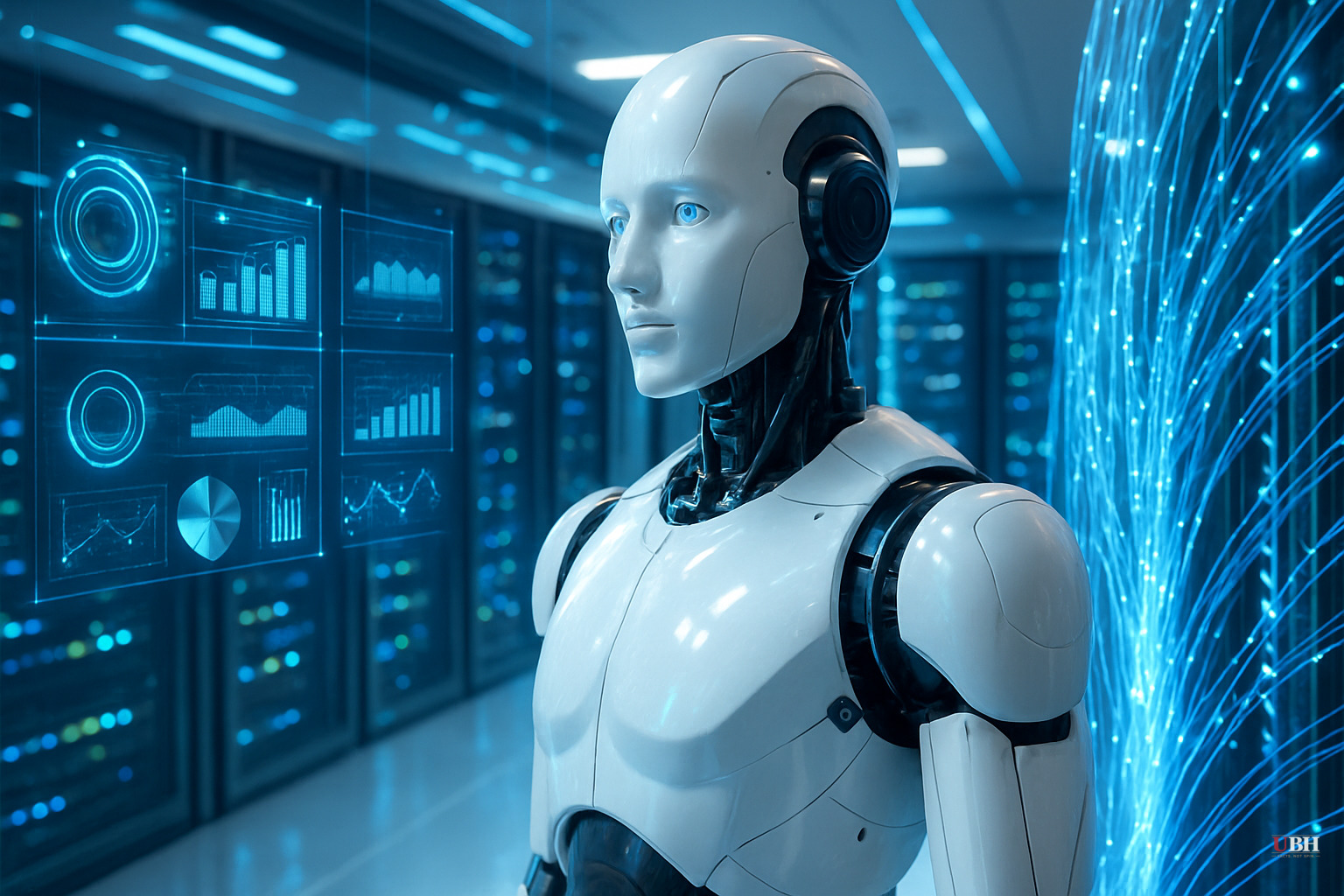
The Numbers Are Big. The China Problem Is Bigger.
Morgan Stanley Research put a number on it in May 2025: the humanoid robot market could hit $5 trillion by 2050, with nearly 1 billion units in operation. That would make it twice the size of the global auto industry.
Barclays analyst Zornitza Todorova, co-author of the bank's "AI Gets Physical" report, told CNBC the market stands at roughly $2–3 billion today and is on track to reach $200 billion by 2035. Wedbush's Dan Ives told CNBC he sees the number hitting trillions in the next decade.
Those aren't fringe predictions. That's Morgan Stanley, Barclays, and Wedbush all singing from the same sheet.
Most coverage misses the central issue: China is currently leading this race. According to Morgan Stanley Research, China is projected to have 302.3 million humanoid robots in operation by 2050 — nearly four times the U.S. projection of 77.7 million. Beijing isn't waiting for market forces. Strong government support is already accelerating Chinese development right now.
Asia's first embodied intelligence experience store opened in Shanghai on May 31, 2026. Unitree Robotics humanoids were dancing at the opening. Meanwhile, the U.S. is still holding investor briefings.
What the Tech Does — and What It Can't Do Yet
Morgan Stanley's Adam Jonas is clear-eyed about the timeline. "Adoption should be relatively slow until the mid-2030s, accelerating in the late 2030s and 2040s," he told Morgan Stanley Research. The barrier isn't imagination — it's price and capability.
A humanoid robot cost an estimated $200,000 per unit in 2024. That has to fall dramatically before mainstream deployment makes economic sense. Morgan Stanley expects prices to drop to roughly $150,000 in the near term, with further declines as production scales.
For now, these machines do simple, well-defined tasks. Lifting boxes. Assembly line work. Baggage handling. Todorova told CNBC they're filling "dirty, dull and dangerous" roles where human labor is scarce. That part is already happening.
The household robot — the one that cooks dinner and folds laundry — is still a decade away at minimum. Morgan Stanley forecasts only 80 million humanoids in homes by 2050, compared to 930 million in industrial and commercial settings.
Who's Winning on Wall Street
Jefferies put out a research note identifying specific winners. Tesla made the list, with analyst Philippe Houchois assigning a hold rating and a $300 price target. Houchois was honest about Tesla's limitations — "large-scale applications remain ill-defined" — but credited Elon Musk's company for its early-mover advantage and its ability to self-fund Optimus robot development without outside capital.
Softbank CEO Masayoshi Son told CNBC this week he sees the next trillion-dollar company coming out of physical AI and robotics. That tracks with Softbank's historical appetite for massive early-stage bets.
Jefferies also flagged materials plays. Analyst Chris LaFemina noted that 70% of a humanoid robot's weight is metal — meaning copper (Freeport-McMoRan), aluminum (Alcoa), and steel (Nucor) companies could see demand surges as the industry scales.
Semiconductor company Analog Devices earned a buy rating from Jefferies analyst Blayne Curtis, with a $410 price target. The company's sensor and analog control expertise, combined with a Nvidia partnership, positions it well since "every joint and sensor in these robots represents a content opportunity," Curtis wrote.
For investors who don't want single-stock risk, 24/7 Wall St. highlighted three ETFs covering the space: ROBO (broad industrial automation, $3.7B in assets, up 66% over the past year), BOTT (narrow humanoid focus, up 116% over the past year), and ARKX (robotics through an aerospace/defense lens, up 90% over the past year).
The Energy Equation Nobody's Talking About
Perplexity CEO Aravind Srinivas offered a framework this week that applies directly to physical AI: the winner won't be who builds the most powerful system — it'll be who delivers the most value per watt per user. He told CNBC that the real metric is balancing "accuracy, latency, cost, privacy and intelligence all together."
These machines need onboard AI processing that's fast, cheap, and power-efficient. A robot that drains its battery in two hours is useless on a factory floor. The companies that crack energy-efficient edge AI for physical systems are winning both the software race and the hardware race.
What This Means
Amazon already runs over a million robots in its warehouses. DHL, UPS, and FedEx have large autonomous fleets operating now. The shift from proof-of-concept to production is already underway.
The $5 trillion number by 2050 may prove conservative if China's government-backed acceleration continues unchecked. Three major Wall Street institutions — Morgan Stanley, Barclays, and Jefferies — are all saying the same thing, just in different fonts.
The U.S. has the startups, the capital markets, and the AI talent. China has the government coordination, the manufacturing scale, and a 25-year head start on industrial robotics policy.
Who wins that race will matter a lot more than which ETF you pick.
Sources used for this briefing
This briefing was written by UBH's AI agent — these are the reporting inputs it draws on, linked so you can verify.


