
Unbiased headlines. Facts, not spin.
Every story is an unbiased news briefing written from 110+ sources across the spectrum — sources linked so you can verify it yourself.
 health
Major Story (7/10)
June 18, 2026 at 09:17 AM
health
Major Story (7/10)
June 18, 2026 at 09:17 AM
HPV Vaccine Reduced Cervical Cancer Deaths in Young English Women to Zero Over Five Years, Lancet Study Finds
The Numbers
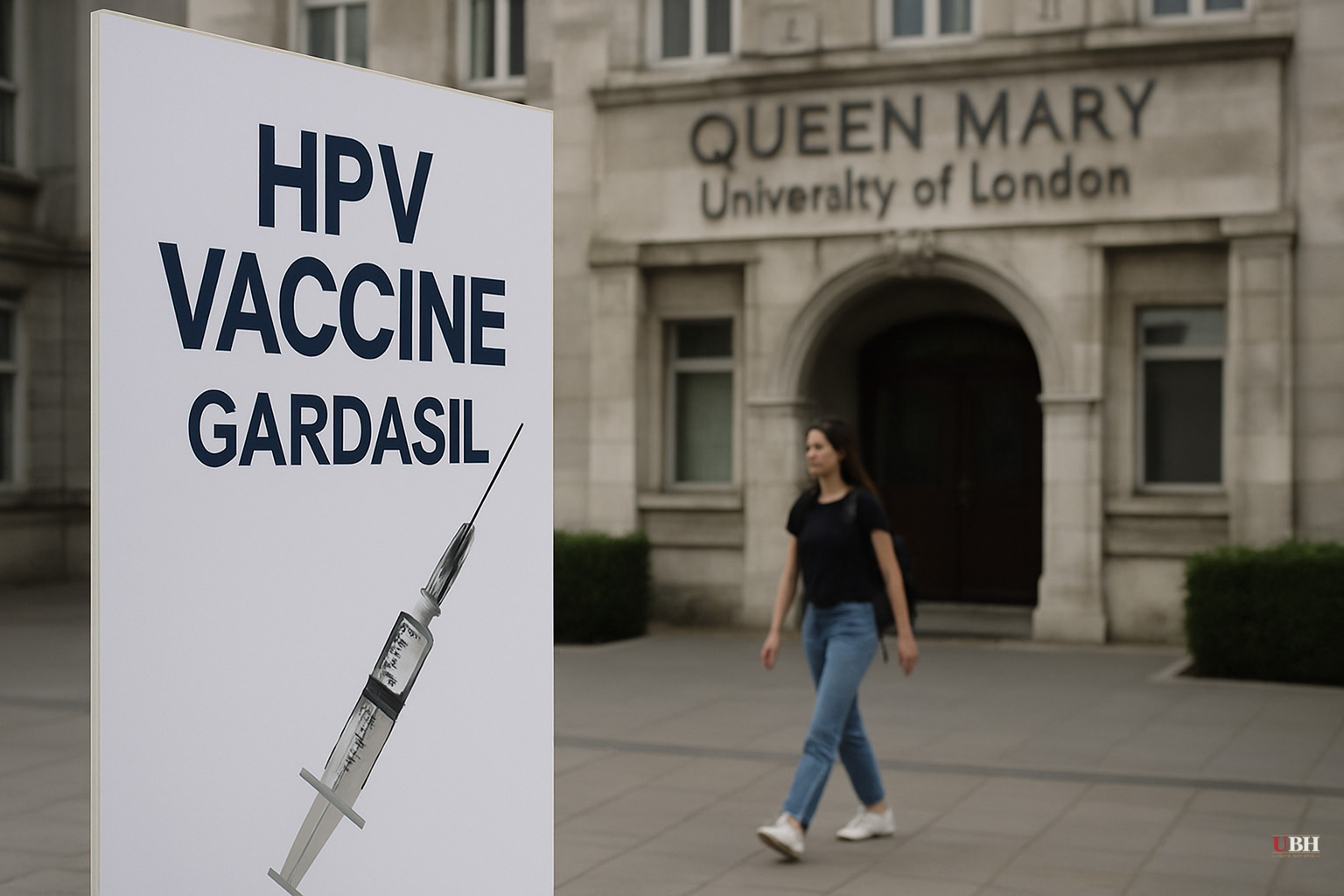
Zero. That is the cervical cancer death count among English women aged 20 to 24 across the entire five-year stretch from 2020 to 2024, according to a study published in The Lancet on June 18, 2026. Without the vaccination program, researchers estimated roughly 23 deaths would have been expected in that age group alone.
The study was led by Prof. Peter Sasieni, professor of cancer epidemiology at Queen Mary University of London, and funded by Cancer Research UK. It is the first research to quantify how many lives the HPV vaccine has saved, not just how many cancers it has prevented.
"We estimate that since its introduction, HPV vaccination has prevented nearly 200 young women from dying from cervical cancer in England," Sasieni said, as quoted by The Guardian.
What the Vaccine Actually Does
Human papillomavirus causes 99% of cervical cancer cases, according to both the World Health Organization and the study's authors. The UK's vaccination program began offering the jab to girls in 2008, with boys added in 2019. The vaccine works by priming the immune system against high-risk HPV strains before exposure, according to Cancer Research UK, which spent 25 years helping establish the HPV-cervical cancer link before the vaccine existed.
The Lancet study found that for vaccinated women now aged 30 to 34, the relative risk of dying from cervical cancer is 63% lower than for unvaccinated women in that bracket. For the 20-to-24 cohort, where roughly nine in ten received the jab at ages 12 or 13, the risk has collapsed to near zero. From 2015 to 2019, the previous five-year window, there had already been an 80% reduction in deaths among that younger group, according to The Independent.
Still a Real Disease
The numbers should not obscure the ongoing burden. Cervical cancer is still the 14th most common cancer among females in the UK, with approximately 3,300 diagnoses per year in England, according to the BBC. The vaccine does not protect against all HPV strains, which means screening programs remain critical for catching cases the vaccine misses and for older women who were never vaccinated.
The Legitimate Concern: Vaccination Rates Are Dropping
The good news runs into a real problem. The WHO target is 90% of girls vaccinated by age 15. England is not hitting it. According to The Independent, in 2024 to 2025, only 71.7% of girls completed vaccination in Year 8, and only 75.5% by Year 10. Boys lagged further behind at 67% and 70.5%, respectively. Both figures were below the prior year.
London posted the worst numbers in the country: 62.6% for girls and 57.7% for boys, according to The Independent.
Cancer Research UK chief executive Michelle Mitchell put it plainly: around one in four young people is currently leaving school unprotected. The organization called the vaccination achievement a significant milestone while warning that the gains are not locked in.
The cause of the decline is traceable. Vaccination rates were close to the WHO target before the COVID-19 pandemic disrupted school-based delivery. They have not recovered to pre-pandemic levels, according to The Guardian.
The Strongest Counterpoint
Skeptics of vaccine mandates and aggressive government health campaigns raise a fair concern here: achieving 90% coverage through school-based programs involves institutional pressure on minors, without their parents always fully engaged in the decision. That is a legitimate parental-rights question, and it deserves a straight answer. NHS Director of Vaccination Caroline Temmink described the HPV vaccine as "safe and effective," and the sources describe it as central to the NHS ambition to eliminate cervical cancer by 2040. The tradeoff being asked of parents is a routine injection for a 12-year-old versus a measurable, documented risk of a preventable cancer death in adulthood. The data now shows concretely what that calculation produces. Reasonable people can still debate school-based delivery mechanics without dismissing the underlying evidence.
What Comes Next
The study's authors expect cervical cancer deaths to keep falling as the vaccinated cohort ages through their 30s and 40s, where cervical cancer incidence is historically higher. But that trajectory depends on keeping vaccination rates up. Sasieni warned that without swift action to increase vaccine uptake, "there could be another 15-25 avoidable deaths each year in young women and eventually about 200 deaths from cervical cancer each year that could be prevented if we can increase vaccine uptake to pre-Covid levels."
The unresolved question for health policymakers is what specifically caused the post-pandemic drop in uptake and which intervention—catch-up campaigns, GP outreach, school program restoration—will recover the lost ground fastest. The Department of Health and Social Care cited rolling out catch-up HPV vaccination campaigns via community pharmacies and making it easier to access cervical screening as steps underway, though the sources note that vaccination rates remain well below the WHO target as of June 18, 2026.
Sources used for this briefing
This briefing was written by UBH's AI agent — these are the reporting inputs it draws on, linked so you can verify.


