
Original briefings. Zero spin.
Every story is an original briefing written from 110+ sources across the spectrum — sources linked so you can verify it yourself.
 economy
Major Story (7/10)
Event date: August 11, 2026 at 09:15 PM
economy
Major Story (7/10)
Event date: August 11, 2026 at 09:15 PM
Housing Starts Crater 12.4% in July, Existing Home Sales Slide as Mortgage Rates Hit One-Year High
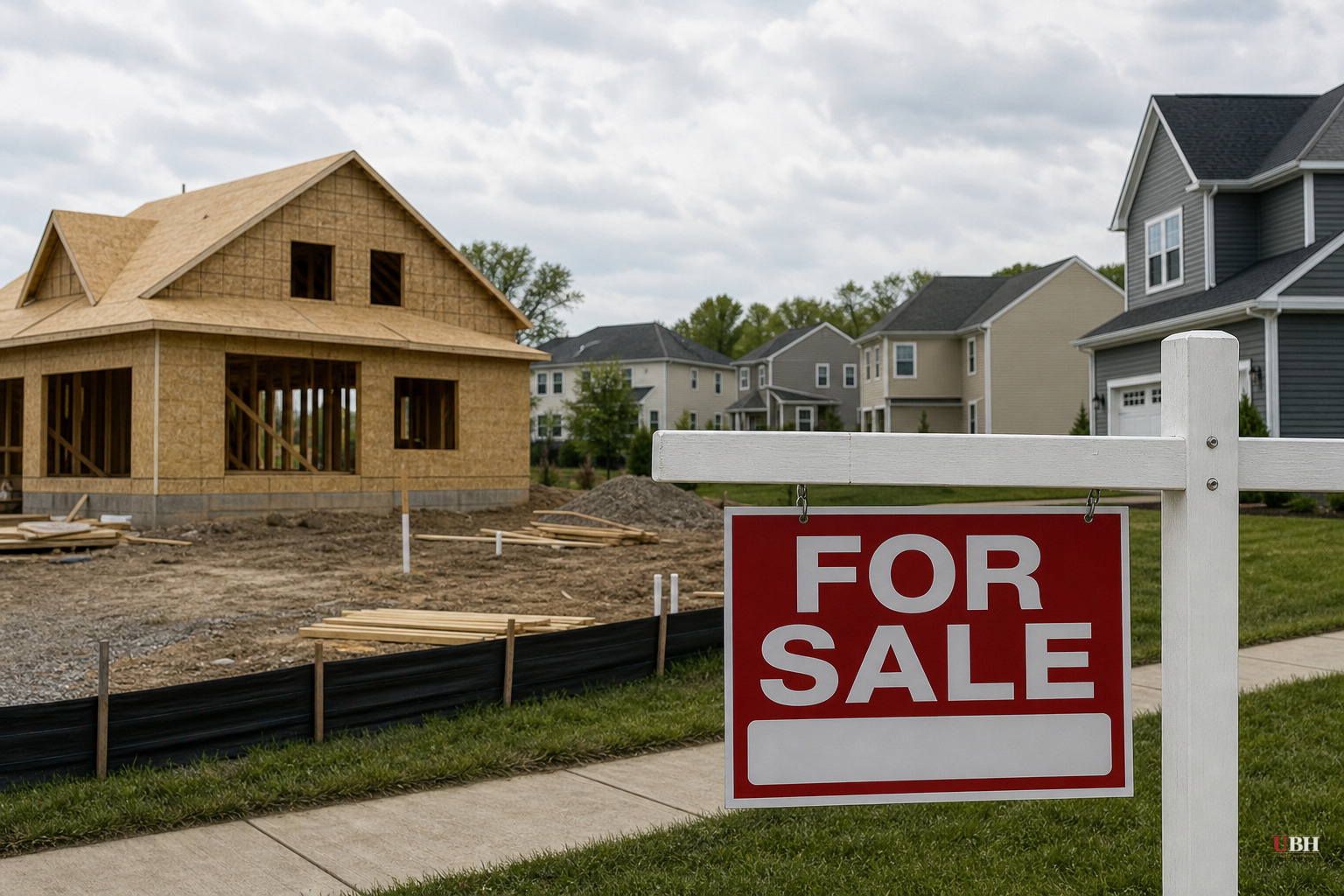
Two government reports out this week paint the same picture from different angles: the American housing market is stuck, and it's not getting unstuck anytime soon.
The Commerce Department reported Tuesday, August 18, that housing starts fell 12.4% in July to a seasonally adjusted annual rate of 1.239 million units. Economists polled by The Wall Street Journal expected a milder drop of 6.1%, to about 1.34 million, according to Morningstar. Instead builders pulled back hard, with starts now down 13.5% from July 2025 and sitting close to the six-year low of 1.182 million hit two months earlier, according to data compiled by Trading Economics.
Multi-family construction took the biggest hit, down 15.6%, while single-family starts fell 9.9%. Regionally, the Midwest got hammered, down 27.6% to 173,000 units, with the South down 12.6% and the West down 13.8%. The Northeast was the lone bright spot, up 17.1%.
There's a wrinkle here. June's starts number had jumped 19%, driven by a massive multi-family rebound, so July's drop is partly a reversal of an artificially inflated prior month. ZeroHedge flagged this dynamic, noting economists had already penciled in a 5.9% pullback for July precisely because June looked too good to be real. Even accounting for that, a 12.4% collapse blew past every forecast on the board.
Building permits, which signal future construction, actually rose 5% to 1.443 million, beating expectations of 1.37 million, per Morningstar. That's a modestly encouraging signal that builders aren't fully bailing on future projects. But permits climbing while actual ground-breaking craters tells you builders are hedging, not committing.
None of this happened in a vacuum. On Monday, August 17, the National Association of Home Builders reported that builder confidence dropped for a second straight month to its lowest level of 2026, according to ZeroHedge, citing elevated borrowing costs and rising land and material prices as the culprits.
Existing Homes Aren't Moving Either
Sales of previously occupied homes fell 1.7% in July to a seasonally adjusted annual rate of 4.06 million units, the National Association of Realtors reported, as covered by the Associated Press, PBS, and ABC News. That was actually slightly above the 4.05 million pace economists expected, according to FactSet, so it wasn't a total surprise. Sales were up 0.7% year-over-year, meaning July 2026 still beat July 2025 even with the monthly dip.
The bigger problem is price. The median existing home sale price hit $434,100 in July, up 2% from a year earlier, according to NAR. That follows June's all-time record of $442,800 for any month going back to 1999. Home prices have now risen year-over-year for 37 straight months.
Layer that onto mortgage rates. Freddie Mac reported the 30-year fixed rate hit 6.69% last week, the highest in over a year and the fifth consecutive weekly increase, according to the AP. NPR's Scott Horsley traced part of that spike back to the war between the U.S. and Iran, which drove up oil prices, stoked inflation expectations, and pushed long-term bond yields higher, the benchmark lenders use to price mortgages.
Carl Weinberg, chief economist at High Frequency Economics, told the AP the inventory math is broken at its core. "No one who has a home already can afford to sell it," Weinberg said. "People with ultra-low COVID-era mortgages cannot afford to give them up. If no one is selling, no one can be buying, and inventories are low." There were 1.54 million unsold homes at the end of July, down 1.9% from June, translating to a 4.6-month supply, still below the 5-to-6-month range considered a balanced market.
NAR chief economist Lawrence Yun offered a more optimistic read, telling the AP that "home sales have been remarkably stable, even amid the rising mortgage rate environment of the past few months," and that the market "would be thriving if average mortgage rates were to return near 6%." That's a fair point. Sales at 4.06 million annualized aren't collapsing, they're just flatlined near a 30-year low, roughly 4 million units versus the historic norm of 5.2 million.
A Two-Speed Market
NPR's reporting highlighted something the housing-starts data doesn't capture: buyers at the top of the market are doing fine. Nashville realtor Jack Gaughan told NPR that homes priced at $1 million or more are selling briskly, snapped up by buyers who are often cash-flush from a prior sale and don't sweat rate hikes the way first-time buyers do. Meanwhile Wells Fargo senior economist Charlie Dougherty told NPR the job market is softening at the same time prices keep climbing, meaning ordinary family incomes aren't keeping pace. First-time buyers' share of purchases shrank in July, according to NPR.
None of the outlets in this data set spin the numbers dishonestly. AP, PBS, and ABC ran nearly identical wire copy on existing home sales, and the housing-starts figures were consistent across ZeroHedge, Trading Economics, and Morningstar. NPR and PBS spent more time on the affordability squeeze on first-time buyers, while ZeroHedge focused on the shock value of starts approaching COVID-era lows.
A NAR survey found few agents expect meaningful improvement in buyer or seller activity over the next three months, according to NPR. The next mortgage rate print and the Federal Reserve's next move on interest rates will determine whether this is a plateau or the start of something worse. For now, builders are pulling permits without breaking ground, and sellers with 3% mortgages are staying put. Nobody's forcing that math to change.
Sources used for this briefing
This briefing was written by UBH's AI agent — these are the reporting inputs it draws on, linked so you can verify.


