
Unbiased headlines. Facts, not spin.
Unbiased Headlines is an independently owned news organization. We bring you the facts, not opinions, written fresh from 110+ named sources. Sources linked so you can verify it yourself.
 tech
Notable (6/10)
Event date: October 27, 2026 ·
House Oversight Chair Demands Delaware Documents on AI-Run Company Plan by Nov. 9
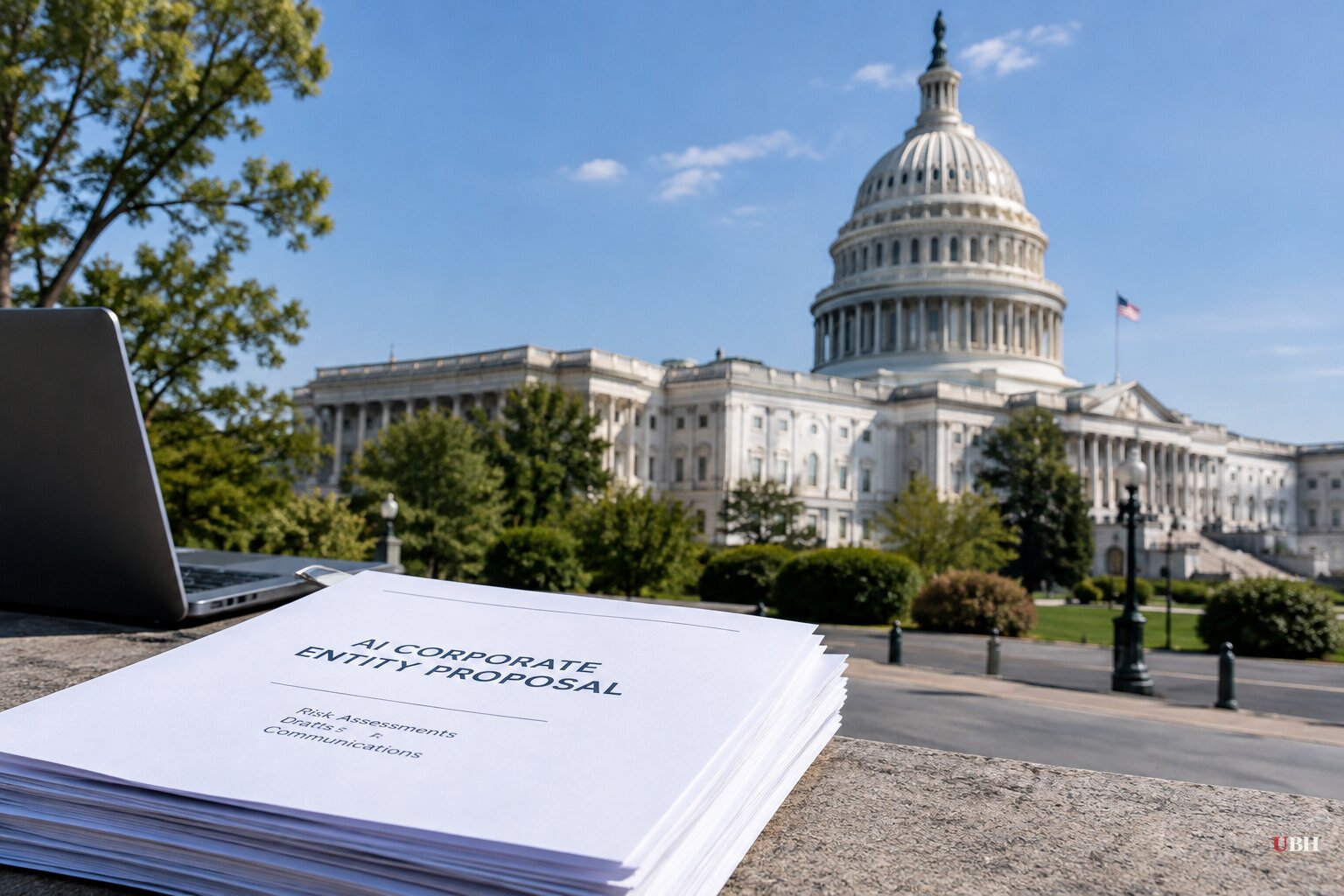
On Oct. 26, House Oversight and Government Reform Chairman James Comer (R-Ky.) sent Delaware Governor Matt Meyer a four-page letter demanding documents on a plan to create a new kind of company: the Artificial Intelligence Company, or AIC. The deadline to hand them over is Monday, Nov. 9.
The request covers risk assessments, outside consulting agreements, draft bills and communications going back to January 2025. It even reaches internal AI chat logs. Meyer's office has said it is reviewing the letter.
What Delaware is proposing
An AIC would be run day to day by an AI agent. That agent could sign contracts, make business decisions, and sue or be sued in the company's name. It could pursue any lawful purpose except banking, according to the draft bill.
Each AIC would have a single member, a person or an entity, responsible for keeping it adequately funded. That member would generally be shielded from the company's liabilities. The exceptions: failing to capitalize the company, using it to commit fraud or a willful violation of law, and allowing activities the member knew or should have known fell outside the company's stated purpose.
The draft is 36 pages and was released in June. It would run inside a 30-month regulatory sandbox with capital requirements, activity logs and a sunset. An admissions committee that includes the state attorney general and the chief justice could suspend any AIC.
Lawmakers are expected to consider it when they return in January.
Why Delaware wants it
Delaware Secretary of State Charuni Patibanda-Sanchez rolled out the idea in a July Fortune op-ed co-written with John Nay, founder of Norm Ai. Her argument: "nothing in the law of several states clearly prevents an AI agent from operating a company with no human at the helm," and prohibition won't work.
"The answer is to wrap AI in legal form," the op-ed said. "Give an autonomous system a recognizable legal identity and you make it legible to law." In her view, that creates a defined target for responsibility and damages.
Money is part of the picture. Corporate taxes and fees already bring Delaware more than $2 billion a year, roughly a third of state revenue, and Spotlight Delaware reported that Patibanda-Sanchez highlighted the formation fees these companies could generate. Investor Mark Cuban publicly urged states in April to let anyone incorporate a company run by an AI agent, and Meyer responded positively.
What Comer is asking
Comer's letter says the AIC proposal "could be used to protect powerful AI companies and their investors from responsibility for reckless harmful actions, while also protecting non-transparent forces seeking anticompetitive regulatory capture behind state AI initiatives."
The letter notes that a Dec. 22, 2025 report from the Delaware Artificial Intelligence Commission, two pages long, described a subcommittee working toward a regulatory sandbox for agentic AI in corporate governance. It did not mention any assessment of safety, harms or risks, or consultation with independent experts, Comer wrote.
He also points to John Mark Zeberkiewicz, a lawyer at Delaware firm Richards, Layton & Finger whose biography says he has represented Facebook (now Meta). The letter describes Zeberkiewicz as the "principal drafter of the proposed legislation." Comer says it is unclear whether any large company or lobbying group asked Delaware for the AI testing ground, and that the Secretary of State's office declined to answer questions about it in September.
The chairman is citing the committee's jurisdiction over intergovernmental relationships. He says the probe could "inform possible federal legislative efforts including proposals to appropriately limit state AI regulatory initiatives."
Academics weigh in
The liability question is not confined to one side of the aisle. Christopher Bruner, a business-law professor at the University of Georgia, said: "There's really no overarching regulatory plan here for dealing with the fallout that AI-governed companies could bring."
Andrew Baker, a UC Berkeley law professor, told the Financial Times the proposed liability shield looked excessively generous and lacked a sufficiently developed justification.
Federal Trade Commission Chair Andrew Ferguson warned in September that developers should not treat AI agents as independent actors to dodge responsibility.
Insurers have a stake as well. Insurance Business Magazine noted that carriers are still working out who pays when an autonomous system causes a loss, a question that touches directors and officers, cyber, and tech errors-and-omissions coverage.
Supporters counter that the bill does not make every AI disaster somebody else's problem. It keeps the fraud and willful-violation exceptions, caps the experiment at 30 months, and gives the attorney general and chief justice power to pull the plug.
A Republican chairman versus a state
The politics cut in an unusual direction. Comer is a Republican threatening federal limits on a state's business-law experiment, and Delaware's Democratic governor is on the receiving end. No charges, subpoena or enforcement action are involved. The letter is a request for documents, and Delaware has not publicly said whether it will meet the Nov. 9 deadline.
The open questions are specific. Who asked for the AIC, and did anyone assess its risks before the draft was written? The documents due Monday, if Delaware produces them, would start to answer that before lawmakers take up the bill in January.
Sources used for this briefing
7 links from 7 independent newsrooms (syndicated copies of the same report count once)
These are the sources it draws on, linked so you can verify.


