
Unbiased headlines. Facts, not spin.
Unbiased Headlines is an independently owned news organization. We bring you the facts, not opinions, written fresh from 110+ named sources. Sources linked so you can verify it yourself.
 tech
Notable (5/10)
China's Galactic Energy Puts Four Satellites in Orbit With Ceres-2 Rocket Ten Months After Failed Debut
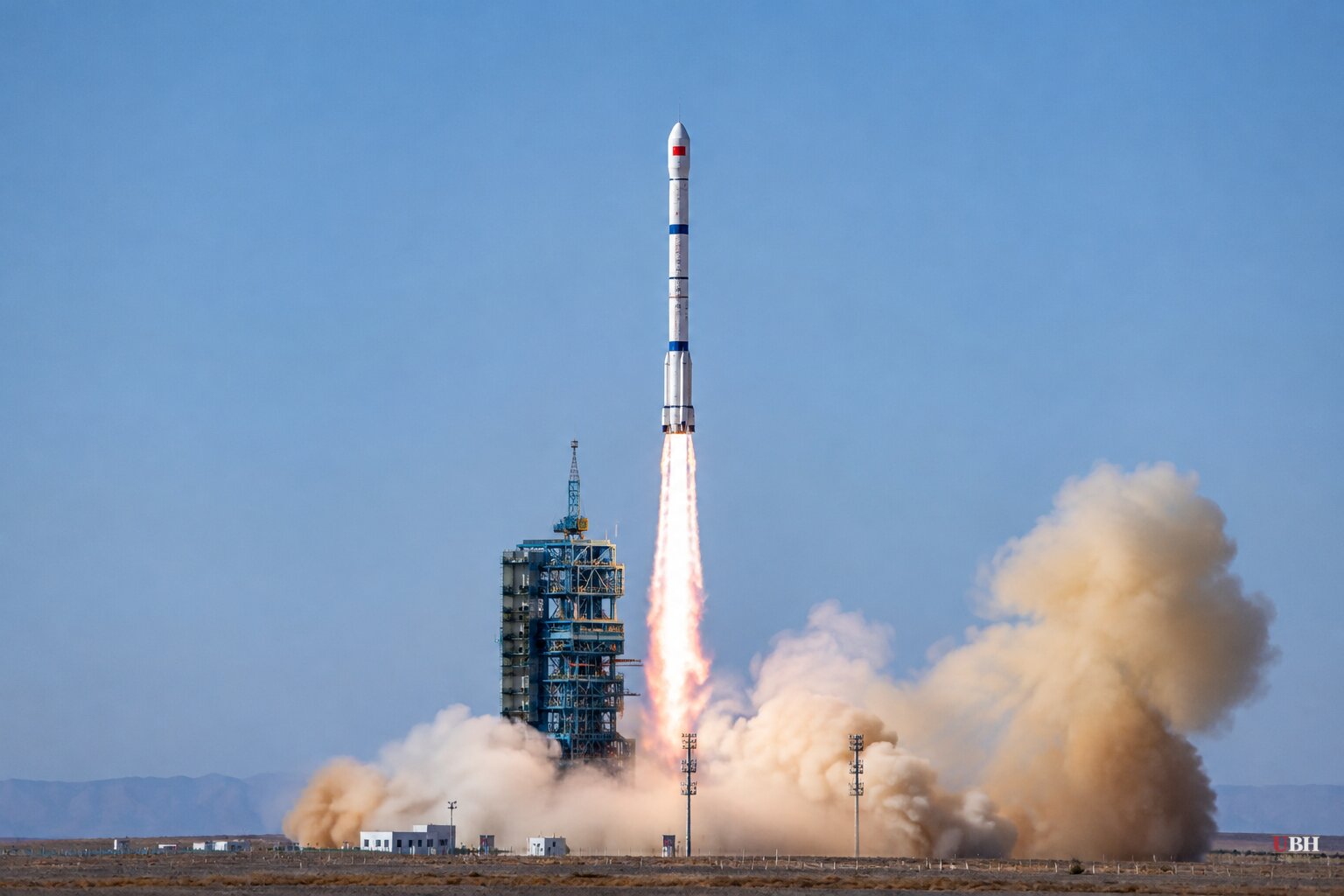
China's commercial rocket maker Galactic Energy launched a Ceres-2 Y3 rocket from the Jiuquan Satellite Launch Center in northwest China on Saturday, Nov. 7, and delivered four satellites to orbit.
Liftoff came at 7:37 a.m. Beijing time. The payloads went into a 535-km sun-synchronous orbit, according to Xinhua, which carried the launch details released by the rocket's development team.
The payloads
The four satellites cover ocean remote sensing, commercial meteorology, university-led scientific research and space situational awareness. Xinhua names them as the Guanlan experimental satellite, Yunyao-1 28, North University of China-1 and Juntian-1 06A.
Space situational awareness means tracking objects in orbit. The sources do not say who operates that particular satellite or what it will track, and the company has not said either.
What the rocket is
Ceres-2 is a medium-lift vehicle built for the commercial launch market. It is an upgrade of the earlier Ceres line, with three solid-fuel stages stacked in series and a liquid upper stage.
Liftoff mass is about 100 tonnes. The rocket can carry 1.3 tonnes to a 500-km sun-synchronous orbit, and it is designed for both land and sea launches.
That sea-launch capability matters for flexibility. A rocket that can fly from a platform at sea is not tied to a handful of fixed pads, and it can be positioned for different orbital inclinations.
A rebound from January
The rocket's debut flight in January failed to reach orbit. Russian state news agency TASS reported that this second mission verified fixes to the upper-stage engine, the electrical systems and the launch equipment.
The rocket development team said Saturday's flight and the precise orbital insertion of all four satellites mark the official entry into service of a new commercial launch vehicle. That is the developer's own assessment of its product, and it is a company milestone, not an independent certification.
The Chinese outlet Jiemian reports that Galactic Energy now counts 24 successful orbital launches and 94 commercial satellites placed in orbit. Those figures come from that report and are not confirmed in the company's launch statement.
What Galactic Energy says it wants
A Galactic Energy representative said the company will keep working to improve the efficiency and reliability of its solid-fuel launch vehicles. The stated goal is to serve China's "multi-tiered launch needs" for small and medium satellite constellation deployment, replenishment, and the build-out of medium-to-large constellations.
Constellations are the business here. Replacing and topping up large numbers of satellites requires frequent, dependable launches, and the company is positioning Ceres-2 as one of the vehicles for that work.
Solid-fuel rockets can be stored ready and launched on short notice. That is a commercial selling point. It is also the reason Washington and its allies watch Chinese launch capacity closely, since the same industrial base supports civil and military space work. Nothing in the launch announcement ties Ceres-2 or these four payloads to a military program, and none of the sources makes that claim.
What comes next
The sources do not give a date for the next Ceres-2 flight, a price per launch, or a customer list beyond the four satellites flown Saturday. Galactic Energy has not published a launch cadence.
One successful flight after a failed debut is a start, not a track record. How many Ceres-2 missions the company can fly in the next year, and whether it flies any from the sea, will show whether this launch was a turning point or a single good day.
Sources used for this briefing
7 links from 7 independent newsrooms (syndicated copies of the same report count once)
These are the sources it draws on, linked so you can verify.


