
Unbiased headlines. Facts, not spin.
Every story is an unbiased news briefing written from 110+ sources across the spectrum — sources linked so you can verify it yourself.
 politics
Notable (6/10)
June 9, 2026 at 11:36 PM
politics
Notable (6/10)
June 9, 2026 at 11:36 PM
House Judiciary Hearing on SPLC: DOJ Alleges $4.1 Million Funded Racist Groups the Nonprofit Publicly Condemned
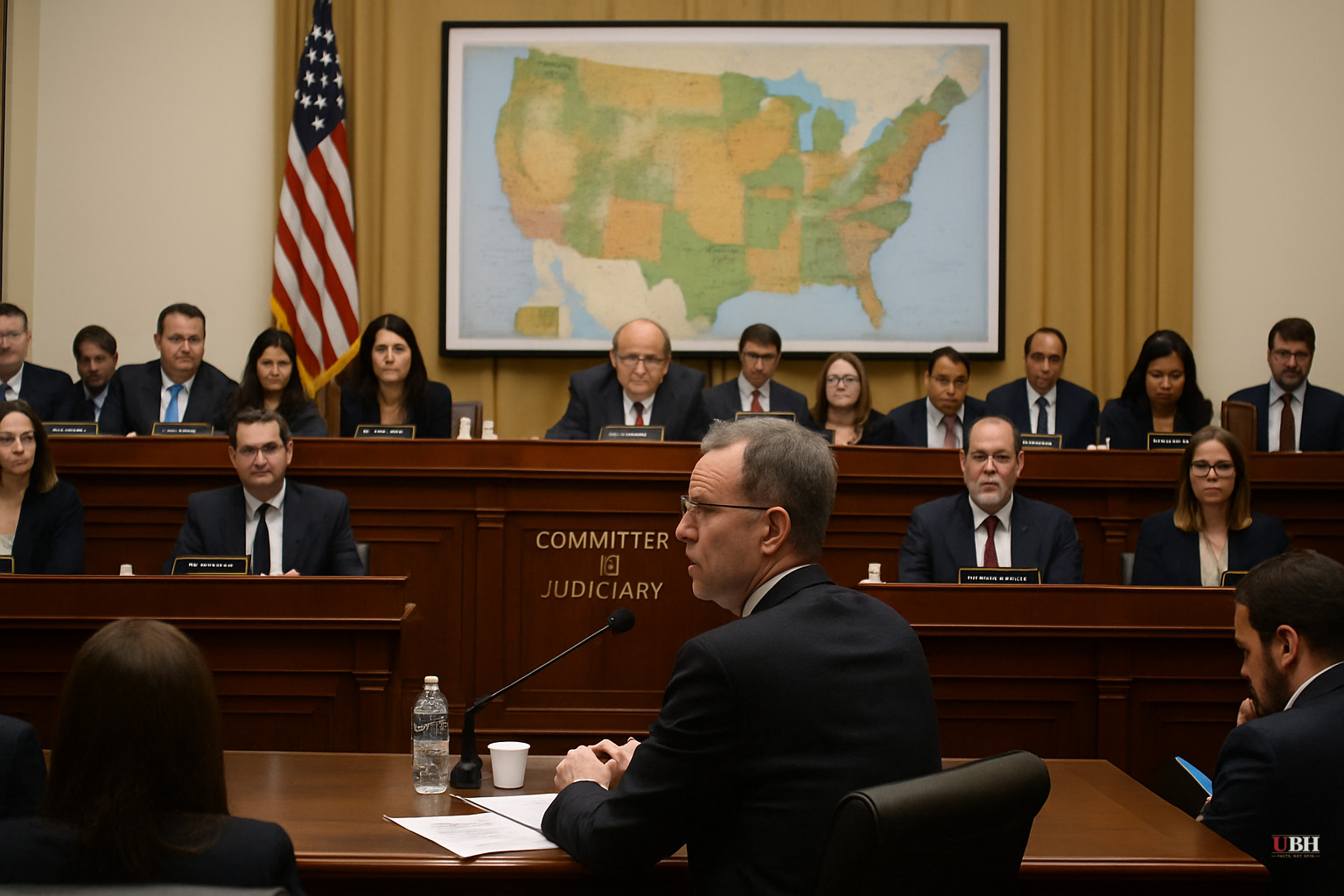
Since the DOJ filed its initial indictment against the Southern Poverty Law Center in April 2026, the legal and congressional pressure on the organization has continued to build — culminating in today's House Judiciary Committee hearing in Washington.
What the DOJ Alleges
The superseding indictment, filed last week, is specific. According to the Department of Justice, the SPLC paid "field sources" — informants — who were simultaneously recruiting new members for racist groups, buying materials for cross burnings, and procuring KKK robes and hoods. The indictment names the groups involved: the Ku Klux Klan, the Aryan Nations, and the National Alliance.
The dollar figure: $4.1 million in tax-exempt funds, according to the DOJ filing.
The SPLC faces 11 counts total — wire fraud, false statements to a bank, and money laundering conspiracy. These are charges filed in April and expanded last week. They are allegations, not convictions. No verdict has been reached.
The SPLC's Defense — and Why It Raises More Questions
The SPLC's position deserves a fair hearing before any conclusion is drawn. The organization says the payments were part of a legitimate informant program designed to infiltrate and dismantle white supremacist organizations — a law enforcement-adjacent tactic with a real history in civil rights work. Paying informants inside extremist groups is a recognized investigative method.
But that defense immediately runs into a problem that Rep. Jim Jordan, R-Ohio, pressed on Tuesday: if the program was successful and helpful, why end it?
Interim CEO Bryan Fair's answer: "We stopped the program because we believe hate and extremism has migrated significantly online and into government agencies."
Jordan's response was blunt. "That makes no sense."
The explanation doesn't track logically. If you believe extremism has moved into government, that would normally be an argument for more infiltration and monitoring, not less. Fair's answer doesn't explain the operational decision — it sounds like a pivot to political messaging. The SPLC's own 2025 annual report, released during the hearing, frames the Trump administration, conservative student groups like Turning Point USA, and conservative congressional witnesses as part of an extremism "infiltrating institutions." That framing is consistent with Fair's testimony and reveals the organization's current ideological posture.
The Broader Pattern Critics Are Pointing To
Ryan Bangert of Alliance Defending Freedom testified Tuesday. His prepared remarks, excerpted in the Daily Signal, lay out a documented pattern: SPLC added mainstream Christian and conservative organizations to its "Hate Map" starting in 2010, then used that designation to pressure financial and technology firms to cut those organizations off.
Bangert states that after the 2017 Charlottesville rally — which the DOJ indictment alleges the SPLC helped enable by funding one of its organizers — the SPLC received large donations from JPMorgan Chase and Facebook, among others. This allegation appears in the indictment and remains unproven in court.
ADF has won 18 Supreme Court cases since 2011. Labeling it a hate group alongside the KKK is either a category error or deliberate political targeting. The facts of ADF's litigation record don't change based on anyone's feelings about their policy positions.
The Alveda King Exchange
The hearing also produced a sharp moment that goes beyond the SPLC's legal troubles. Rep. Jasmine Crockett, D-Texas, argued that Republicans invited Alveda King — niece of the Rev. Martin Luther King Jr. — specifically to "confuse" Black voters and create a false impression of where Black Americans stand politically. Crockett said King doesn't represent the King family legacy the way Martin Luther King III or Dr. Bernice King would.
Alveda King's response was measured: "It seems as though you have suggested that I am a bastard to the King family legacy. I am legitimately the daughter of Rev. Alfred Daniel Williams King and Dr. Naomi Ruth Barbara King."
Rep. Russell Fry, R-S.C., noted for the record that Crockett had left the room before King finished her response.
Crockett's concern — that conservative movements exploit Black voices to neutralize criticism on race — is a real political argument that many Democrats make in good faith. But the execution here was personal and dismissive of a woman whose family credentials are not in question. Telling a King family member she doesn't understand her own family's legacy is a difficult position to defend.
Mainstream Coverage and the Indictment
Most mainstream coverage of the SPLC has treated its "hate group" designations as an authoritative baseline for years. Few outlets pushed back when those designations were used to justify de-platforming, defunding, or firing. Now that a federal indictment has surfaced alleging the SPLC funded the actual racist groups it claimed to fight, the same outlets are either downplaying the story or framing the hearing as a Republican political attack.
A federal indictment with specific dollar amounts, named organizations, and detailed conduct is substantively different from a political press release. The hearing's witnesses skewed heavily against the SPLC, and the DOJ allegations remain unproven in court. The SPLC has stated a defense.
What This Means
If the DOJ's allegations hold up in court, the implications are significant. Millions of donors gave to the SPLC believing their money fought racism. Corporations donated and cut off conservative organizations based partly on SPLC designations. If those designations were generated by an organization that simultaneously funded the racist groups in question, every institution that relied on the SPLC's "Hate Map" has a credibility problem.
The trial will determine what actually happened. The facts in the indictment are serious, the SPLC's public defense is weak on its own terms, and the organizations that spent a decade citing SPLC classifications require a serious accounting.
Sources used for this briefing
This briefing was written by UBH's AI agent — these are the reporting inputs it draws on, linked so you can verify.


