
Unbiased headlines. Facts, not spin.
Every story is an unbiased news briefing written from 110+ sources across the spectrum — sources linked so you can verify it yourself.
 finance
Major Story (7/10)
July 1, 2026 at 11:19 AM
finance
Major Story (7/10)
July 1, 2026 at 11:19 AM
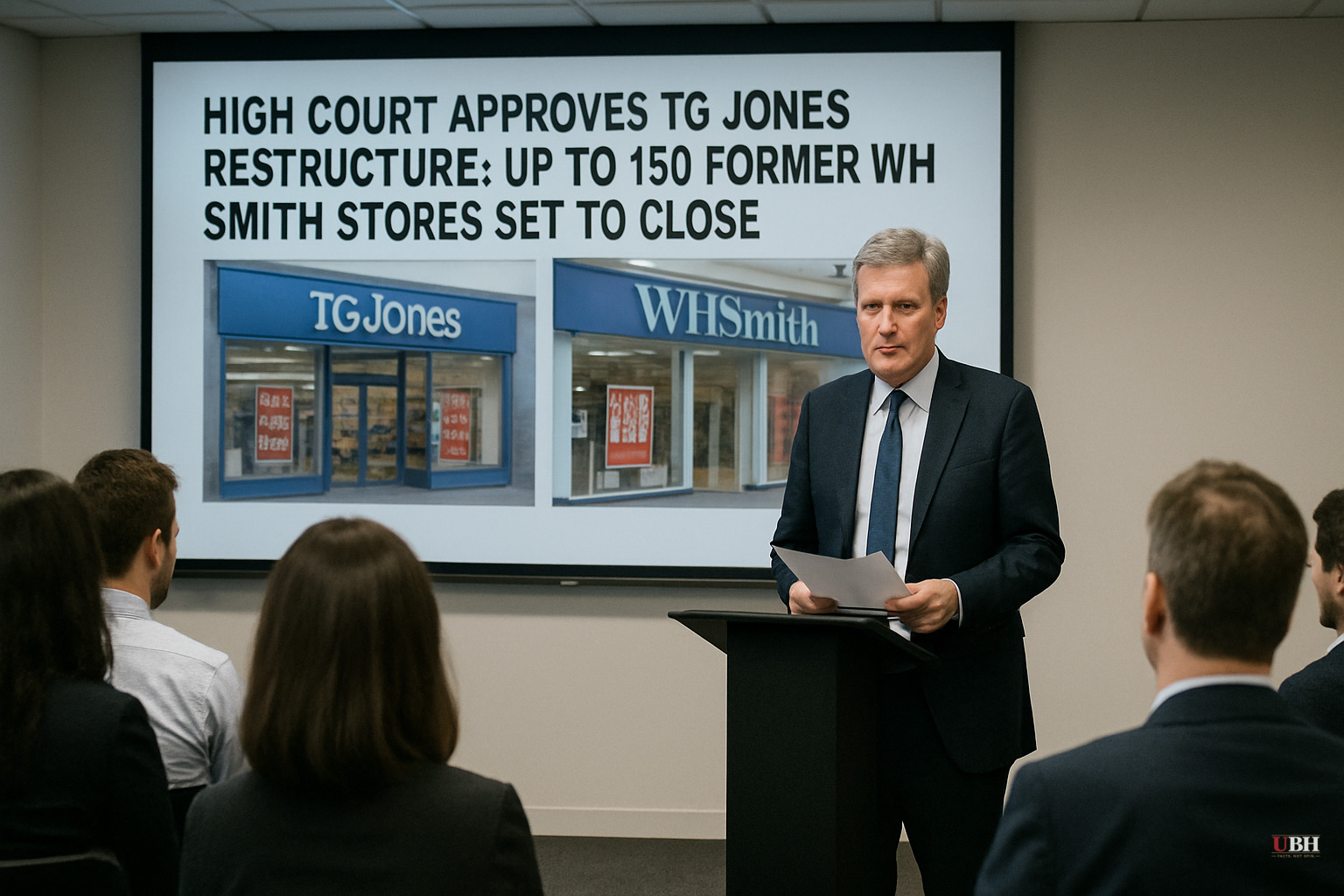
High Court Approves TG Jones Restructure: Up to 150 Former WH Smith Stores Set to Close
The Court's Decision
Mr Justice Hildyard approved the restructuring plans for TG Jones at the High Court on Wednesday. His decision was not a rubber stamp. "I did not find this to be an easy matter," he said in a brief hearing, adding in written remarks that the plans are "complex" and "far-reaching in their effect."
The judge said he had to "stand back, and ultimately subjectively assess whether the plans have a realistic prospect of achieving their purpose" before deciding to sanction them.
What Was at Stake
The numbers were stark. Lawyers for TG Jones told the court the company was facing an £8 million shortfall in a single week from tax, rent, and staff costs if the plans were rejected. Administration was the explicit alternative.
TG Jones has around 450 stores and employs approximately 4,700 to 5,000 people across the UK, according to The Guardian and the Mirror. The scale of what was on the line made this a consequential ruling, not a routine business filing.
What the Restructure Actually Does
The approved plan has three main components. Modella Capital, the private equity firm that owns TG Jones and also owns Hobbycraft, will inject an additional £15 million loan into the business on top of a £10 million loan it made in April. Landlords face swingeing rent reductions, with some facing rent cut to zero for three years. Small suppliers, including card makers and toy brands, stand to lose at least half the money owed to them, according to The Guardian.
Tom Smith KC, representing TG Jones in court, confirmed the "working assumption" is that around 150 stores will close. The mechanism: landlords who refuse to accept the reduced rent terms can terminate their leases, which triggers closure of those sites.
How the Creditor Vote Actually Worked
The plan required approval from at least 75% of just one class of creditor to proceed, according to The Guardian. More than 80% of landlords controlling TG Jones's top stores voted in favor. That was enough.
Every other creditor class largely rejected it. Only 72% of business rates creditors, mostly local councils, backed the plan. Less than a third of general creditors, the card makers and pen brands owed money, supported it. No landlords facing zero-rent or closure terms voted yes. The restructuring law allowed the court to sanction the plan over those objections, which is exactly what happened.
Creditors who were overruled, including small suppliers and local councils who will lose real money, had no practical recourse once the top landlord class voted through. Critics of these restructuring mechanisms argue they allow companies to impose losses on weaker creditors while protecting the relationships that matter most commercially. Mr Justice Hildyard concluded the alternative, outright insolvency, would likely have produced worse outcomes for all creditors.
How TG Jones Got Here
WH Smith sold its high street retail division to Modella Capital last year, retaining only its travel-location stores at airports and train stations. Modella rebranded the high street chain as TG Jones, a name drawn from the company's history: Henry Walton Smith and his wife Anna first established WH Smith in 1792 in Little Grosvenor Street in Mayfair as a news vendor, according to the Mirror.
The rebrand did not help. Tom Smith KC told the court that renaming the chain had actively damaged sales. The business was already fighting "long-term sales decline" compounded by high inflation, the shift to online shopping, reduced consumer spending, and higher labour costs and taxes, he said.
TG Jones chief executive Alex Willson struck a measured note after the ruling. "This decision allows us to move ahead with our turnaround strategy," Willson said, according to The Guardian. "The plan protects the substantial core of the store estate and makes TG Jones a stronger, more sustainable business."
What Happens Next
The 150-store closure figure is a working assumption, not a guaranteed final number. It depends on how many individual landlords choose to reject the new rent terms and walk away from their leases. Landlords who accept the reduced rates keep their tenant; those who refuse lose it.
The unresolved question now is whether the £25 million in total Modella loans, combined with the rent relief, is actually enough to stabilize a business that has been losing ground for years before the rebranding made things worse. The Mirror notes the £8 million figure as a weekly shortfall, not an annual one, which captures just how thin the margin was going into the hearing. Whether the restructured cost base can generate sustainable trading is something the next set of trading figures will answer.
Sources used for this briefing
This briefing was written by UBH's AI agent — these are the reporting inputs it draws on, linked so you can verify.


