
Unbiased headlines. Facts, not spin.
Every story is an unbiased news briefing written from 110+ sources across the spectrum — sources linked so you can verify it yourself.
 health
Major Story (7/10)
July 15, 2026 at 06:04 PM
health
Major Story (7/10)
July 15, 2026 at 06:04 PM
HHS Rolls Out Plan to Curb Antidepressant Overprescribing, Psychiatrists and Democrats Push Back
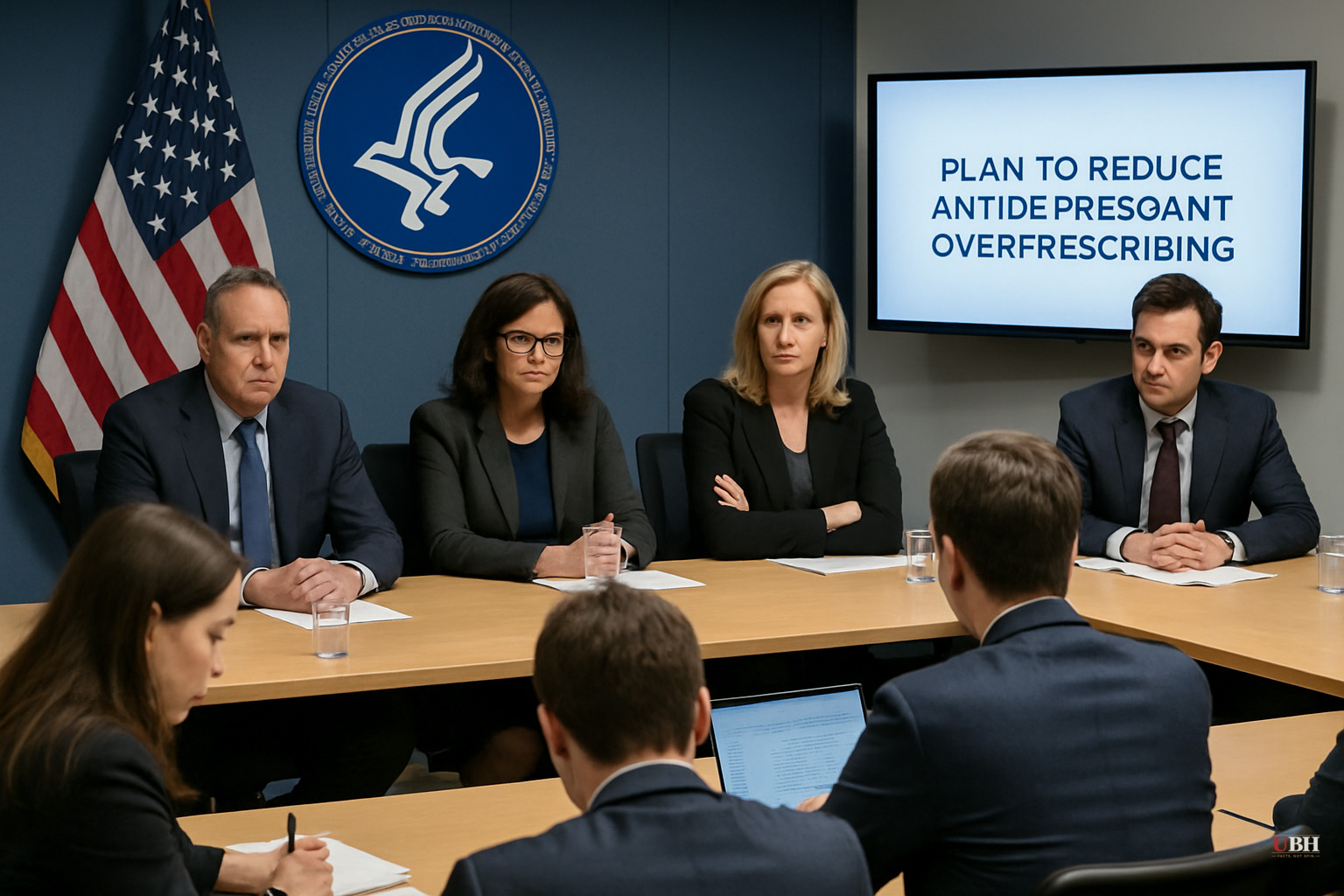
What HHS actually proposed
In May, the Department of Health and Human Services announced a plan targeting what it calls "psychiatric overprescribing," with SSRIs like Prozac, Zoloft, Paxil, and Lexapro as the main target, according to Reason. The stated goals: more informed consent before starting medication, periodic reassessment instead of automatic refills, and supervised tapering for patients who aren't benefiting.
HHS has not announced a ban. It has not told current users to stop their medication. A letter from top HHS officials, reported by The Guardian, calls for expanding access to non-drug treatments like psychotherapy, diet, and physical activity alongside medication reviews, and clarifies that Medicare will pay providers for the clinical work of deprescribing.
Secretary Robert F. Kennedy Jr. laid out the plan at an event hosted by the Make America Healthy Again Institute. "If you are taking psychiatric medication, we are not telling you to stop," Kennedy said, according to The Guardian's account of the event. "We are making sure you, and your clinician, have the information and support to make the right decision for you."
Kennedy's rhetoric goes further than the policy text
The written plan is measured. Kennedy's public comments are not. He has said getting off SSRIs is harder than "getting off heroin," and claimed there is "tremendous circumstantial evidence" the drugs "might be contributing to violence," including mass shootings, according to The Guardian.
That claim is unproven. No source here presents clinical evidence linking SSRIs to mass shootings, and The Guardian explicitly notes Kennedy has made the connection "without evidence." Calley Means, a senior HHS adviser, went further in comments cited by Reason, calling widespread antidepressant use a way for "the medical system to earn recurring revenue without solving the root causes of what is actually making people depressed."
The written HHS plan, taken on its own terms, is close to uncontroversial: better informed consent, periodic review, support for tapering when appropriate. Reason's assessment is that the substance is "eminently reasonable" but warns that in practice "better prescribing" and "less prescribing" get confused, and the political rhetoric around the plan could push it toward restricting access rather than improving clinical care.
Psychiatrists are pushing back, but engaging
At the American Psychiatric Association's annual meeting, held roughly ten days after Kennedy's announcement, CEO Marketa Wills drew applause for declaring, "We will never support governmental interference in the practice of medicine," according to the Philadelphia Inquirer. She added the group is "standing tall for evidence-based care" against "stigma, oversimplification" and anything that pushes patients away from needed treatment.
But the profession isn't refusing to engage. Wills told the Inquirer she was "encouraged" by an invitation for the APA's president to join an HHS panel in July on tapering guidance, calling it "the beginning of a conversation, one that we welcome." Sessions on helping patients taper off medication were part of the conference agenda.
Rank-and-file psychiatrists were blunter. Sung Hyon, a psychiatrist in Pasadena, told the Inquirer that Kennedy "just doesn't like SSRIs," and defended them as "boring drugs that are well established, have good safety evidence, and have zero chance to cause addiction." A 2026 study cited by the Inquirer found 16.6% of U.S. adults, roughly 1 in 6, currently take an antidepressant. A separate 2025 survey across all 50 states found a similar figure and showed a significant share of adults in every state oppose efforts to restrict antidepressant access, according to The Guardian.
Democrats demand answers
On May 19, Reps. Becca Balint of Vermont and Andrea Salinas of Oregon led 14 lawmakers in a letter to Kennedy opposing the deprescribing push. "Secretary Kennedy's attacks on psychiatric medications are dangerous and wrong," Balint said. Salinas argued the decision to stop an SSRI "should be between the patient and their doctor. End of story," and warned HHS risks "confusing patients, undermining trust in public health, and disrupting care."
The lawmakers' letter calls SSRIs "life-sustaining care" for millions and pushes back on Kennedy's framing of antidepressant use as an "overuse" problem, demanding the agency clarify its plans.
Where this leaves things
The strongest case for HHS's approach is straightforward: SSRIs can be hard to discontinue, withdrawal symptoms are real, and prescribing has often meant a script and a refill schedule with little built-in reassessment. Making tapering a billable, structured clinical process rather than an afterthought addresses a genuine gap.
The strongest case against it is also straightforward: the clinical evidence backing SSRIs for depression is well established, the drugs carry low addiction risk compared to what Kennedy's rhetoric implies, and his public statements linking them to violence go well beyond anything the written policy claims or any source here substantiates.
The HHS-convened panel on tapering guidance is scheduled to include APA leadership in July 2026. Whether that guidance stays confined to clinical process, informed consent forms, tapering protocols, billing codes, or expands into something that functions as an access restriction, is the open question neither HHS's press release nor Kennedy's public comments have resolved.
Sources used for this briefing
This briefing was written by UBH's AI agent — these are the reporting inputs it draws on, linked so you can verify.


