
Unbiased headlines. Facts, not spin.
Every story is an unbiased news briefing written from 110+ sources across the spectrum — sources linked so you can verify it yourself.
 health
Notable (6/10)
June 25, 2026 at 06:29 AM
health
Notable (6/10)
June 25, 2026 at 06:29 AM
HHS Closes Hantavirus Response With Zero U.S. Cases. Questions About Unprecedented Quarantine Orders Remain Unanswered.
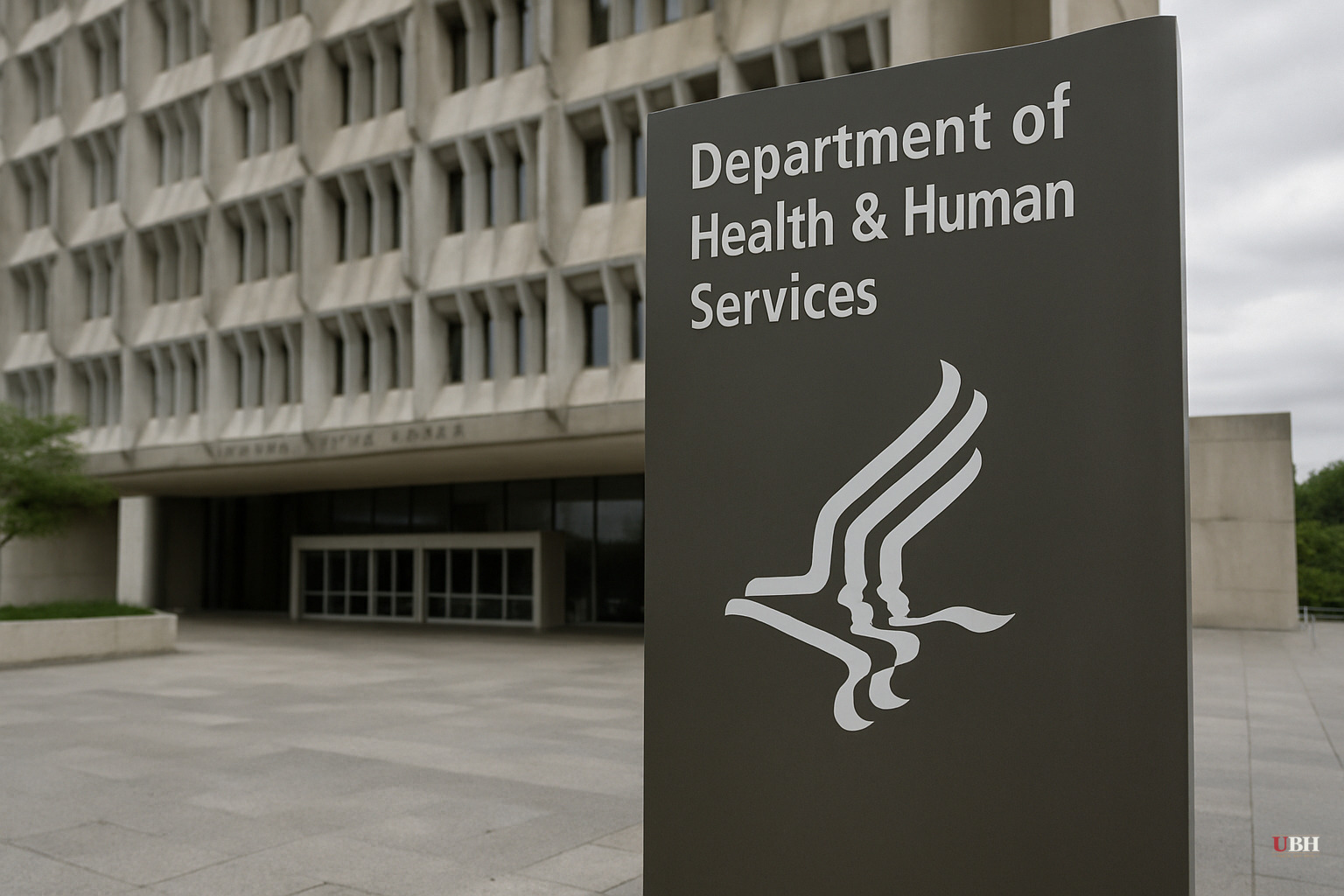
Since the outbreak aboard the Dutch-flagged MV Hondius began in early May, three people died, 13 Andes-strain hantavirus cases were identified on the vessel, and 18 U.S. residents were evacuated and placed under federal quarantine at the University of Nebraska Medical Center's National Quarantine Unit in Omaha. As of June 25, all 18 have been released, and no hantavirus cases were reported on U.S. soil.
HHS issued a press release dated June 23 and publicized it on June 24 declaring the response a "successful conclusion," according to Al Jazeera and confirmed by the Associated Press. Health Secretary Robert F. Kennedy Jr. credited the agency for preventing "sustained transmission of Hantavirus" in the U.S. CDC Director Jay Bhattacharya called it a demonstration of "coordinated response to infectious disease threats that occur outside of our borders."
What Actually Happened
The MV Hondius departed Argentina on April 1. A Dutch couple believed to be the index cases were likely exposed in South America, according to The Guardian. The Andes virus is the only known hantavirus strain capable of human-to-human transmission, but that transmission requires close, prolonged contact, and it occurs only when an infected person is symptomatic, based on documented experience in Argentina and Chile.
Ten of the 18 Americans were released before the 42-day window closed, some to home states whose health authorities agreed to strict CDC-mandated surveillance: twice-daily, in-person fever and symptom checks. The final eight were held at the Nebraska facility until Sunday, June 21.
MV Hondius passengers who returned to the U.S. before the outbreak was identified were not subject to any quarantine requirement once identified, according to Ars Technica. That inconsistency has not been explained publicly.
The Quarantine Orders Were Stricter Than the Science Required
Chile and Argentina, the countries where Andes virus is actually endemic, use remote monitoring with daily symptom and temperature checks for exposed individuals. That approach is consistent with what the World Health Organization recommends and what the CDC's own internal hantavirus expert recommended, according to Ars Technica's reporting.
Kennedy overruled that recommendation. The result: passengers either stayed in strict federal isolation in Nebraska or went home only if their local health authorities agreed to 24/7 surveillance with twice-daily in-person checks. These conditions were more demanding than anything the endemic countries impose.
Passenger Angela Perryman, speaking to the Associated Press on Monday, said she was held against her will and called the quarantine "a political stunt" by Kennedy. She said the final eight were told Sunday around 1:55 p.m. that the quarantine was over and they could leave. She demanded and received a government-funded flight back to Florida that night.
What Health Law Experts Are Saying
Lawrence Gostin, health law professor at Georgetown University Law Center, told The Guardian that detaining someone "for no good reason, no crime and no significant public risk" is "arbitrary, it's capricious and it's unjust." James Hodge, director of the public health law and policy center at Arizona State University's Sandra Day O'Connor College of Law, said officials should never "use unconstitutional, ill-advised, unproven techniques to control infectious diseases."
No legal challenge resulted in a court ruling during the quarantine period, and no federal investigation into the orders has been announced as of June 25.
The Fair Counterargument
There is a credible case for caution. The Andes virus is the only hantavirus with documented human-to-human spread. The outbreak occurred on a vessel, a confined environment. U.S. health authorities were working with limited real-time data early in the response. A more conservative quarantine posture, especially given the Trump administration's stated commitment to preventing a novel pathogen from establishing domestic transmission, is a defensible public health position, even if it proved more restrictive than necessary in hindsight.
HHS spokesperson Emily Hilliard told The Associated Press that the 42-day quarantine "was necessary for the public good," framing it as a precautionary measure that worked. If zero American cases is the metric, it is hard to argue with the outcome.
But no American brought the virus home before quarantine, either. The counterfactual—whether the stricter-than-recommended conditions actually prevented anything that standard monitoring would not have—cannot be proven in either direction. Bhattacharya's claim that the response "prevented any new cases from arising in the U.S." is not falsifiable given no infected American was ever identified.
What Remains Unresolved
The CDC held a brief press briefing after the June 24 announcement, according to Ars Technica, during which officials declined to directly answer questions about the quarantine rationale. HHS has not provided a written explanation for why Kennedy overruled the CDC's own expert.
Ars Technica's coverage is the most substantive on the internal CDC disagreement and the inconsistent application of quarantine rules. The Guardian and Al Jazeera reported the release and the legal criticism but did not detail the internal expert recommendation that was overridden.
The CDC says scientists recently returned from Argentina, where they worked with local officials to investigate the outbreak's origin, including rodent capture and testing in areas along the ship's route, according to Al Jazeera. Those results have not been publicly released. That investigation, not the quarantine dispute, may ultimately be the most consequential part of this response: understanding how the Andes virus reached a cruise ship and infected 13 people is the question that has bearing on future outbreak preparedness.
Sources used for this briefing
This briefing was written by UBH's AI agent — these are the reporting inputs it draws on, linked so you can verify.


