
Unbiased headlines. Facts, not spin.
Every story is an unbiased news briefing written from 110+ sources across the spectrum — sources linked so you can verify it yourself.
 politics
Major Story (7/10)
July 23, 2026 at 10:34 PM
politics
Major Story (7/10)
July 23, 2026 at 10:34 PM
HHS Becomes Third Agency This Year to Kill Disparate-Impact Rules Under Title VI
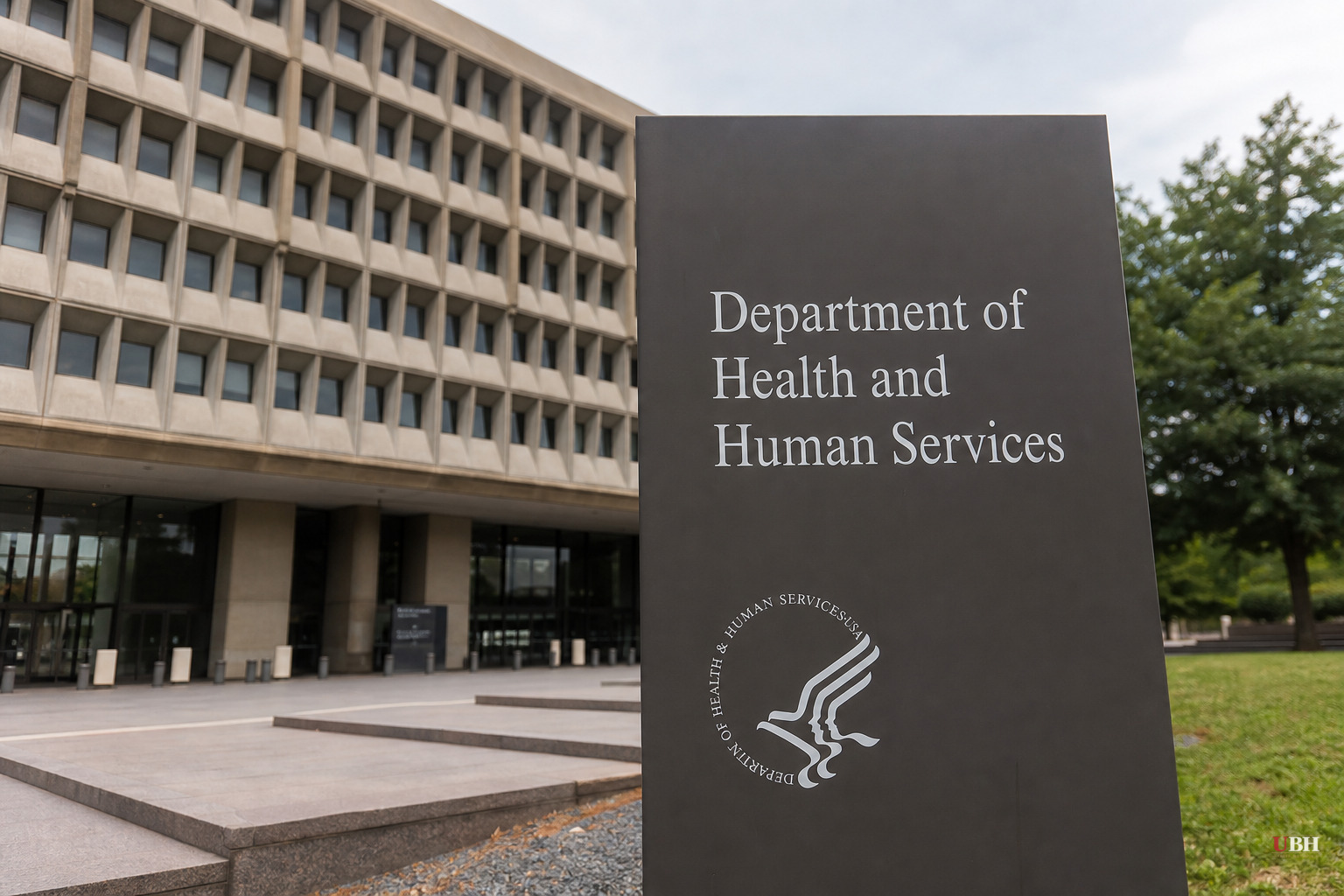
Since the Department of Justice rewrote its own Title VI regulations on December 10, 2025, three more federal agencies have followed the same script. HHS finalized its version Thursday. DHS published its rule June 22. The Department of Education rescinded its disparate-impact provisions around the same window. All four now require proof of intentional discrimination before pulling federal funding over civil rights complaints.
The HHS Office for Civil Rights announced its final rule Thursday, updating regulations that implement Title VI of the Civil Rights Act of 1964. According to HHS.gov, the rule ends what the department calls effects-based liability, meaning statistical racial disparities alone can no longer trigger civil rights enforcement against hospitals, universities, or state agencies that receive HHS funding.
"HHS will not pressure doctors, hospitals, universities, or state agencies to sort people by race to satisfy a statistic," said Paula M. Stannard, director of HHS OCR, in the agency's statement. "This rule restores common sense and true equality to Title VI enforcement."
HHS says it isn't walking away from civil rights enforcement entirely. The agency will keep investigating complaints, conducting compliance reviews, and taking action against intentional discrimination based on race, color, or national origin. Statistical disparities will still be considered as evidence, according to HHS, just not as standalone proof.
What Disparate Impact Actually Did
Disparate-impact liability let the government find a Title VI violation based on demographic outcomes alone, even when no policy explicitly mentioned race and no discriminatory intent existed. The Department of Education's announcement lays out a concrete example: schools were found in violation of Title VI for applying race-neutral discipline policies evenly, simply because the resulting numbers showed more minority students were disciplined.
Assistant Secretary for Civil Rights Kimberly Richey said the change means "teachers retain control over their classrooms across America" without fear that even-handed discipline decisions will trigger a federal civil rights investigation based on statistics alone.
The legal basis for all these changes traces back to Executive Order 14281, "Restoring Equality of Opportunity and Meritocracy," which Trump signed in April 2025. That order made it official U.S. policy to eliminate disparate-impact liability across the federal government, not just in one agency.
The Money at Stake
The dollar figures are largest at DHS. Newsweek reported that DHS issued roughly 274,000 awards totaling about $140 billion between fiscal years 2022 and 2024, with FEMA alone overseeing $43.1 billion in fiscal year 2024 across disaster assistance, hazard mitigation, and fire safety grants. Under the DHS rule signed by Secretary Markwayne Mullin, none of that funding can now be challenged on disparate-impact grounds, only on proof of intentional discrimination.
DHS also deleted long-standing affirmative action provisions from its grant frameworks entirely, according to Newsweek's reporting on the rule text.
The Case Against It
Civil rights advocates argue this guts a real enforcement tool. Stacey Young, founder of the advocacy group Justice Connection, told TheWellNews that requiring plaintiffs to prove discriminatory intent in every case "is contrary to Supreme Court law, and will lead to a sharp increase in unchecked discrimination."
That's a fair concern to take seriously. Intent is hard to prove. A hospital or school district that discriminates quietly, through policies that look neutral on paper but consistently produce lopsided outcomes, could escape accountability if plaintiffs can never point to the numbers as evidence on their own. Critics are effectively asking: if the effects of a policy are severe and lasting, why should the burden fall entirely on proving what was in someone's head?
The administration's counter, laid out across the HHS, ED, and DHS announcements, is that disparate-impact enforcement itself became the discriminatory tool. Deputy Attorney General Todd Blanche said in a statement cited by Newsweek that "EEOC's disparate impact liability interpretation under Title VII actually fosters the very discrimination its guidelines seek to address." The Department of Education went further, arguing the Obama administration "weaponized" the doctrine to force schools into race-based decision-making on discipline, effectively making race a required factor rather than an irrelevant one.
Both arguments can't fully be true at once. Neither side offers hard data in these releases quantifying how many cases were resolved under disparate-impact standards versus intent-based standards historically, or how enforcement outcomes will actually shift.
HHS also used the same rulemaking to quietly kill Appendix B to 45 C.F.R. Part 80, a set of 1979 vocational education guidelines from the old Department of Health, Education, and Welfare that the agency says hasn't been used as an active compliance framework since 1980. It's a minor housekeeping move, but it fits the broader pattern. This administration is not just changing enforcement standards, it's stripping the regulatory code of anything tied to the old effects-based framework.
The next agency to watch is the Equal Employment Opportunity Commission, given Blanche's public comments about disparate-impact liability under Title VII. No formal EEOC rulemaking has been announced as of this writing.
Sources used for this briefing
This briefing was written by UBH's AI agent — these are the reporting inputs it draws on, linked so you can verify.


