
Unbiased headlines. Facts, not spin.
Every story is an unbiased news briefing written from 110+ sources across the spectrum — sources linked so you can verify it yourself.
 finance
Major Story (7/10)
June 25, 2026 at 05:56 PM
finance
Major Story (7/10)
June 25, 2026 at 05:56 PM
Hertz Shares Down Nearly 50% in Two Days After Used-Car Warning and Dilutive Debt Deal
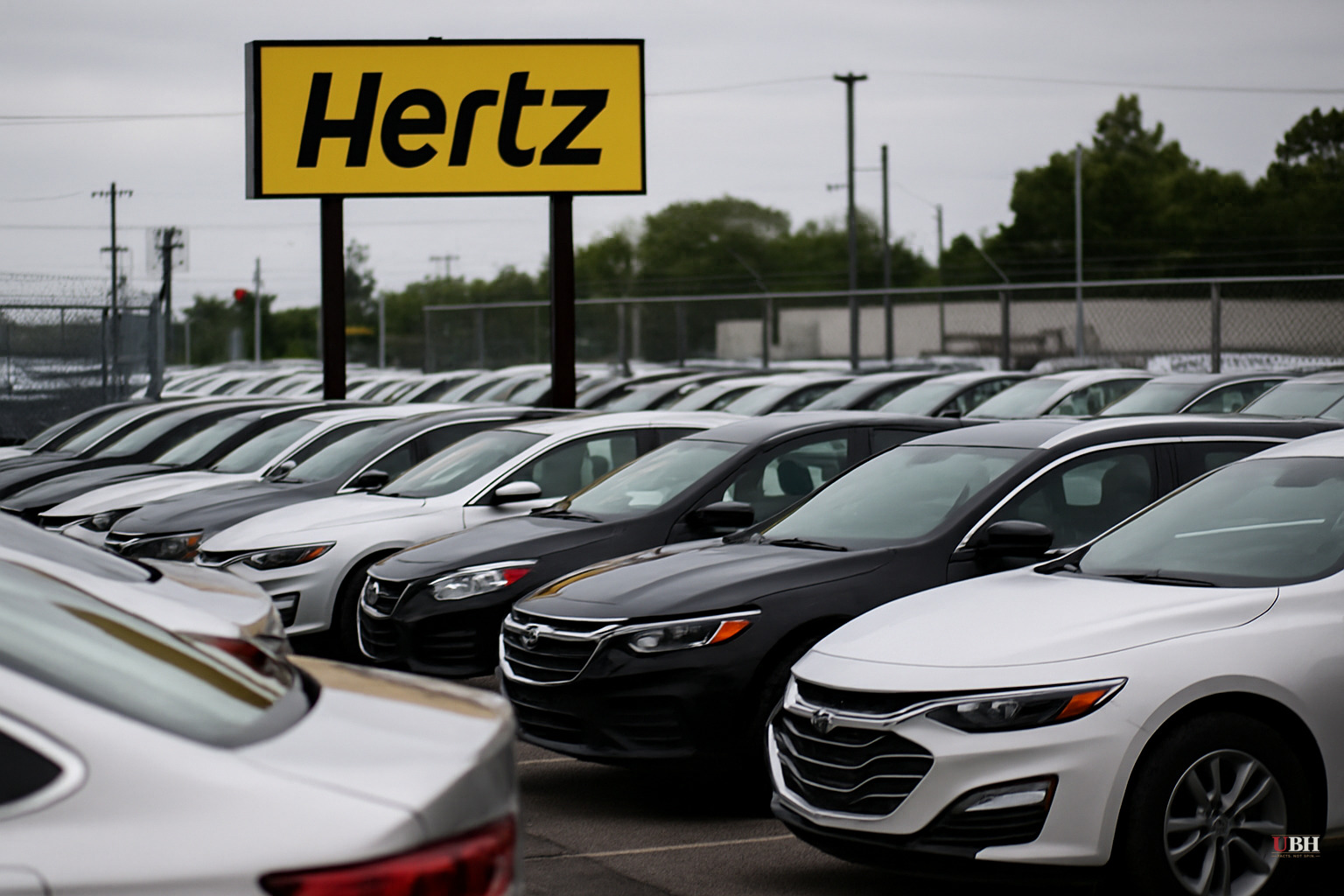
The Profit Warning
Hertz filed a preliminary disclosure with the SEC on June 24 cutting its second-quarter Adjusted Corporate EBITDA outlook to a range of $50 million to $80 million. The culprit: the used-car market.
Vehicle sales in May 2026 turned from a gain to a loss, reversing gains made in April. According to Yahoo Finance, Hertz now expects net depreciation per unit per month for Q2 to hit approximately $300. That number matters because selling off fleet vehicles at a loss is the opposite of how the recycling model is supposed to work. Every car that exits at a markdown bleeds cash directly from the bottom line.
The company was careful to note that overall demand held up. Fleet size, rental days, revenue per day, and capacity utilization all met or slightly exceeded prior expectations, and year-over-year revenue per day growth accelerated above the Q1 trend. The problem was not people renting cars. The problem was what happens when those cars age out and hit the wholesale market at depressed prices.
The Capital Raise
On the same day as the profit warning, Hertz announced two concurrent offerings totaling $400 million.
The larger piece is a $300 million offering of Exchangeable Senior First-Lien Secured PIK notes due 2030, with an option to expand by $45 million. These are payment-in-kind notes, meaning Hertz can pay interest in more debt rather than cash. The notes are exchangeable into cash, Hertz common stock, or a combination, at Hertz Corporation's election. Proceeds are earmarked for general corporate purposes, which the company said may include repaying existing debt, according to Yahoo Finance.
The second piece is a $100 million common-stock offering with an unusual structure. Hertz loans shares to J.P. Morgan Securities LLC, which sells them short to hedge buyer positions in the convertible notes. Hertz collects only a nominal lending fee and receives none of the $100 million in proceeds.
Transport Topics reported why the structure is so convoluted: much of Hertz's existing stock is concentrated in institutional and private equity hands, the float is already heavily shorted, and there is limited stock available to borrow. The company is essentially manufacturing borrow supply to make the convertible deal workable.
Matt Maley, chief market strategist at Miller Tabak + Co., called it plainly: "At this price, the offering will be over 25 million shares, which is 21% of their float. That will make this offering significantly dilutive."
Mark Hackett, chief market strategist at Nationwide, framed the broader picture to Transport Topics: "It is a sign that they see the need to do something drastic. This has been a fragile story for some time, and today may signal capitulation of those that had been holding on."
The Stock
HTZ closed at $5.06 on June 23. By the end of June 24, it was at $3.00, according to StocksToTrade. As of June 25, it had slid further to around $2.71, a roughly 46% decline in two trading days.
Transport Topics noted it was the steepest single-day plunge since Hertz's 2021 IPO. The intraday tape on June 25, per StocksToTrade, showed attempted bounces near $2.94 that were repeatedly sold back down, a pattern consistent with sellers absorbing every uptick.
The Bull Case
Hertz's own filing shows rental demand is healthy, utilization beat expectations, and revenue per day is accelerating year over year. The capital raise, however dilutive, does give the company runway to service debt and avoid a liquidity crisis. The PIK structure reduces near-term cash interest burden. If the used-car market stabilizes, the depreciation drag eases automatically.
StocksToTrade also noted Hertz generated roughly $8.50 billion in trailing revenue with a 41.6% gross margin. That is not a company with no business. It is a company with a capital structure that does not tolerate margin compression well.
Hertz carries approximately $20.6 billion in long-term debt against thin equity, posted a net loss of $333 million and an EBITDA loss of $259 million in Q1 2026, and just added more senior secured debt on top. The PIK feature means interest accrues whether cash is available or not, compounding the debt load over time. More secured creditors ahead of equity is not good news for shareholders.
The Open Question
Hertz has a revolver credit facility with a portion expiring this month, according to Transport Topics. The notes offering is specifically structured to give the company room to issue first-lien debt against that facility. Whether the $300 million private placement closes on terms Hertz can live with, and at what exchange price the notes ultimately convert, will determine how much additional dilution equity holders actually face. That pricing has not been disclosed publicly as of June 25.
Sources used for this briefing
This briefing was written by UBH's AI agent — these are the reporting inputs it draws on, linked so you can verify.


