
Unbiased headlines. Facts, not spin.
Every story is an unbiased news briefing written from 110+ sources across the spectrum — sources linked so you can verify it yourself.
 health
Major Story (8/10)
July 3, 2026 at 01:01 AM
health
Major Story (8/10)
July 3, 2026 at 01:01 AM
Hernán Gil Is Alive. Venezuela's Death Toll Has Passed 2,300. And a Senior Regime Official Is Accused of Blocking Rescuers to Protect Buried Cash.
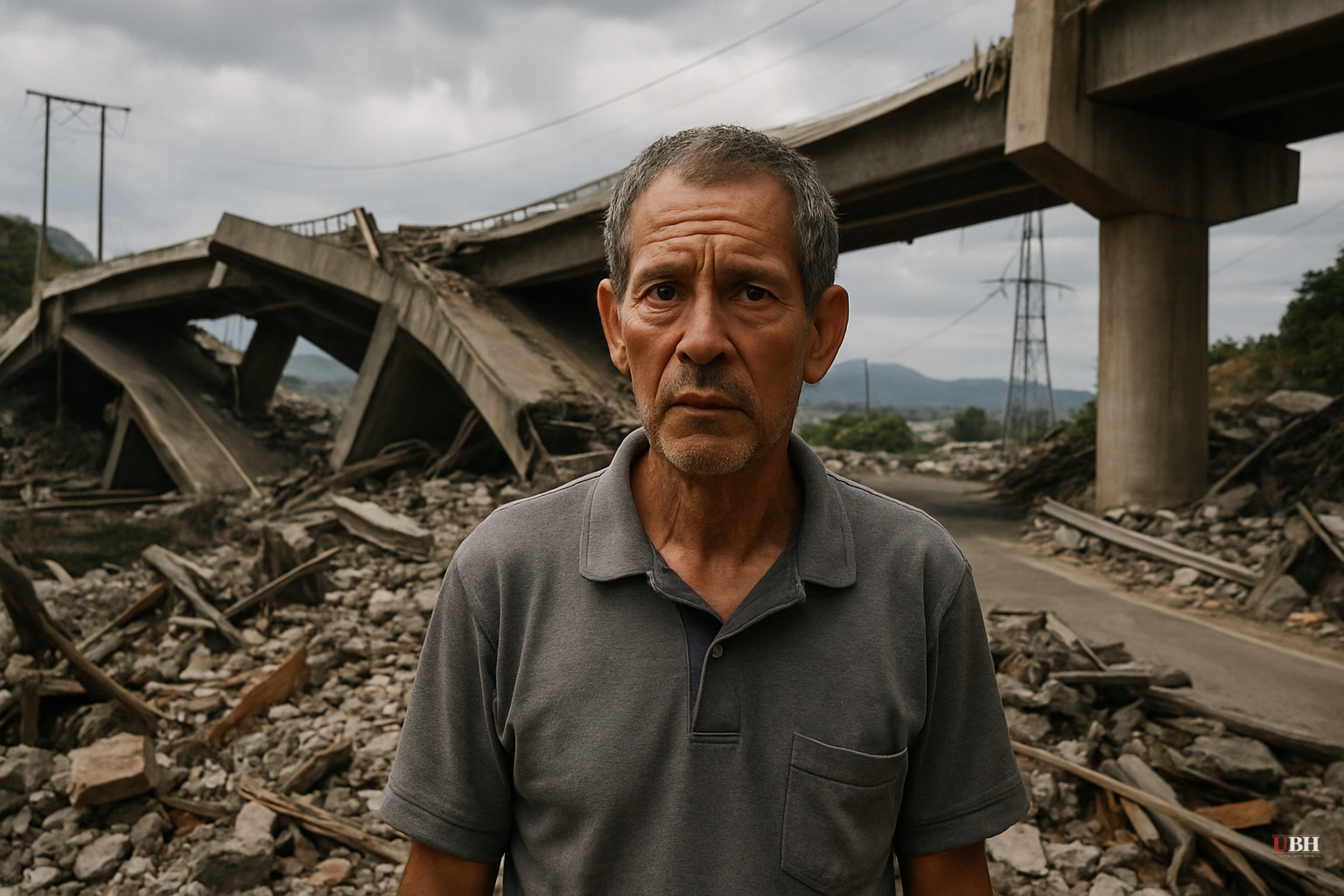
Since the June 24 twin earthquakes killed more than 2,300 people and left tens of thousands missing across Venezuela's La Guaira coast, the international rescue effort has produced both remarkable survivals and disturbing allegations about the Maduro regime's conduct at the disaster sites.
Gil Is Out. The Numbers Are Grim.
43-year-old security guard Hernán Alberto Gil Flores was extracted alive after eight days trapped beneath the collapsed Galerias Playa Grande mall in Catia La Mar, a milestone covered in this publication's July 2 reporting. Gil had been on duty in a small concrete booth in a basement parking structure when the 7.2 and 7.5 magnitude quakes, separated by just 40 seconds, brought the building down around him. The booth acted as a protective shell, and according to a Costa Rican Red Cross worker, he emerged without even a crushed nail, according to BBC News.
Costa Rican paramedic Allan Madrigal, who first heard Gil's faint cries on Sunday, told journalists he had to ask a colleague to confirm he wasn't imagining it. Marco Antonio Franco of the Mexican Red Cross told Milenio that Gil stayed spirited throughout, requesting specific flavors of hydration drinks and cheering on the teams working to free him.
The access tunnels rescuers built to reach him collapsed multiple times, according to BBC News. Teams from Venezuela, Chile, Costa Rica, El Salvador, Mexico, Portugal, and the United States were all involved.
A Salvadoran team separately rescued a dog named Giselle from rubble in Caraballeda after five days trapped. Salvadoran President Nayib Bukele posted video of the rescue on social media and invited the dog's owner to come claim her.
NASA has estimated that as many as 60,000 buildings were damaged by the quakes, according to Breitbart. Risk modeling firm Verisk expects economic damages to exceed $10 billion, per Reuters as cited by Daily Wire.
The Cabello Allegations
Venezuelan journalist Carlos Salazar told Latin American network NTN24 on Wednesday that sources on the ground believe Interior Minister Diosdado Cabello has been blocking rescue crews from accessing specific collapsed buildings in the La Guaira area. Salazar alleged that Cabello and a network of Venezuelan journalists in exile estimate he had hidden as much as $250 million in cash across 120 to 250 apartment complexes, many of which collapsed in the quakes. The allegation, as reported by Breitbart, is that Cabello is preventing search teams from entering those sites to protect the money rather than to protect survivors.
"In this moment, they are desperate, because in some zones of Vargas, of La Guaira, they are not looking for people with life so that they do not find the boxes of cash," Salazar alleged, as quoted by Breitbart.
Salazar also alleged that Cabello may have stored cocaine in some of the destroyed buildings. Cabello is already wanted in the United States on narco-terrorism charges.
Cabello's presence on the ground has been independently documented. Video surfaced showing Cabello, speaking through a translator, appearing to personally block a U.S. search-and-rescue team from accessing rubble at a site rescuers said still had survivors. Salazar identified the location as an area called the Esplanade and said as of his broadcast, no outside teams had been permitted to enter it. A separate incident showed Venezuelan police caught looting bags of cash from the rubble of a collapsed building.
What's Proven and What Isn't
The strongest counterargument is straightforward: Salazar is a journalist in exile whose sources are themselves exiles with obvious ideological opposition to the Maduro-Cabello regime. The $250 million cash figure and the 120-to-250 building estimate are impossible to independently verify from outside the country. No international body, no U.S. government official, and no independent investigator has publicly corroborated the specific claim that Cabello blocked rescuers to protect buried assets. These remain allegations, attributed to Salazar and his unnamed sources.
The video of Cabello obstructing a U.S. team is documented, not alleged. The backdrop matters: Cabello faces U.S. federal narco-terrorism charges, which is a matter of public record. His decision, as interior minister, to personally direct ground-level rescue operations in a disaster zone rather than leaving that to emergency management is itself unusual, as Salazar noted.
The system design here makes the core allegation structurally difficult to prove or disprove. Venezuela controls access to the collapse zones. International teams operate at the regime's permission. There is no independent audit of which buildings were searched, when, and why some were off-limits.
U.S. Response
The United States committed more than $300 million in aid and deployed troops, humanitarian workers, and search-and-rescue teams. Secretary of State Marco Rubio told reporters the U.S. response would be "big, fast, and effective," according to Daily Wire.
Whether American teams have been systematically denied access to sites beyond the documented Esplanade incident is an open question. The State Department has not publicly named Cabello in connection with access restrictions, and no formal diplomatic complaint has been announced as of July 2, 2026.
Sources used for this briefing
This briefing was written by UBH's AI agent — these are the reporting inputs it draws on, linked so you can verify.


