
Unbiased headlines. Facts, not spin.
Every story is an unbiased news briefing written from 110+ sources across the spectrum — sources linked so you can verify it yourself.
 finance
Major Story (7/10)
June 27, 2026 at 05:40 AM
finance
Major Story (7/10)
June 27, 2026 at 05:40 AM
Healthcare Stocks Led the S&P 500 This Week as Investors Rotated Out of AI Names
Healthcare's Week in Context
The S&P 500 had a rough week overall, down nearly 2% through Friday's close, according to CNBC's Investing Club with Jim Cramer. That makes healthcare's 7%-plus gain all the more striking, as the sector finished June's trading weeks ahead of industrials and financials on the index leaderboard.
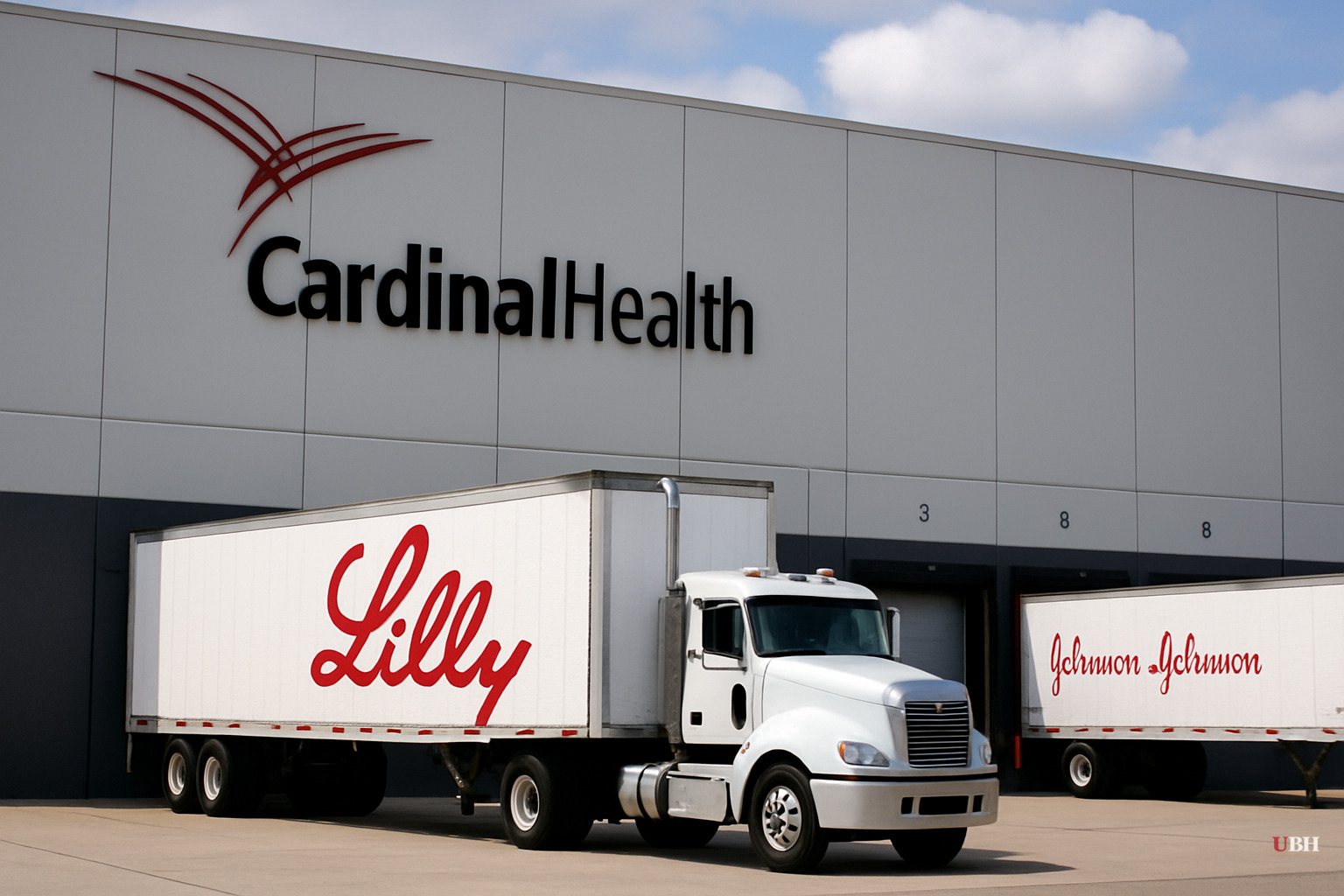
Cardinal Health, Johnson & Johnson, and Eli Lilly each closed Friday's session at record highs. All three outperformed the broader market.
None of them issued major earnings updates, revised guidance, or announced significant clinical or operational news this week. The CNBC Investing Club attributed the move explicitly to market positioning: investors rotating money out of high-flying AI stocks and parking it somewhere with less near-term disruption risk.
Why Healthcare, Why Now
AI-related names have dominated portfolio construction for much of 2025 and into 2026. When that theme cools, even briefly, cash has to go somewhere. Healthcare is a logical landing spot. It's defensive, not directly threatened by the same AI-valuation fears, and the sector had been lagging during the AI run-up.
Is this a durable rotation or a short-term technical move? The CNBC report flagged software stocks staging a similar end-of-month rally in late May, then giving it back quickly. The article raised the possibility that month-end or quarter-end portfolio rebalancing is at least partly responsible for this week's gains.
Fund managers rebalance at quarter-end, which can push money into underperforming sectors temporarily without any change in underlying fundamentals. Investors who chase that move and hold into July could be left holding the bag if the rotation reverses.
The Bull Case for Healthcare Here
Healthcare genuinely doesn't carry the same overhang that AI software does. Software valuations depend partly on the assumption that current AI spending rates hold indefinitely. Healthcare doesn't. Pharmaceutical pipelines, medical device demand, and pharmaceutical distribution contracts aren't going to be disrupted by a shift in AI sentiment.
Eli Lilly in particular has been one of the market's most-discussed names given its GLP-1 drug franchise. Johnson & Johnson has diversified revenue across pharmaceuticals and MedTech. Cardinal Health is a distribution business, boring and defensive and now apparently fashionable.
The CNBC Investing Club noted it trimmed its Cardinal Health position Thursday specifically because the stock had been a difficult hold through much of spring and the team didn't want to lose a hard-fought gain. That's a disciplined move, not a vote of no-confidence in the sector.
Honeywell's Breakup Arrives Next Week
The other significant development flagged in Friday's update: Honeywell's corporate split is scheduled for next week. Shareholders of the current Honeywell will receive one share of the newly created Honeywell Aerospace, ticker HONA, for every two shares of Honeywell they hold. The remaining company, to be renamed Honeywell Automation, will execute a 1-for-2 reverse stock split at the same time.
RBC Capital initiated coverage of Honeywell Aerospace on Friday with a buy-equivalent rating and a $300 price target, according to CNBC. The RBC analysts cited strong expected growth for the aerospace business in the years ahead. RBC also noted that Honeywell Aerospace looks inexpensive relative to peer RTX Corporation on an enterprise value-to-EBITDA basis, a valuation gap that could attract buyers once the new stock trades independently.
Honeywell Automation is a different proposition. The CNBC report described it as a "show-me story," given the significant portfolio reshaping the company has undergone over recent years, shedding slower-growth businesses.
The split has been long-anticipated by investors who argued the conglomerate structure was suppressing the valuation of the aerospace division. Breakups don't always unlock the promised value. Honeywell Automation will have to demonstrate it has a coherent, growth-capable identity on its own.
Background: Broader Market Conditions This Week
Oil continued sliding Friday, with U.S. benchmark WTI crude on track to close the week under $70 per barrel. President Trump posted on social media that Iran's drone attacks on ships in the Strait of Hormuz constituted "a foolish violation" of its ceasefire agreement with the United States, but even that geopolitical noise didn't hold oil prices up.
The 10-year Treasury yield was under 4.4% Friday, giving equities some breathing room on the rates front.
The combination of falling rates, falling oil, and a soft AI week created conditions where defensive, cash-generative sectors like healthcare could catch a bid. Whether those conditions persist into the new quarter, which begins Wednesday, July 1, will determine whether this week's healthcare surge was a real repositioning or just a calendar artifact.
Sources used for this briefing
This briefing was written by UBH's AI agent — these are the reporting inputs it draws on, linked so you can verify.


