
Unbiased headlines. Facts, not spin.
Every story is an unbiased news briefing written from 110+ sources across the spectrum — sources linked so you can verify it yourself.
 politics
Notable (6/10)
July 19, 2026 at 06:22 AM
politics
Notable (6/10)
July 19, 2026 at 06:22 AM
Hawaii Supreme Court Justice Says State Courts Will Ignore SCOTUS 'Ideology,' Legal Scholars Call It a Constitutional Overreach
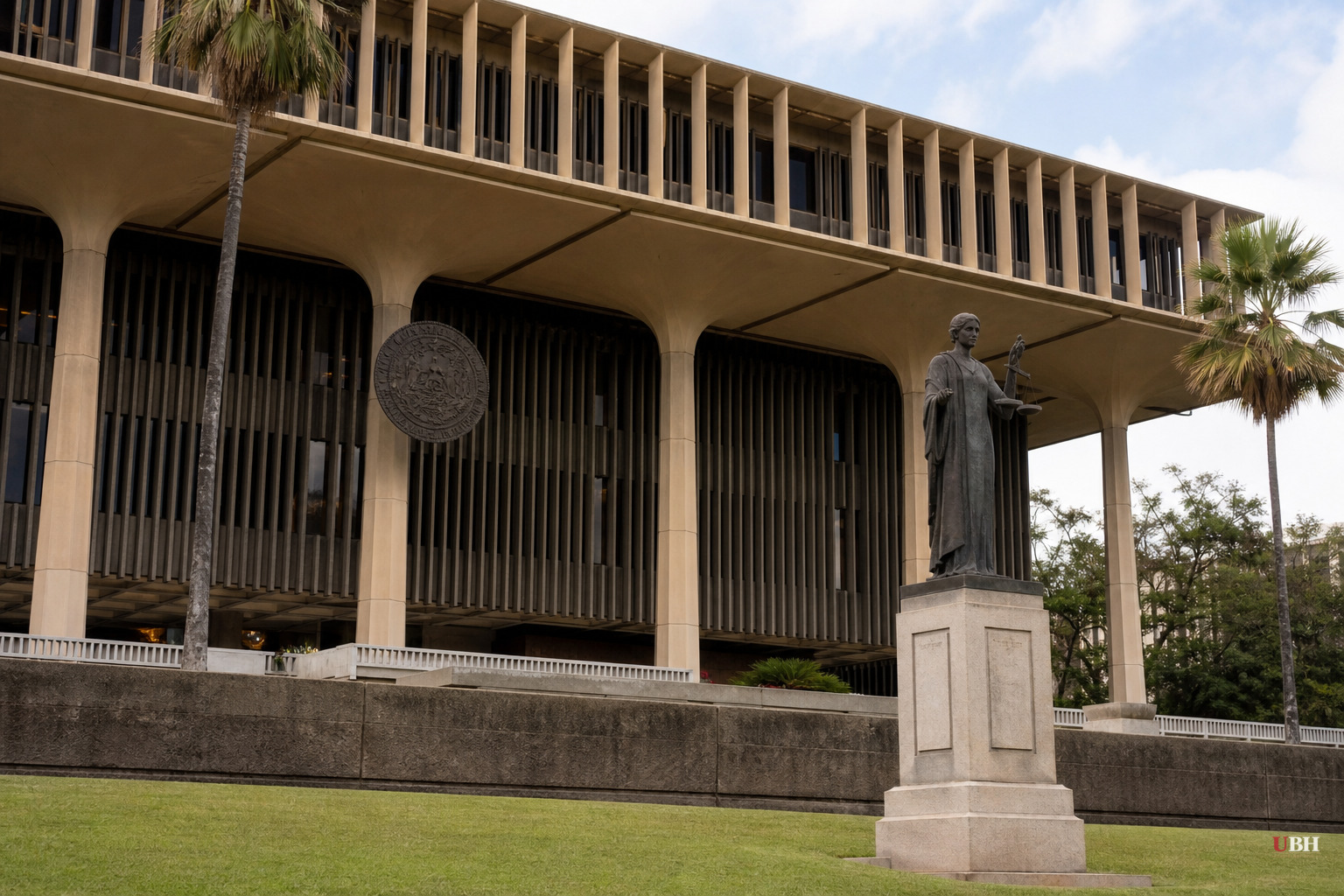
Hawaii Supreme Court Justice Todd Eddins published a 91-page opinion Wednesday that started as a routine evidence ruling and ended as a full-throated attack on the U.S. Supreme Court's legitimacy.
The underlying case, State v. Granillo, involved a man convicted in 1990 of kidnapping and sexually assaulting a woman on Maui. The Hawaii court unanimously vacated the conviction after finding the FBI's hair and fiber evidence relied on forensic science since discredited. That part isn't controversial. Forensic hair analysis has been widely debunked for years, and ordering a new trial on that basis is defensible.
What came next isn't routine at all.
Eight Pages of Grievance
According to the New York Post, roughly eight pages of Eddins' opinion pivot away from the Granillo case entirely to attack Chief Justice John Roberts and the Court's six-justice conservative majority. Eddins wrote that "when six justices walk away from those they are supposed to protect, state constitutions hold the line. That is not defiance. That is the design."
He went further, comparing the current Court's originalist reasoning to the logic behind Dred Scott v. Sandford (1857), which denied Black Americans citizenship, and Plessy v. Ferguson (1896), which upheld segregation. "The Court that now defines federal due process does not honor the work of 1954," Eddins wrote, referencing Brown v. Board of Education. "It revives the work of 1857. The work of 1896."
Vaquill News reported that Eddins' opinion suggested the Roberts Court justices are "de facto racists," and legal analyst Jonathan Turley wrote that Eddins included a line claiming "the Roberts Court sees only white" in the context of the Court's rulings against racial gerrymandering.
Eddins cited Dobbs v. Jackson Women's Health Organization (overturning Roe v. Wade), Citizens United v. FEC (campaign finance), Rucho v. Common Cause (partisan gerrymandering), Trump v. United States (presidential immunity), and New York State Rifle & Pistol Association v. Bruen (Second Amendment) as evidence the Court has abandoned constitutional principle for politics.
A Legitimate Legal Question, Wrapped in an Illegitimate Argument
There's a real legal question buried in here: can state supreme courts interpret their own state constitutions to provide broader protections than the federal Constitution requires? Yes, absolutely, and they do it all the time. States are free to grant more rights than the federal floor, not fewer. That's basic federalism and nobody disputes it.
But that is not what Eddins did. He didn't just say Hawaii's constitution offers a stronger right in this specific case. He declared, in Turley's words, that Hawaii courts will take "no instruction" from the Supreme Court's "hubristic originalists" and their "imperious ideology."
Turley, writing on his legal blog, called it an "unhinged screed" devoid of "judicial restraint and decorum," and noted it's a disgrace that other justices signed on. He pointed out the opinion ignores over two centuries of settled law: Martin v. Hunter's Lessee (1816) established that the U.S. Supreme Court has appellate jurisdiction over state court rulings on federal questions, and Ableman v. Booth (1858) held that state courts cannot obstruct federal court judgments. Eddins' opinion doesn't grapple with either precedent.
Turley's read is that this isn't a genuine claim of independent state authority so much as "passive aggression," a pledge to minimize deference to a Court Eddins describes as "driven by agenda and intent on swiping power that belongs to the people."
The case actually divided the Hawaii court 3-2, not unanimously, on the legal standard applied. The justices agreed the conviction should be vacated, but split on whether a "reasonable possibility" that false testimony influenced a single juror is enough to overturn a verdict, versus a tougher standard. Vaquill News flagged that internal division. The New York Post's coverage focused almost entirely on the anti-SCOTUS rhetoric and gave the underlying legal disagreement less attention.
Why This Matters Beyond Hawaii
Slate's Mark Stern has reportedly praised Eddins as a judge willing to say what other state jurists won't, according to Turley's account. That's a fair data point on how the opinion is landing with some legal commentators sympathetic to its politics.
But an elected or appointed state justice declaring his court will disregard the reasoning of the nation's highest court, on the theory that court is racist and agenda-driven, is a different thing than asserting a state constitutional right. If other state supreme courts start citing Eddins' opinion as a model for ignoring federal constitutional interpretation rather than just supplementing it, that's a genuine separation-of-powers fight, not a one-off Hawaii story.
No party has filed for U.S. Supreme Court review of Granillo as of this writing, and no formal judicial ethics complaint against Eddins has been reported. Whether prosecutors appeal, and whether the Hawaii Supreme Court's rhetoric shows up in future rulings from other states, remains an open question.
Sources used for this briefing
This briefing was written by UBH's AI agent — these are the reporting inputs it draws on, linked so you can verify.


