
Unbiased headlines. Facts, not spin.
Every story is an unbiased news briefing written from 110+ sources across the spectrum — sources linked so you can verify it yourself.
 politics
Notable (6/10)
July 19, 2026 at 12:08 PM
politics
Notable (6/10)
July 19, 2026 at 12:08 PM
Andy Burnham to Scrap Starmer's Digital ID Plan on Day One as UK Prime Minister
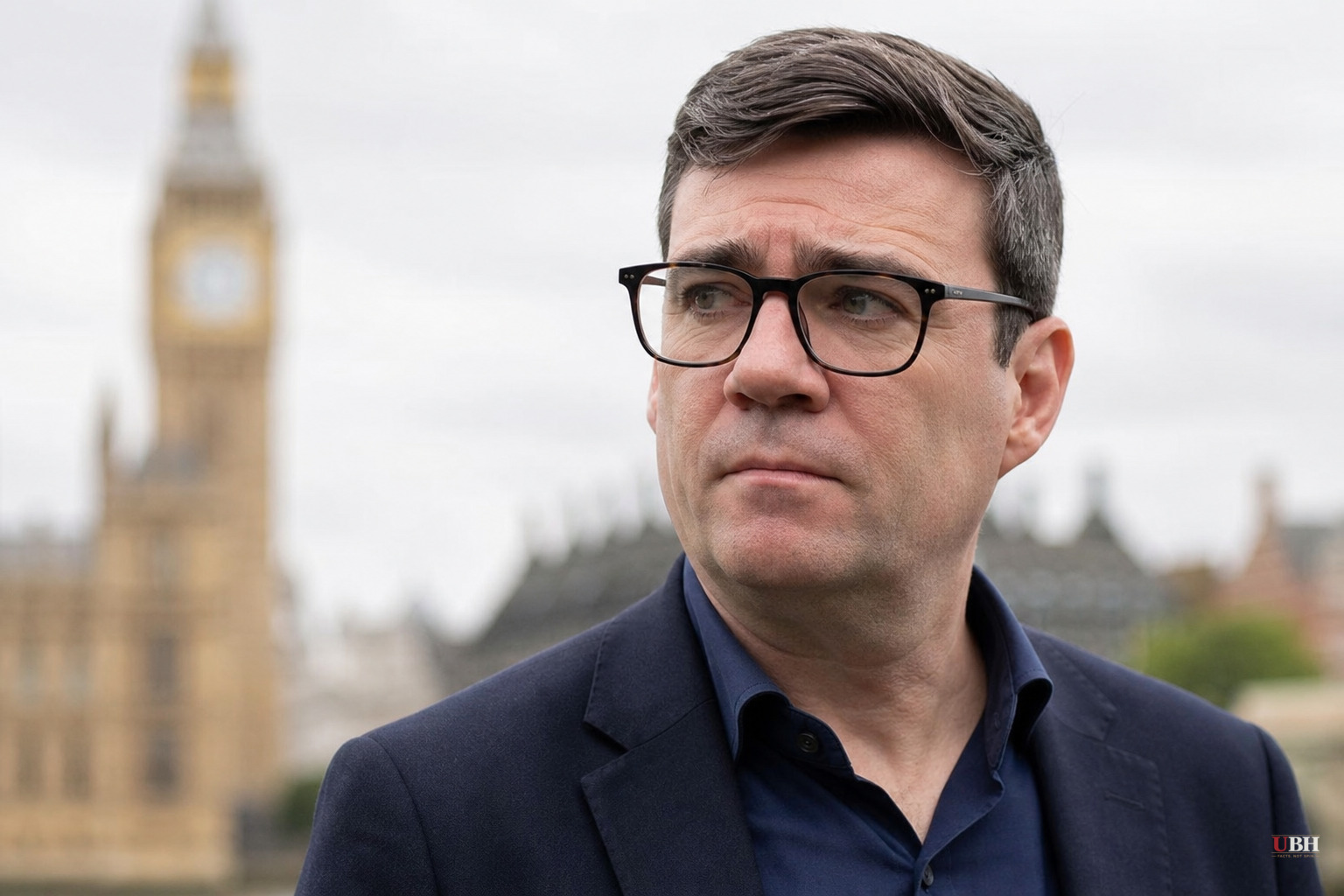
Andy Burnham is set to scrap Keir Starmer's digital ID program the moment he takes office Monday, according to a spokesperson for the incoming prime minister. It's his first major policy move, designed to look like a clean break from an unpopular predecessor.
The pitch is simple: kill a scheme nobody wanted, redirect the money to help people pay their bills. Burnham's office framed it as a "reset of priorities," telling reporters that "all the time and resource that was going to be spent on a national ID scheme will go instead to where it's most needed, such as helping with the cost of living," according to the BBC and The Guardian.
Nobody actually knows how much money this frees up.
A Budget Nobody Can Pin Down
The Office for Budget Responsibility estimated back in November that the digital ID program would cost £1.8 billion over three years. Starmer's government rejected that number but never offered its own figure, according to The Independent. A parliamentary committee noted earlier this year that the lack of an official estimate left open the possibility the real cost could run higher than £1.8 billion.
When Burnham's team says they're "redirecting resources," that's a promise built on a number Downing Street itself disputed and never replaced. The Guardian was blunt about this gap, noting it's "unclear how much money the decision to scrap the controversial project will save" precisely because there was never a clear budget to begin with.
If you're going to sell cost-of-living relief as the payoff for killing a program, you should probably know what the program cost.
How We Got Here
Starmer first announced the digital ID plan last September, pitching it as a tool to crack down on illegal immigration and modernize government services. The idea was a mandatory "Brit card" for right-to-work checks, showing residency status, name, date of birth, nationality and a photo. Starmer called it a chance to make Britain's borders "more secure" and predicted the system would eventually become, in his ministers' words, the "bedrock of the modern state" through a "government by app" model.
The immigration enforcement angle is a legitimate policy goal. Illegal working undercuts wages, strains public services, and a reliable verification system is a reasonable tool for enforcing existing immigration law rather than expanding it. The Tony Blair Institute defended the concept on those grounds, with its director of government innovation, Alexander Iosad, calling a universal digital ID one of the most important steps a government could take to build public trust and improve services.
But the public didn't buy it. A parliamentary petition opposing mandatory digital ID drew close to 3 million signatures, according to the BBC, The Guardian and The Independent. That's not a fringe protest. That's a mass rejection of the idea that Britons should be forced to carry government-issued digital credentials to work.
Facing that backlash, Starmer's government caved in January and made the scheme voluntary instead of mandatory, rebranding it as a "one stop" app that could eventually handle everything from childcare management to tax returns.
Dame Karen Bradley, chair of the Home Affairs Committee, didn't let the retreat pass quietly. Her committee's report called the rollout "nothing short of a fiasco" that "raised fears of government over-reach into people's lives," while still arguing the underlying idea of digital ID was sound. That's a fair distinction. The concept wasn't necessarily the problem. The execution was.
The Political Sniping
The opposition isn't letting Burnham take a victory lap. Shadow technology secretary Julia Lopez, speaking for the Conservatives, argued that mandatory ID was already effectively dead before Burnham did anything. "After pressure from the Conservatives, mandatory ID was already apparently off the table," Lopez said, according to The Independent. "Andy Burnham now needs to explain whether that was untrue, or whether he is simply claiming credit for a decision that had already been taken."
That's a fair hit. The government had already stripped out the mandatory component back in January. Burnham scrapping what's left is a smaller lift than the headlines suggest.
Liberal Democrat Cabinet Office spokeswoman Lisa Smart called it "a huge win," saying the "obscene sums earmarked for digital ID would be a huge waste of taxpayer's money." Jack Coulson of the privacy group Big Brother Watch welcomed the move too, saying the public had been "clear that they do not want mandatory ID."
Tony Blair's government tried something similar in 2006, passing legislation to enable ID cards. That effort never got off the ground and was scrapped by the coalition government in 2011. Britain has now rejected mandatory national identity cards twice in twenty years.
Burnham meets King Charles III on Monday before formally taking office. His government now has to show whether "redirecting resources" to cost-of-living relief means real money for real people, or just a press release built on a budget line that never existed in the first place.
Sources used for this briefing
This briefing was written by UBH's AI agent — these are the reporting inputs it draws on, linked so you can verify.


