
Unbiased headlines. Facts, not spin.
Every story is an unbiased news briefing written from 110+ sources across the spectrum — sources linked so you can verify it yourself.
 politics
Notable (6/10)
July 19, 2026 at 01:42 PM
politics
Notable (6/10)
July 19, 2026 at 01:42 PM
45% of Poles Now Want to Stop Arming Ukraine, Up From 18% in 2022
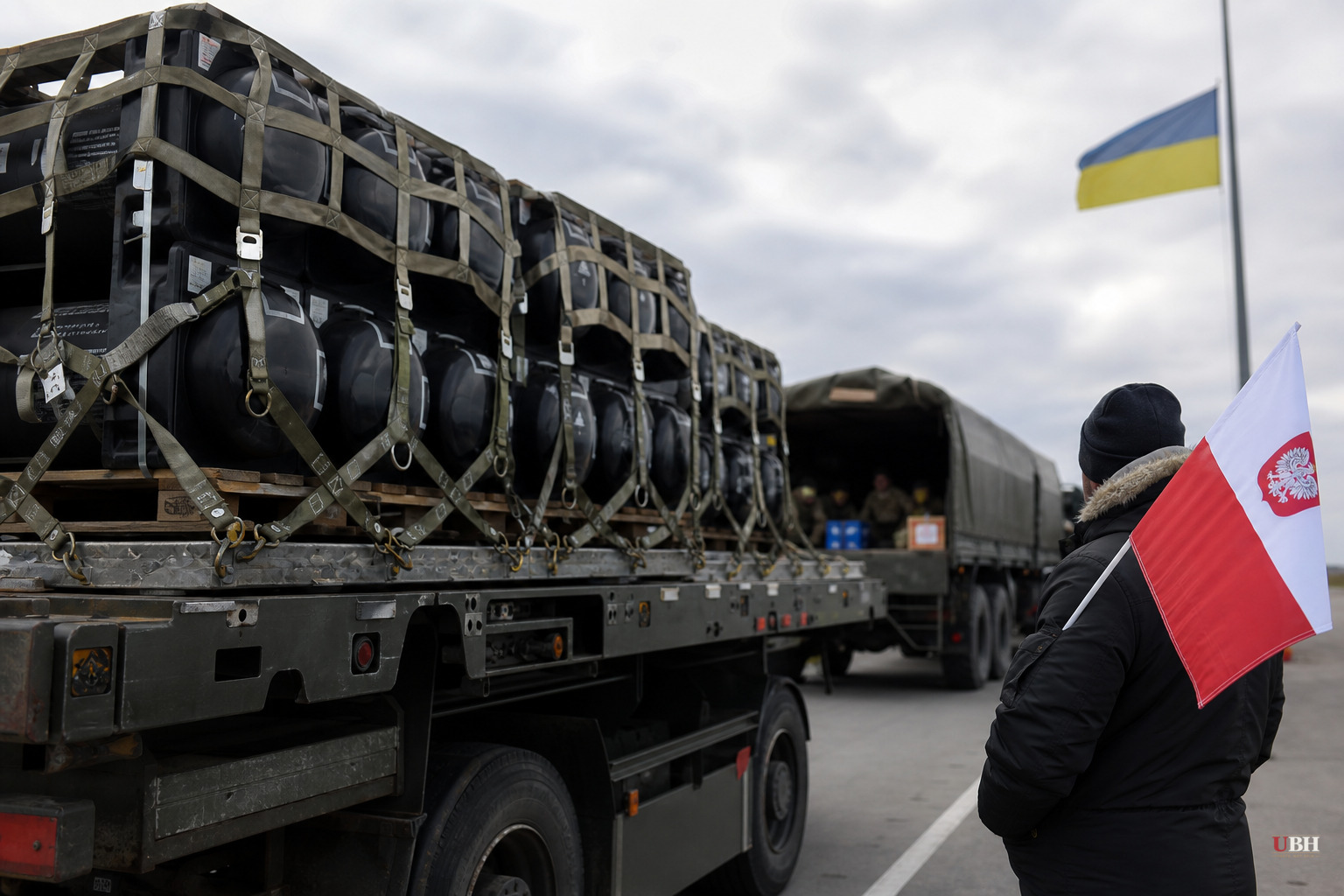
Polish public opinion on Ukraine has moved fast, and the numbers back it up.
An IBRiS poll commissioned by Rzeczpospolita, a major Polish newspaper, found 52.2% of Poles still support continuing military assistance to Ukraine. But 45.2% now oppose it, with 2.5% undecided. Compare that to late 2022, when 77.5% backed arming Ukraine, according to the same polling series reported by Ukrainska Pravda.
That's a 25-point collapse in support in roughly three and a half years. Confidence has cratered fastest on the political right. Ukrainska Pravda reported that 23.7% of Poles are now "firmly opposed" to continued aid, and that opposition-party supporters make up the largest chunk of that group.
What Sparked the Break
The immediate trigger, according to reporting syndicated through Pressenza and ZeroHedge, is Ukrainian President Volodymyr Zelensky's state-level honoring of figures tied to the OUN-UPA, the Ukrainian nationalist organizations responsible for the Volhynia massacres. Polish and Ukrainian historians widely regard Volhynia as a genocide of tens of thousands of Polish civilians by Ukrainian nationalist forces during World War II. Poland's president, Karol Nawrocki, responded by revoking Poland's highest honor previously given to Zelensky.
The dispute escalated on multiple fronts. A senior Ukrainian sergeant reportedly threatened Poland over drone strikes. Kyiv backed out of a drones-for-MiGs arrangement with Warsaw. Ukrainian military intelligence chief Kyrylo Budanov compared Poland to Russia. None of that plays well in a country that has hosted millions of Ukrainian refugees and been one of Kyiv's most reliable backers since Russia's 2022 invasion.
The Political Fallout
The polling shift is reshaping Polish politics ahead of the Sejm elections expected in fall 2027. Przemysław Czarnek, the prime ministerial candidate for the conservative Law and Justice (PiS) opposition, broke from his own party's leadership by calling on the EU to halt funding for Ukrainian arms until Kyiv "enters the path of pro-human values," a direct reference to the Volhynia dispute.
Prime Minister Donald Tusk, whose ruling liberal coalition has maintained strong support for Ukraine, called Czarnek's position "idiotic" and "dangerous," accusing him of stoking "anti-Ukrainian sentiment." Tusk went further, saying "Russia couldn't have dreamed up a better candidate for prime minister than Czarnek."
Even Czarnek's own party chairman, PiS co-founder Jarosław Kaczyński, publicly distanced himself, reaffirming PiS support for arming Ukraine and noting the party funneled roughly €3 billion in military aid to Kyiv between 2022 and 2023. Kaczyński said party leadership would clarify Czarnek's remarks.
Meanwhile, PiS is dealing with its own internal fracture, an ongoing power struggle between Kaczyński and former Prime Minister Mateusz Morawiecki over Morawiecki's refusal to disband a sub-faction within the party.
Where the Real Growth Is
The polling data commissioned by Rzeczpospolita points to something bigger than one candidate's comments. A separate CBOS survey found that the libertarian-nationalist Confederation party and its offshoot, the Confederation of the Polish Crown, now poll at a combined 28.3%, ahead of PiS's 23.6%. Confederation co-leader Krzysztof Bosak has consistently pushed for conditional aid to Ukraine tied to Polish interests, a position that looks increasingly mainstream given the polling.
Supporters of conditional aid argue that a country hosting millions of Ukrainian refugees and shouldering major security risk from a neighboring war has legitimate standing to demand its own historical grievances be addressed, particularly a genocide that killed tens of thousands of ethnic Poles. That's a materially different argument than simply wanting to abandon Ukraine to Russia, and conflating the two would misread what the polling shows.
At the same time, a majority of Poles, 52.2%, still back continuing aid. Poland hasn't turned against Ukraine wholesale. A large and rapidly growing minority wants conditions attached, and that minority is now large enough to reshape a national election.
No Sejm vote has occurred and no Polish government policy has changed as a result of this poll. The next parliamentary elections are scheduled for fall 2027, and whether Confederation actually becomes the senior partner in a coalition government, as some Polish commentators speculate, remains an open question that will hinge on whether PiS voters continue drifting toward the more hardline party or whether Kaczyński's pushback holds the coalition together.
Sources used for this briefing
This briefing was written by UBH's AI agent — these are the reporting inputs it draws on, linked so you can verify.


