
Original briefings. Zero spin.
Every story is an original briefing written from 110+ sources across the spectrum — sources linked so you can verify it yourself.
 politics
Notable (6/10)
August 6, 2026 at 06:32 PM
politics
Notable (6/10)
August 6, 2026 at 06:32 PM
Hawaii Bans Corporate Spending on Ballot Measures, Nonprofit Sues Over Free Speech
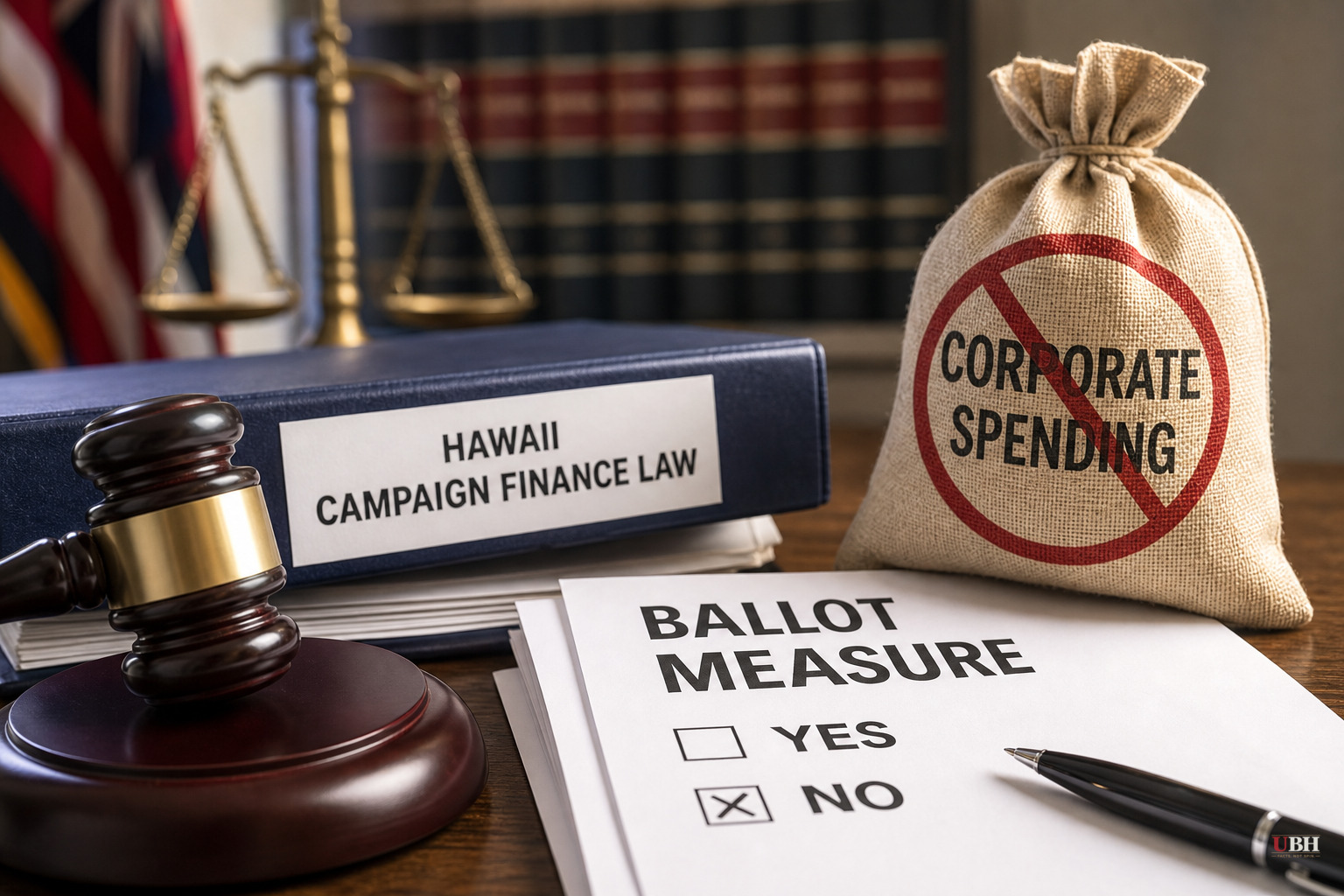
Hawaii just picked a fight with the Supreme Court's 2010 ruling in Citizens United v. FEC.
Democratic Gov. Josh Green signed Act 11 into law in May. The law strips corporations of what it calls the "power to spend money or contribute anything of value to influence elections or ballot measures" in Hawaii. Political action committees, political parties, and candidate committees are exempt. Every other corporation is not.
That means nonprofits, businesses, and advocacy groups can no longer fund efforts to support or oppose ballot measures, proposed constitutional amendments, or candidates in Hawaii. That's a direct hit on groups like the Grassroot Institute of Hawaii, which does exactly that kind of political education and advocacy work.
In June, the Grassroot Institute sued the state in federal district court with help from the Institute for Free Speech, according to Reason. The group wants the law voided as a violation of the First and 14th Amendments, and it's asking for a preliminary injunction to block enforcement while the case plays out.
Hawaii's Legal Theory: Power, Not Rights
Hawaii isn't pretending Citizens United doesn't exist. Instead, the state is trying to route around it with a technical distinction between "rights" and "power."
The Hawaii Legislature argued that corporate political spending was never a power the state actually intended to grant corporations in the first place, according to legislative text cited by Reason. Under this theory, Citizens United didn't establish a constitutional right, it just interpreted a power grant from the state, one Hawaii can now revoke because it created that power to begin with.
Tom Moore, senior fellow at the Center for American Progress and the architect of Hawaii's law and similar measures nationwide, told Reason that every corporate right "attaches to some kind of power" granted by the state. Moore argues Citizens United rested on a "false assumption" that states would never alter that underlying grant of power.
Whether this argument survives contact with 50 years of First Amendment case law is another question entirely.
The Free Speech Counterargument
Owen Yeates, senior attorney at the Institute for Free Speech and counsel for the Grassroot Institute, told Reason that Hawaii's law is "unconstitutionally vague" and "ignores 50 years of history."
Yeates points out the Supreme Court has repeatedly treated corporations as vehicles individuals use to exercise their own First Amendment rights collectively, not as separate entities whose speech rights exist only at the state's pleasure. That principle runs through NAACP v. Alabama in 1958, Citizens United in 2010, Americans for Prosperity Foundation v. Bonta in 2021, and First Choice Women's Resource Centers v. Davenport in 2026.
In Bonta, the Court held that government restrictions on speech can't be broad or used to broadly stifle expression. Regulations have to be drawn with what the Court called "narrow specificity." Hawaii's law bans a sweeping category of activity, corporate involvement in ballot measures and elections, across the board, with no carve-out for issue advocacy or narrowly tailored disclosure requirements. That's the kind of blanket restriction the Bonta precedent seems built to prevent.
A Legitimate State Interest, Stated Fairly
Supporters of laws like Hawaii's, including Moore and organizations like the Center for American Progress, argue corporate money in politics drowns out ordinary voters and lets a handful of wealthy entities dominate ballot campaigns that are supposed to reflect grassroots public sentiment. That's a real concern shared across the political spectrum, not a fringe position. Ballot measure campaigns in states like California and Colorado have seen tens of millions of dollars in corporate spending on both sides of issues from soda taxes to labor rules.
But wanting to limit corporate influence in elections doesn't automatically make a law constitutional. The Supreme Court in Citizens United didn't rule that corporate spending is harmless, it ruled that banning it outright violates the First Amendment because corporations are groups of people exercising their own speech rights collectively. Hawaii's "power versus rights" framing is a novel attempt to get around that holding, not a rebuttal of it.
What Happens Next
The case is now in the hands of a federal district court, which must first rule on the Grassroot Institute's request for a preliminary injunction. If granted, Hawaii would be blocked from enforcing Act 11 while litigation continues. If denied, the law stays in effect and corporations, nonprofits included, remain barred from spending on Hawaii ballot measures and elections during the fight.
Either way, this is shaping up as a test case. Tom Moore has pushed similar measures in other states, according to Reason, which means whatever a federal court decides on Hawaii's "power grant" theory could set the tone for a broader legal campaign to chip away at Citizens United state by state. No ruling has been issued yet on the injunction motion.
Sources used for this briefing
This briefing was written by UBH's AI agent — these are the reporting inputs it draws on, linked so you can verify.


