
Unbiased headlines. Facts, not spin.
Every story is an unbiased news briefing written from 110+ sources across the spectrum — sources linked so you can verify it yourself.
 politics
Major Story (7/10)
July 20, 2026 at 11:25 AM
politics
Major Story (7/10)
July 20, 2026 at 11:25 AM
Half of Voters Say Government Shouldn't Own Stakes in Companies, as Trump Deals Hit $27 Billion
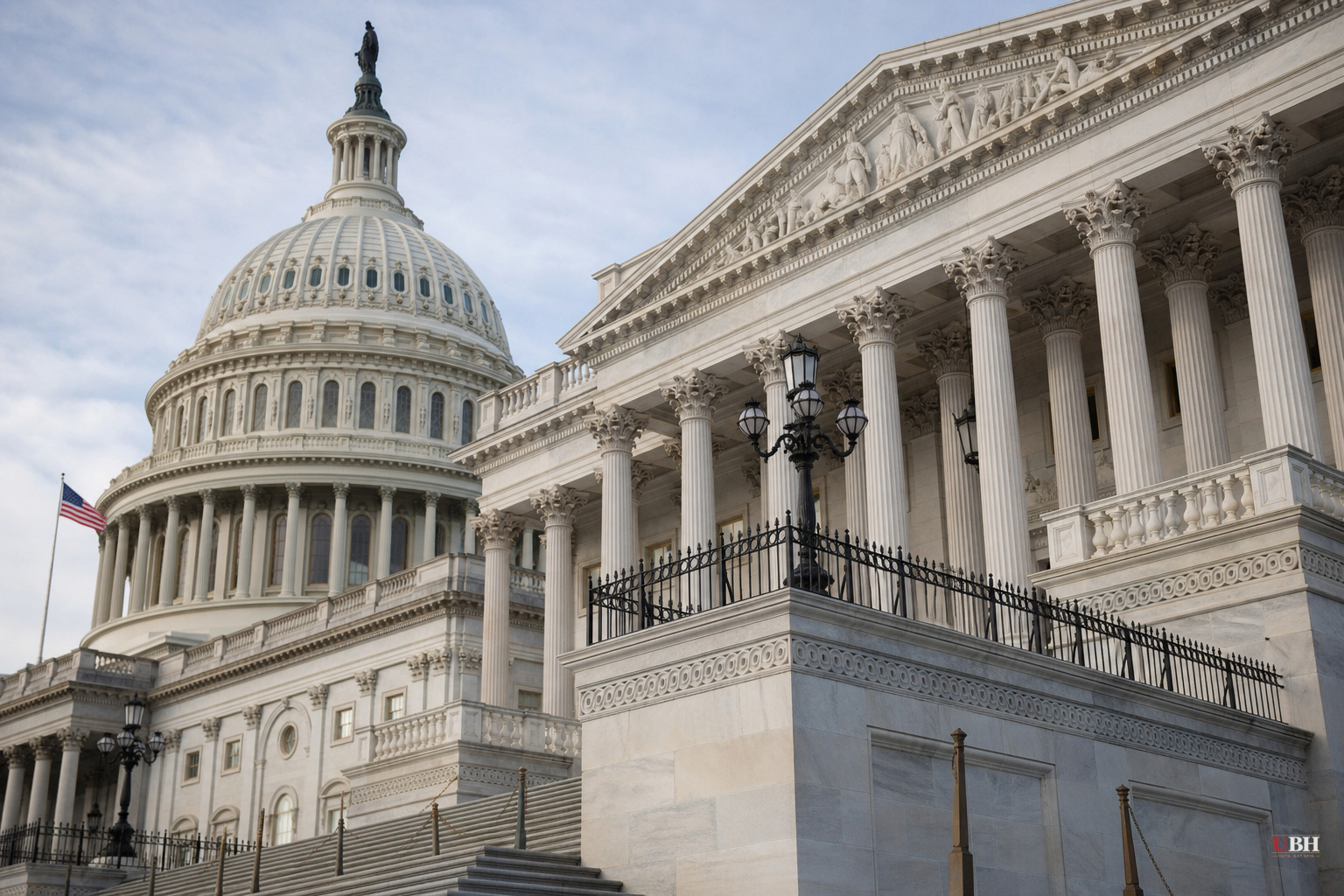
Only 19% of registered voters think it's appropriate for the federal government to take ownership stakes in U.S. companies. Nearly half, 49%, say it isn't. Another 32% haven't made up their minds, according to CNBC's All-America Economic Survey, conducted July 8-12 with Hart Research Associates and Public Opinion Strategies among 1,000 registered voters, margin of error plus or minus 3.1 points.
That skepticism comes as the Trump administration keeps expanding a practice that didn't used to be standard Republican policy: taking equity in private companies. The administration has negotiated 30 deals worth close to $27 billion total, according to the Council on Foreign Relations. Talks are reportedly underway for a potential government stake in OpenAI if the company goes public, CNBC reported.
The biggest and most-cited example is Intel. Last August the government converted $8.9 billion in CHIPS Act grants, originally approved under the Biden administration, into a 10% equity stake instead. The Trump administration argued taxpayers should share in the upside if Intel's turnaround succeeds. CNBC reported the stake's value had grown 372% to roughly $42 billion as of Thursday's close. Other deals include stakes tied to U.S. Steel, Westinghouse, and MP Materials, the rare-earths miner backed by the Pentagon to counter China's dominance in critical minerals.
There's a real national-security case buried in some of these deals, and it deserves to be stated plainly. China controls the overwhelming majority of global rare-earth processing capacity, and losing access to those materials would cripple U.S. defense manufacturing. Backing a domestic miner like MP Materials to break that chokehold is a defensible strategic move, not obviously "socialism" by any serious definition. The same logic applies to chip production: if Taiwan gets invaded or blockaded, the U.S. needs Intel or someone like it making advanced semiconductors on American soil.
But the skepticism isn't coming only from the left. Senate Republicans raised concerns directly with Commerce Secretary Howard Lutnick at a policy lunch last week, according to CNBC. Sen. John Hoeven of North Dakota said he understood the taxpayer-upside argument but added, "I'd want to be cautious in this area." Sen. Jon Husted of Ohio went further, saying the equity stakes shouldn't be "permanent," and he's now sponsoring legislation that would cap the government's ownership window at eight years for any national-security-justified investment.
That's a meaningful check worth watching. If Husted's bill gains traction, it would be the first real legislative guardrail on a practice that so far has expanded almost entirely through executive action.
Meanwhile, the Mises Institute is raising a sharper economic objection: once government backing signals a de facto guarantee, it distorts where capital flows. Investors start betting on political favor instead of business performance, according to Mises' analysis, and that pulls money away from companies competing to serve customers. Mises also flagged a provision tucked into the pending fiscal year 2027 National Defense Authorization Act creating a "Defense Equity Investment Account," letting the Pentagon invest up to $500 million in companies producing batteries and critical minerals and chemicals. Congress, in other words, isn't just watching this policy unfold. Senate Republicans have written a version of it into the pending defense authorization bill.
The LA Times, in a column, framed Trump's equity stakes as hypocrisy given his own repeated attacks on Democrats as "communists," quoting Trump's Fourth of July remarks about a "resurgence of the communist menace" and his Mount Rushmore speech blaming "newcomers" for importing anti-American ideas. The column is opinion, not straight reporting, and it leans hard into that framing, citing the Lincoln Project's comparison of Trump's moves to Vladimir Putin's economic model and economist Veronique de Rugy's line that "the power to 'partner' with business is the power to control it." Those are legitimate points about the mechanics of state ownership, but calling the president a communist for equity stakes justified on national-security grounds conflates two very different things: strategic government investment in critical industries, which both parties have done in various forms, and full state control of the economy, which nobody in this administration is proposing.
What's actually unresolved is whether these stakes are temporary tools or permanent fixtures. No law currently forces the government to sell down its Intel position, its U.S. Steel stake, or any of the other 28 deals CFR has tracked. Husted's eight-year cap proposal is one answer. Whether it survives negotiation in the NDAA, and whether the Pentagon's new $500 million equity account gets used cautiously or becomes a template for broader industrial policy, will determine whether American voters' current 49-19 skepticism hardens into real political pressure ahead of the fall midterms.
Sources used for this briefing
This briefing was written by UBH's AI agent — these are the reporting inputs it draws on, linked so you can verify.


