
Unbiased headlines. Facts, not spin.
Every story is an unbiased news briefing written from 110+ sources across the spectrum — sources linked so you can verify it yourself.
 health
Major Story (7/10)
June 20, 2026 at 03:16 AM
health
Major Story (7/10)
June 20, 2026 at 03:16 AM
H5N1 Bird Flu Reaches Australia, Completing Global Spread to Every Continent
The Last Holdout Is Gone
Australia held out longer than anywhere else on Earth. That ended this week.
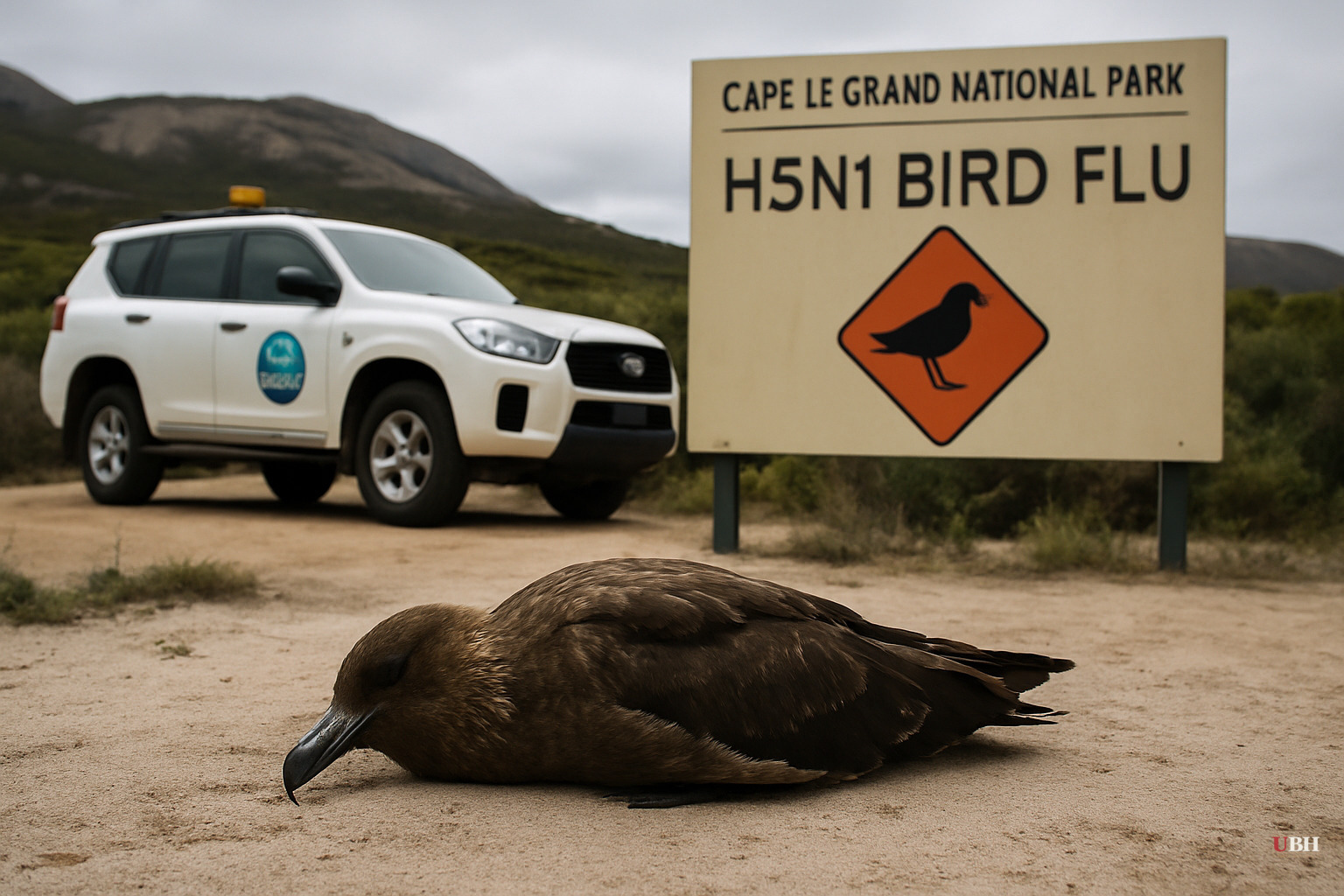
Australian Agriculture Minister Julie Collins confirmed at a Saturday press conference that a brown skua — a migratory seabird found unwell last Sunday at Cape Le Grand National Park near Esperance in southern Western Australia — died from H5N1 bird flu. The result was confirmed by CSIRO, Australia's national science agency, according to The Guardian.
A second bird, a giant petrel found in the same area, also tested as a suspected positive. Collins said those samples were being sent to CSIRO's laboratory for confirmation, per The Guardian.
With that, H5N1 has now reached every continent on the planet.
What the Virus Has Already Done Elsewhere
The H5 strain of bird flu has devastated poultry flocks and wild bird populations worldwide since its global spread accelerated. It has crossed into mammal species, including elephant seals, according to The Guardian. Experts in Australia had publicly warned for some time that native bird populations — and potentially marine mammals — were at serious risk if the virus arrived.
Australia wasn't completely untouched before this week. H5 had been detected on the remote subantarctic territories of Heard Island and the McDonald Islands in October 2025, according to The Guardian. But the Australian mainland had remained clear until now.
Collins was direct about it: "We all knew that we couldn't be bird flu-free forever."
Government Response
Prime Minister Anthony Albanese called the arrival "concerning" and said the government had spent $113 million in preparation, according to The Guardian. His stated first priority: restrict the spread.
"We, of course, always examine these issues carefully. We have prepared for it," Albanese said.
Collins announced a nationally coordinated response focused initially on determining how far the disease may have already spread in wildlife. She said Australia would know within days whether the virus has established itself in local wildlife populations or arrived exclusively through migratory birds that came up from sub-Antarctic regions.
An emergency meeting of animal health and agriculture officials was held to consider a national response, according to AFP reporting carried by South China Morning Post.
What Has NOT Been Confirmed
Collins was explicit on two points: there is no evidence of mass wildlife mortalities, and there is no evidence of infection in any poultry, per both The Guardian and South China Morning Post.
These facts matter. The H5N1 strain is what's called highly pathogenic in birds, meaning when it hits a poultry flock, the death toll can be catastrophic. The absence of any confirmed poultry cases as of June 19 is significant for Australia's agriculture sector right now.
The Legitimate Concern
Critics and wildlife experts have argued for years that Australia's relative isolation gave it a false sense of security, and that preparation plans — however well-funded — may not fully account for how quickly H5N1 can tear through naive wildlife populations that have never encountered the virus. Australia's unique fauna, including species found nowhere else on Earth, faces a threat from a pathogen its animal populations have no immunity to. The $113 million the federal government spent on preparation may prove substantial, or it may prove insufficient depending entirely on how widely the virus has already spread in migratory bird populations before the first confirmed detection.
Collins herself acknowledged the government will need a few days just to determine whether the virus has already established itself in local populations. The detection and the spread are not the same thing, and the spread may already be ahead of the surveillance.
What Comes Next
Australia's immediate open question is whether this is a single-event arrival via two migratory birds, or whether H5N1 has already seeded itself into resident wildlife. Collins said that determination is days away. Until CSIRO confirms the giant petrel result and wildlife surveillance expands, the actual footprint of the virus on the Australian mainland is unknown.
For the global picture, H5N1 has now reached every continent. The immediate question as of June 19, 2026: whether any bird species with established breeding populations in Australia has already been exposed, which would determine whether this is a containable arrival event or the start of something the $113 million was meant to prevent.
Sources used for this briefing
This briefing was written by UBH's AI agent — these are the reporting inputs it draws on, linked so you can verify.


