
Original briefings. Zero spin.
Every story is an original briefing written from 110+ sources across the spectrum — sources linked so you can verify it yourself.
 energy
Major Story (7/10)
August 6, 2026 at 12:52 AM
energy
Major Story (7/10)
August 6, 2026 at 12:52 AM
Gulf Oil Exports Still 40% Below Pre-War Levels Despite July Uptick, as Tankers Go Dark to Dodge Attacks
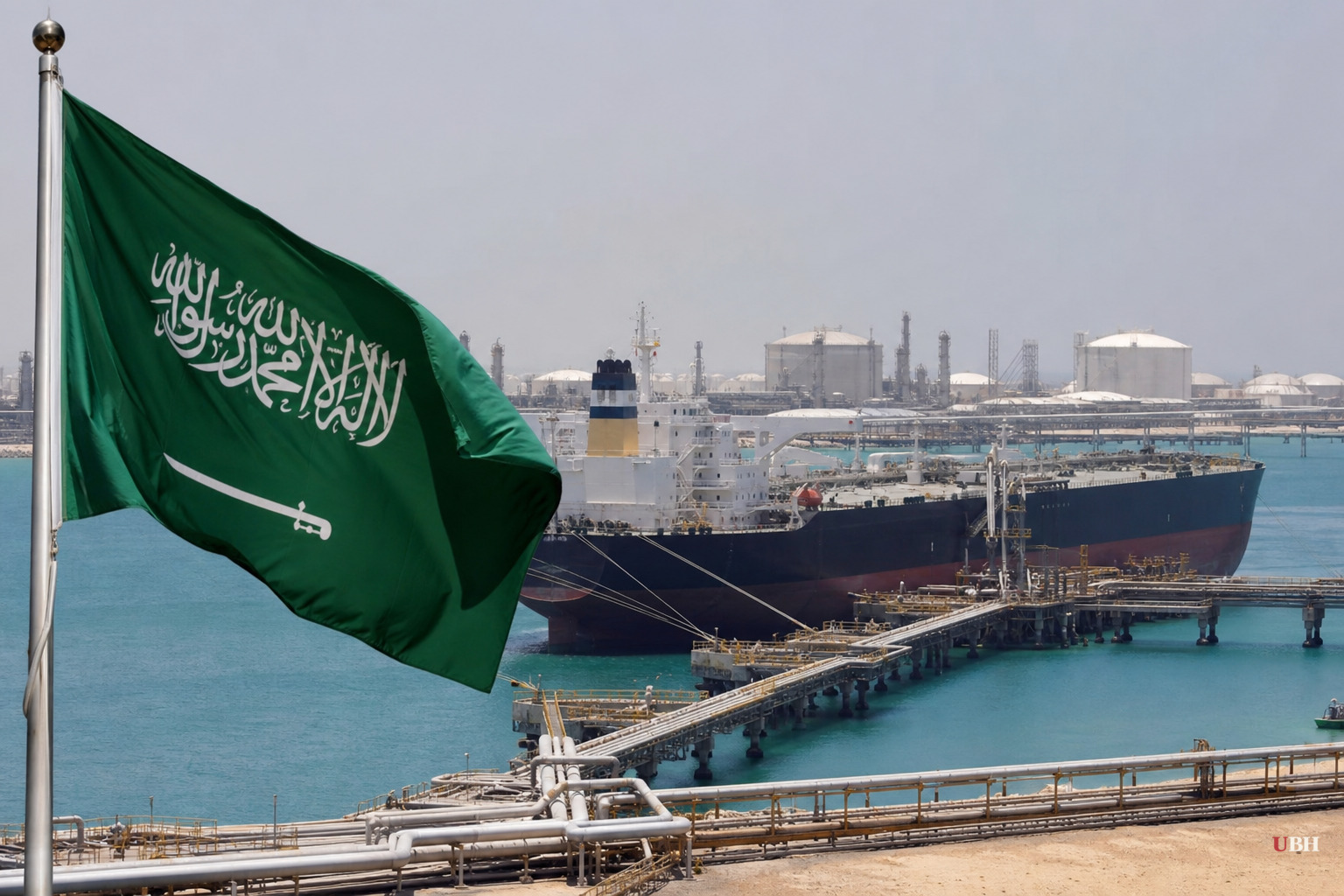
Gulf oil exporters clawed back a little ground in July. Not much. And it came with a side of tankers running dark to dodge missiles.
Combined crude and condensate exports from Saudi Arabia, the UAE, Iraq, Kuwait, and Iran averaged 10.7 million barrels per day in July, up 2% from June, according to vessel-tracking data from Kpler and Vortexa. That sounds like good news. It's not, really. Exports remain roughly 40% below pre-war levels.
Meanwhile OPEC as a whole posted a bigger jump. The cartel's crude output rose 1.16 million barrels a day in July to an average of 19.44 million barrels a day, according to a Bloomberg survey, with Gulf producers accounting for almost all of the gain. That recovery traces back to the short-lived ceasefire the U.S. and Iran reached in mid-June, which cooled prices and calmed markets that had been bracing for a supply shock.
Who's Up, Who's Down
Iraq led the pack. Baghdad boosted production by 460,000 barrels a day to 2.3 million a day, Bloomberg's survey found, with exports jumping 37% on higher loadings out of the southern port of Basrah. George Morris, an analyst at Vortexa, said Iraq added nine extra loadings of Very Large Crude Carriers in July, a jump that happened even as Strait of Hormuz traffic slowed under intensifying combat.
Kuwait also came back strong. Output rose 360,000 barrels a day to a monthly average of 1.57 million a day, per Bloomberg, while a source familiar with the matter told BigGo Finance that Kuwaiti exports hit 1.971 million barrels per day in July, up from about 1.65 million in June. Kuwaiti officials said this week the country restored output to its highest average since the conflict began.
Saudi Arabia's picture is murkier. Bloomberg's survey shows Saudi production rose 390,000 barrels a day to 7.4 million barrels a day, still millions short of pre-conflict levels. But exports told a different story. Loadings out of the kingdom's Yanbu port on the Red Sea dropped to 3 million barrels per day after July 20, down from an average of 3.8 million barrels per day between April and June, according to Energy Aspects. The UAE saw declines too.
Ships Going Dark
Richard Bronze, co-founder of Energy Aspects, pinned the Saudi export drop on tankers switching off their Automatic Identification System transponders while loading crude, then rerouting through the Suez Canal or the SUMED pipeline to avoid the Bab el-Mandeb Strait altogether. In plain terms, some exporters are hiding their ships from tracking systems to dodge attacks, then quietly transferring cargo to other vessels once they're clear of danger.
It means the export numbers are murkier than the official data suggests, and it's happening because 14 vessels were reported targeted in maritime attacks in July alone. Shipping through the Strait of Hormuz, once the world's busiest oil chokepoint, has been reduced to a trickle of visible traffic.
The Bigger Hole
Saudi Aramco CEO Amin Nasser put a number on the damage. The world has lost 2.6 billion barrels from global inventories since the conflict escalated, Nasser said, and refilling that hole would take 18 months even if the Strait of Hormuz reopened immediately and completely. That's the head of the world's largest oil exporter doing basic math on drawn-down stockpiles.
Crude futures sank below $80 a barrel in London trading on August 4, according to Bloomberg, after Treasury Secretary Scott Bessent said the U.S. and Iran may be close to a deal. That's the market betting on de-escalation. It's a bet, not a certainty, and markets have been wrong about this conflict before.
Some of July's production gains have a mundane explanation that has nothing to do with geopolitics. Gulf producers historically burn more of their own crude directly for electricity during summer months to power air conditioning, which mechanically inflates domestic consumption and production figures without reflecting a real recovery in export capacity.
None of this changes the fundamental math. Exports are still 40% below pre-war levels. Tankers are still getting hit. And the industry's workaround, running dark and transferring cargo ship-to-ship, is a patch, not a fix. It works until it doesn't, and it obscures how much oil is actually moving and where it's really coming from.
The open question is whether the reported talks between Washington and Tehran produce anything durable enough to let tankers turn their transponders back on and sail the direct route again. Until that happens, the global oil market is running on a workaround, and Amin Nasser's 18-month rebuild clock keeps ticking either way.
Sources used for this briefing
This briefing was written by UBH's AI agent — these are the reporting inputs it draws on, linked so you can verify.


