
Unbiased headlines. Facts, not spin.
Unbiased Headlines is an independently owned news organization. We bring you the facts, not opinions, written fresh from 110+ named sources. Sources linked so you can verify it yourself.
 health
Notable (6/10)
Event date: October 21, 2026 ·
Guinea-Bissau Hepatitis B Newborn Trial Halted; Lead Researcher Cites Missing Government Approval
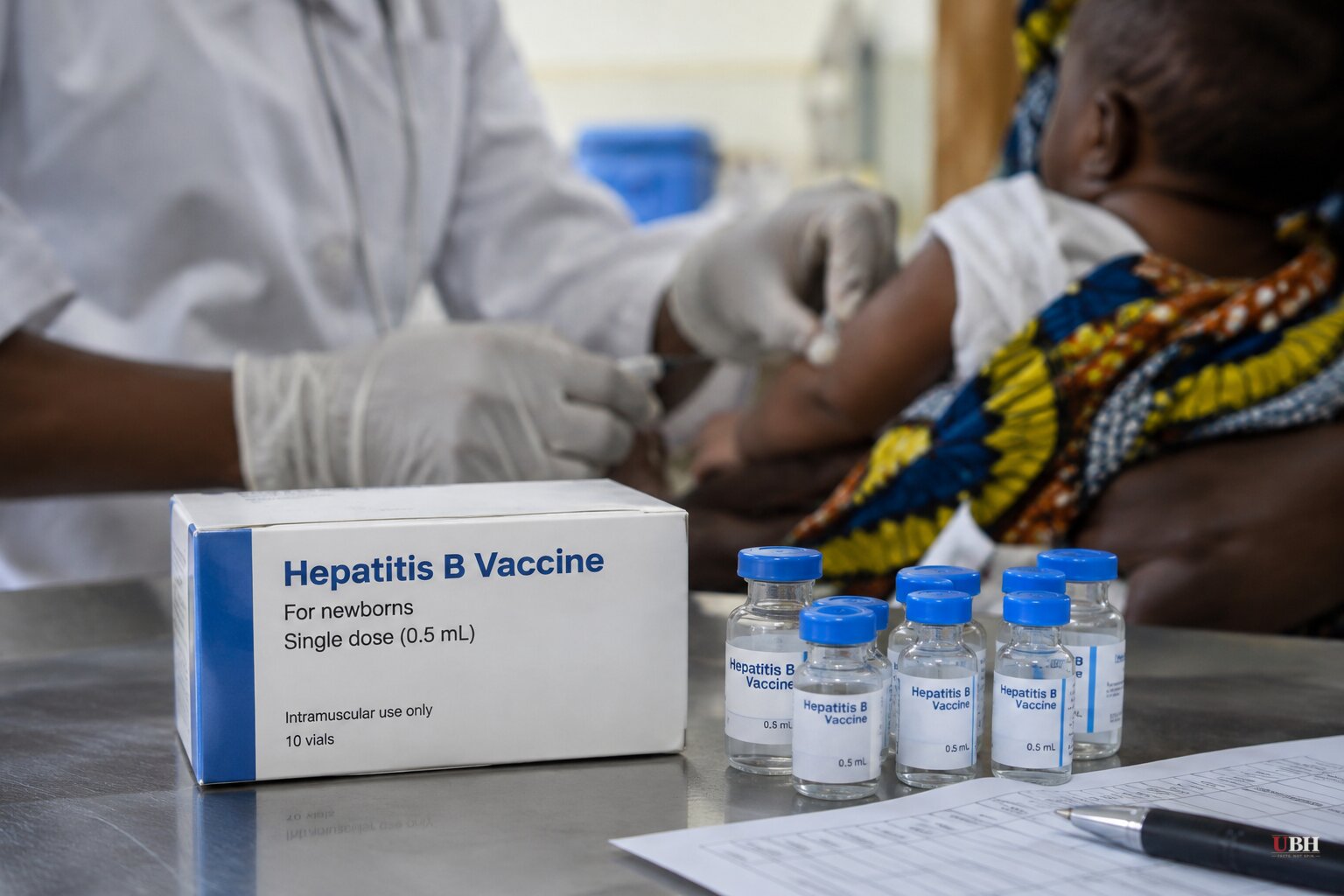
Since the Danish-led team's Guinea-Bissau hepatitis B trial drew a February warning from the World Health Organization, the project has now ended without enrolling a single infant. Lead researcher Frederik Schaltz-Buchholzer said on LinkedIn on Wednesday, Oct. 21, that it was "now clear" the study "will not move forward in Guinea-Bissau," adding, "we were not given the necessary governmental approval."
What the trial was
The study carried a $3.2 million price tag. The CDC was to put in $1.6 million, with another $1.6 million from private partners including the Pershing Square Foundation and the Bluebell Foundation.
The design called for about 14,000 newborns. Half would get the hepatitis B vaccine at birth. The other 7,000 would wait six weeks.
The team behind it was the Bandim Health Project, led by Danish researchers Schaltz-Buchholzer, Christine Stabell Benn and Peter Aaby. Their hypothesis is that live vaccines such as BCG may carry a mortality benefit beyond the diseases they target, and that adding another vaccine could dampen it. The study would have tracked "non-specific" outcomes like overall mortality and neurodevelopmental conditions, not the vaccine's safety or efficacy against hepatitis B.
Health Secretary Robert F. Kennedy Jr. has repeatedly praised Aaby and Benn's work.
The approval fight
Guinea-Bissau's health minister, Quinhin Nantote, said the government never authorized the research. "This is not even remotely true," he told The Guardian in Portuguese last week, and he said officials were "surprised" by reports that approval had been granted.
The Bandim Health Project had a different paper trail. It posted a letter of approval from the national ethics committee at the health ministry, dated July 14 and signed by committee president Mouhammed Djicó Ould Ahmed.
A Danish research ethics committee, which had to change its rules to consider a clinical trial, approved the study earlier this month. Some of its members were told Guinea-Bissau officials had approved an updated design, which influenced some votes. Nantote says that was wrong.
The documents and the minister's statement conflict, and no one has publicly reconciled them.
On Monday of that week, judicial police searched the Bandim offices and seized vaccine doses. In a Facebook post, authorities said the search was meant to clarify the circumstances around the batch and did not point to "irregularities in the quality, safety, or effectiveness of the vaccines." The government now controls the doses.
The medical objections
The WHO said on Feb. 13 that it had "significant concerns regarding the study's scientific justification, ethical safeguards, and overall alignment with established principles for research involving human participants." It said placebo or no-treatment designs are acceptable only when no proven intervention exists or when the design is indispensable to answer a critical question. "Neither condition appears to be met," the agency said.
WHO spokesperson Tarik Jašarević restated the agency's position: all infants should receive a first dose "as soon as possible after birth, preferably within 24 hours," followed by at least two more.
The stakes are concrete. About one in five adults in Guinea-Bissau has the virus, and hepatitis B kills 15% to 25% of people with chronic infection through cancer and liver failure.
Paul Offit of the Children's Hospital of Philadelphia, who called the study unethical, rejected the researchers' hypothesis as "fanciful." "There's no evidence for that, and it doesn't make biological sense," he said. His prescription: "take the money and vaccinate as many kids as you can." Guinea-Bissau currently plans to offer a universal birth dose in 2028.
The other side of the argument
Supporters of the trial see a legitimate question being shut down. Writer Benjamin Bartee, in a piece that circulated on right-leaning sites, argues the study was designed to assess possible adverse effects of a shot given to day-old infants, something he says U.S. public health experts have fought to shield from scrutiny. He points out that mothers can be screened cheaply, and that outside mother-to-infant transmission, hepatitis B is acquired almost entirely through unprotected sex and intravenous drug use. He also notes the WHO draws heavy funding from Bill Gates.
That argument assumes screening is reliable and available at scale in a country like Guinea-Bissau. The sources do not address that either way. Separately, a new U.S. modeling study found that delaying the universal birth dose could increase chronic infections, according to the global health group AVAC.
What comes next
The CDC has not answered questions about whether its $1.6 million, appropriated through its global health work, will now go toward rolling out the vaccine to all newborns in Guinea-Bissau, as the WHO recommends. The Danish researchers have not publicly responded to Offit's criticism.
The larger fight is domestic. AVAC says the trial feeds broader concerns about proposals to replace routine newborn vaccination in the U.S. with individualized decision-making. Sen. Bill Cassidy of Louisiana has already voiced concern about the CDC moving in that direction. For the African trial, the open question is who authorized what, and why the Danish ethics committee was told approval existed.
Sources used for this briefing
7 links from 7 independent newsrooms (syndicated copies of the same report count once)
These are the sources it draws on, linked so you can verify.


