
Unbiased headlines. Facts, not spin.
Unbiased Headlines is an independently owned news organization. We bring you the facts, not opinions, written fresh from 110+ named sources. Sources linked so you can verify it yourself.
 health
Notable (6/10)
Florida Surgeon Removes Cancer Patient's Prostate From 35 Miles Away in Trial AdventHealth Calls First US Hospital-to-Hospital Telesurgery
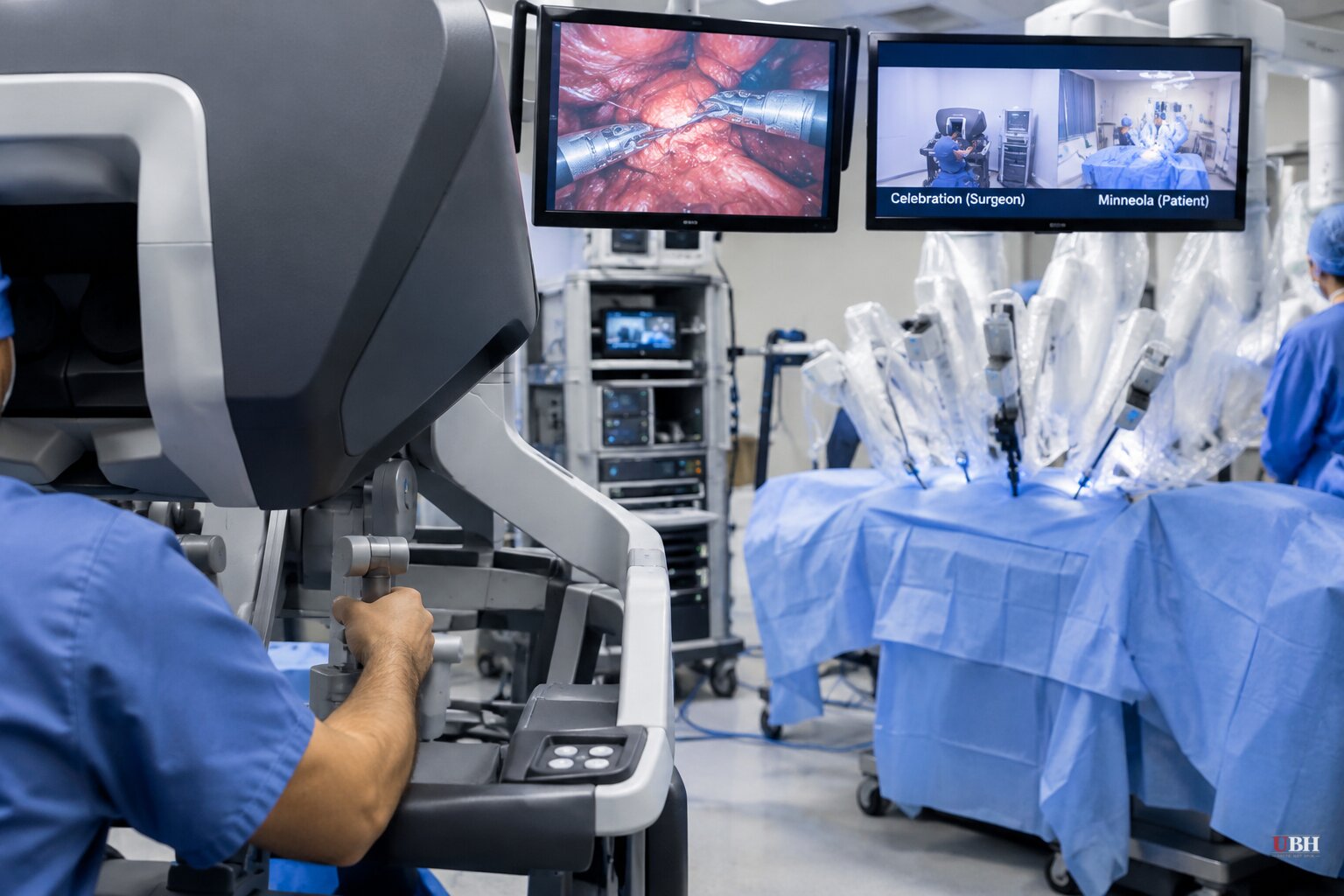
A Florida surgeon removed a cancer patient's prostate on Sunday, Oct. 25, without being in the same building. Dr. Vipul Patel, founder and medical director of the Global Robotics Institute at AdventHealth Celebration near Orlando, controlled the robotic instruments from Celebration. The patient lay on an operating table at AdventHealth Minneola, 35 miles away.
The patient is a 66-year-old man identified only as Mark. AdventHealth says he volunteered for a clinical study of a robotic telesurgery system. The hospital told ABC News that he continues to do well after the surgery.
What happened in the operating room
Patel performed what AdventHealth describes as an investigational robotic prostatectomy. Surgeon Marcio Moschovas, the study's co-principal investigator, provided on-site support to the patient, according to AdventHealth's news release. A qualified surgeon was in the room throughout, the hospital said.
That on-site presence is a core safety feature of the design. Telesurgery adds risks that standard robotic surgery does not have: equipment or connection failures and cybersecurity threats. If something goes wrong, a team next to the patient has to be able to take over.
Robotic prostatectomy carries its own risks, including bleeding, infection, incontinence, erectile dysfunction and the possibility of switching to open surgery.
The claim of a first
AdventHealth says no previous reports have documented a telesurgery between two locations in the United States. That is the basis for the milestone. It is AdventHealth's claim about the record, and the hospital itself cautioned that Sunday's single procedure does not establish the technology's general clinical performance.
The Minneola case follows 10 investigational telesurgeries between Orlando and Luanda, Angola, according to AdventHealth's release. Those hospitals are more than 7,000 miles apart. Sunday's operation marks the study's expansion into US hospitals.
The American College of Surgeons has said the Angola case was the first US-based transcontinental telesurgery since French surgeon Jacques Marescaux performed a robotic gallbladder removal in 2001. That earlier operation relied on roughly 10,000 miles of direct fiber-optic cable to carry data fast enough for real-time control.
A similar operation drew headlines earlier this year, when a surgeon in London used a four-armed robot with a 3D camera to remove a man's prostate in Gibraltar, about 1,500 miles away. The lag between the surgeon's movements and the robot's response was 0.06 seconds.
What the FDA has and has not done
The study is running under an FDA-approved investigational device exemption. That authorization lets the system be studied. It does not constitute FDA approval or clearance.
That distinction matters for anyone picturing remote surgery at their local hospital next year. The system has not cleared the regulatory bar for routine use, and AdventHealth has not claimed otherwise.
Patel's stated case is about access. "For generations, access to highly specialized care has often depended on where a patient lives," he said in a statement shared by AdventHealth. "This study allows us to evaluate whether telesurgery could one day help reduce geographic barriers to specialized treatment."
He also acknowledged the open questions. "Important questions about safety, effectiveness and technical performance remain under investigation," Patel said.
The access argument and its limits
The pitch is simple. A surgeon with rare skill in a major hospital could operate on patients in rural or underserved places without the patient traveling. The American College of Surgeons has said 2025 brought enough technological advancement to make telesurgery increasingly available, with potential to expand access for remote and rural populations.
The 35-mile Florida hop is a long way from that vision. Both hospitals belong to the same health system, and a surgeon was on hand in the room. The study has so far shown that surgery can be done at distance with a team ready to step in. It has not shown what happens when the connection drops, or whether a hospital without a skilled surgeon on site could safely host such a procedure.
The cybersecurity question is not abstract. Hospital networks are a regular target for attackers, and a remotely controlled surgical robot adds a live control channel to that exposure. Researchers are still evaluating the safety, reliability and cybersecurity of these systems, per AdventHealth's account.
What comes next
AdventHealth has described Sunday's operation as part of an ongoing study, not a finished one. One patient's recovery over days or weeks will not settle whether the system works at scale. The data from the Angola cases, the Minneola case and any further US procedures will have to be reviewed before the FDA is asked to move the system from investigational use to clearance. That decision, not Sunday's milestone, determines whether remote surgery ever becomes a standard option.
Sources used for this briefing
7 links from 7 independent newsrooms (syndicated copies of the same report count once)
These are the sources it draws on, linked so you can verify.


