
Unbiased headlines. Facts, not spin.
Unbiased Headlines is an independently owned news organization. We bring you the facts, not opinions, written fresh from 110+ named sources. Sources linked so you can verify it yourself.
 health
Notable (6/10)
Event date: October 20, 2026 ·
New York, Pennsylvania and Syracuse Commit Hundreds of Millions to Lead Pipe Replacement
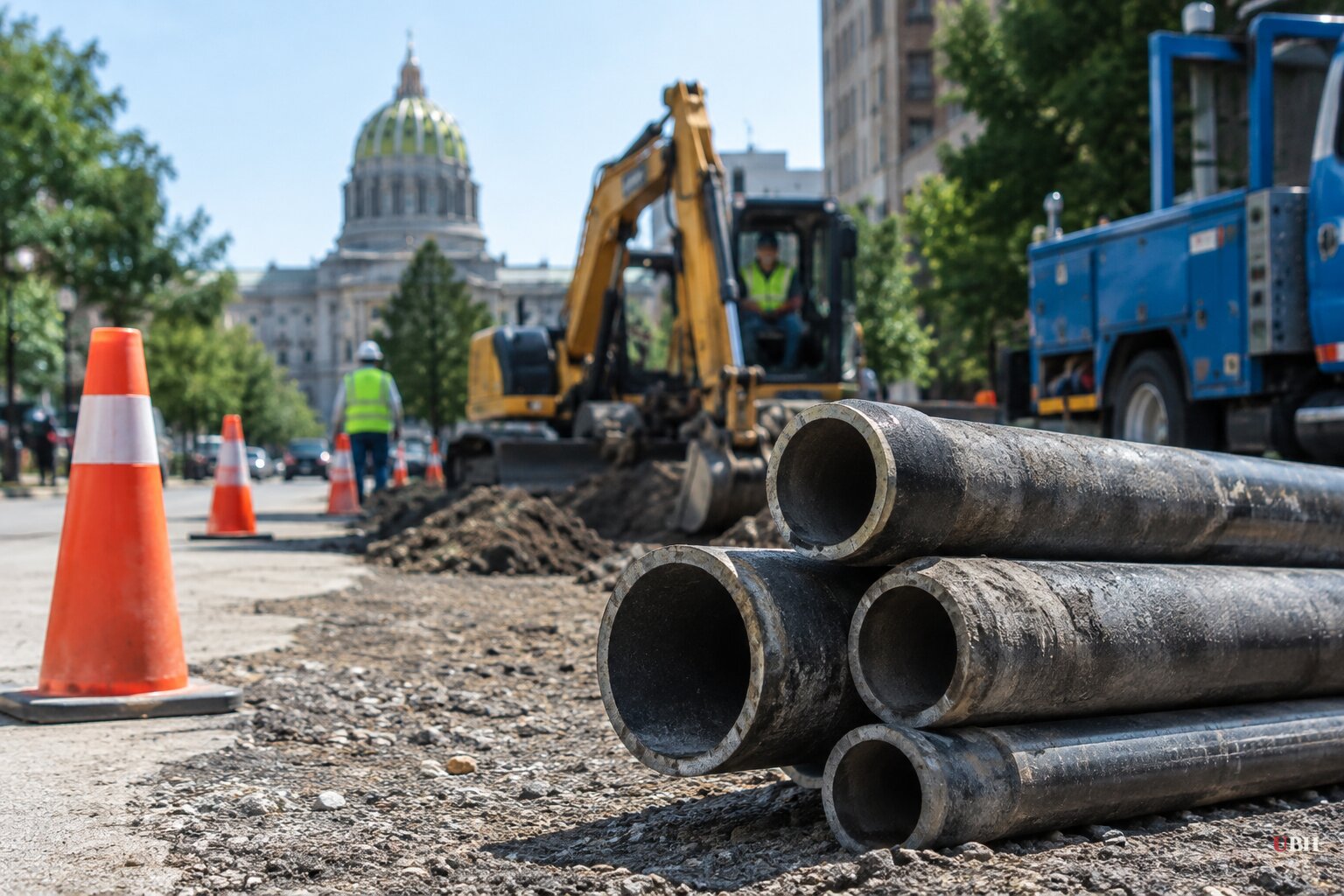
State and local governments are spending big on lead pipes during National Lead Poisoning Prevention Week, which runs through the last week of October. The announcements are real money. They also sit next to a much larger national bill.
The money announced
On Tuesday, Oct. 20, New York State announced close to $500 million in grants for drinking water and sewer projects. Of that, $64 million goes to projects that identify and replace lead service lines. The state says that builds on more than $600 million in grant commitments for lead lines since 2021.
Another $119 million in enhanced grants is earmarked for drinking water projects that bring systems into compliance with the state's strict emerging-contaminant standards, and for wastewater and sewer projects in small, rural and disadvantaged communities. Gov. Kathy Hochul's announcement says the grants are estimated to save communities $1 billion in debt service and support an estimated 22,400 jobs in construction and related industries. Those figures are the state's estimates, based on current market conditions.
In Pennsylvania, the Shapiro administration announced $190.3 million through PENNVEST for 24 drinking water, wastewater and non-point source projects across 19 counties. The administration says it has invested more than $4.9 billion through PENNVEST since Gov. Josh Shapiro took office and has replaced more than 45,000 lead service lines in that time. The $4.9 billion covers drinking water and wastewater work broadly, not just lead.
PENNVEST money comes from a mix of state funds approved by voters, Growing Greener funds, Marcellus Legacy funds, the federal Infrastructure Investment and Jobs Act, federal grant awards from the EPA under the Clean Water Act and the Safe Drinking Water Act Amendments, and recycled loan repayments from earlier PENNVEST awards. For projects funded with federal revolving-fund or IIJA money, the release says a "grant" may be a principal forgiveness loan, the functional equivalent of a grant because it does not require repayment.
In Syracuse, the Common Council voted unanimously to replace 1,700 lead service lines, with the authorization specifying the project won't exceed $25 million. It also approved up to $12 million for the city's Water Main Replacement Project.
The city's drinking water met the EPA lead standard for the January to July 2026 period, according to an August release. The Daily Orange reported in 2024 that Syracuse had some of the highest rates of lead water contamination in the nation. The Syracuse Water Department has also released a Lead Pipe Construction Dashboard so residents can get real-time updates on the pipe replacements.
The national gap
The scale of the problem dwarfs these checks. At least 4 million lead service lines are still in use nationwide, according to a Hill op-ed by Mae Stevens, executive director of the Protect Kids From Lead Coalition. The Infrastructure Investment and Jobs Act committed $15 billion over five years specifically to replacing them, while estimates place the total cost of replacing the nation's lead service lines at $50 billion to $80 billion. The op-ed says that leaves a substantial funding gap.
The EPA's Lead and Copper Rule Improvements, finalized in October 2024, set a 10-year replacement timeline for most water systems. Meeting that deadline requires identifying pipes, planning projects, coordinating with property owners and carrying out construction, all of which take money and time.
The op-ed also argues that as dedicated federal funding winds down, "more of the financial burden could fall on families to cover replacement costs through higher water bills." It calls on Congress to fund the Drinking Water State Revolving Loan Fund, the Reducing Lead in Drinking Water Program, and the Voluntary School and Child Care Lead Testing and Reduction Program in the next appropriations cycle. That is a call for more taxpayer money, and the op-ed does not say where it would come from.
The Trump administration points to the EPA's 100 actions to protect children's health. Those include hands-on assistance to more than 100 communities working to remove lead service lines and guidance to help water systems navigate replacement requirements.
Pipes are not the only source
The Chicago Department of Public Health announced a two-year pilot to bring free childhood lead testing to six South Side neighborhoods: Englewood, West Englewood, South Chicago, Greater Grand Crossing, Auburn Gresham and New City. Events will be held at daycares, schools, libraries, places of worship and community organizations. Prism Health operates the mobile testing units, in partnership with United Way of Metropolitan Chicago.
The department requires blood lead testing at ages 1, 2 and 3, and says a significant number of children in these neighborhoods have not been tested.
CDPH says children are often exposed through deteriorating lead-based paint and dust, especially in older homes. Other sources include contaminated soil, certain imported goods, jewelry and pottery. "By bringing lead testing into the neighborhoods where families live, learn and gather, we can help remove barriers to screening and connect more children with the follow-up care and resources they need," Commissioner Dr. Garth Walker said.
Families pay nothing. For insured children, Prism Health bills the insurance plan directly and families do not receive a bill.
Lead exposure can harm children's brain development, attention, behavior and learning. There is no known safe level of lead exposure, according to the Hill op-ed.
What comes next
Research from Michigan cited in a recent white paper estimated $3.24 billion in future benefits from replacing lead service lines there, including reduced lead exposure for more than 420,000 newborns. It is an estimate, not an audited result.
States like New York and Pennsylvania are committing funds now, while the national gap between the $15 billion federal commitment and the $50 billion to $80 billion estimated cost remains. Whether the remainder lands on Washington, state budgets or ratepayers' water bills has not been settled.
Sources used for this briefing
5 links from 5 independent newsrooms (syndicated copies of the same report count once)
These are the sources it draws on, linked so you can verify.


