
Unbiased headlines. Facts, not spin.
Unbiased Headlines is an independently owned news organization. We bring you the facts, not opinions, written fresh from 110+ named sources. Sources linked so you can verify it yourself.
 economy
Notable (6/10)
Ground Beef Down Under 2% in 30 Days After Trump Expanded Imports, While Cull Cow Prices Fell Up to 13.9%, Farm Action Says
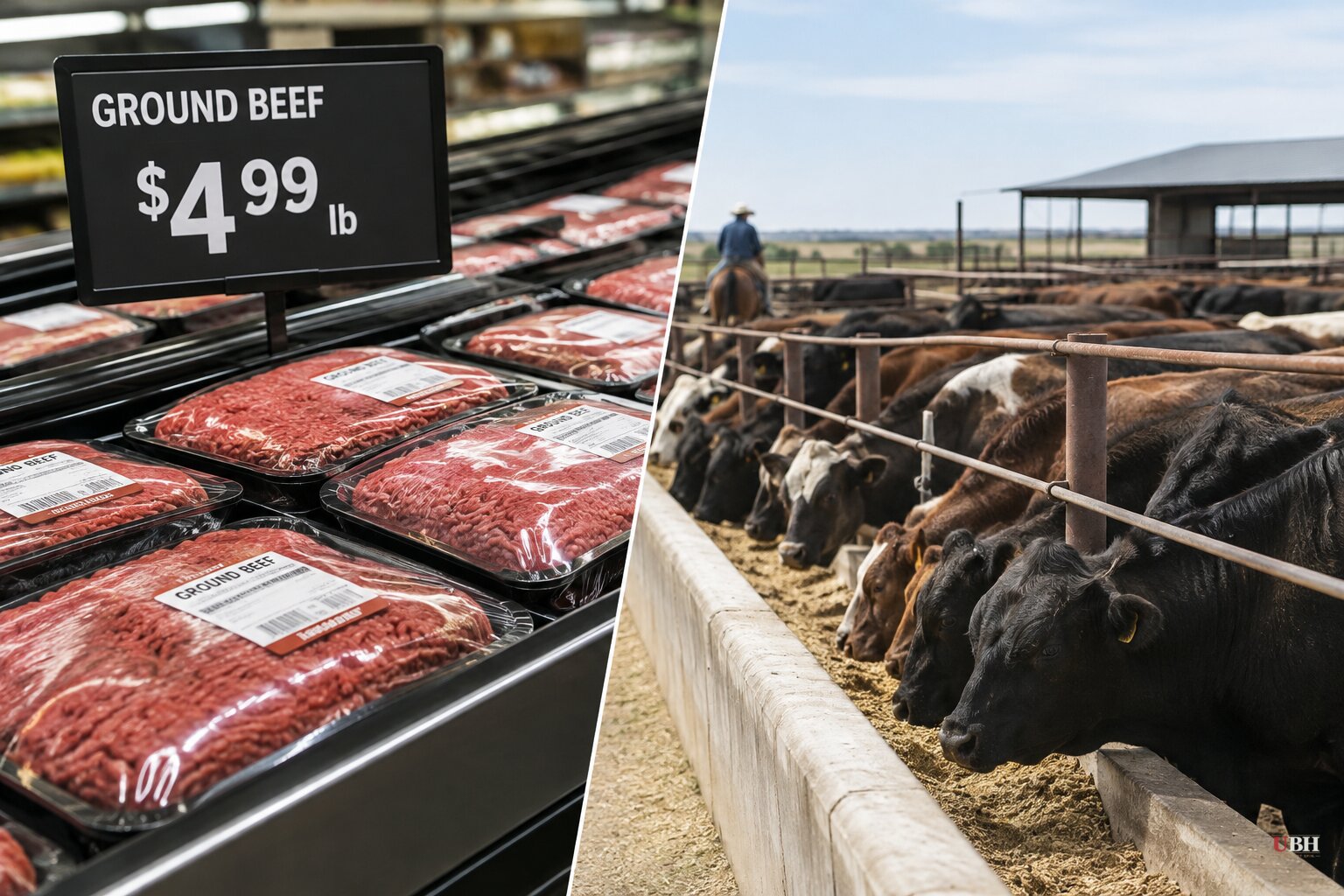
Since President Trump signed the Aug. 26 order allowing up to 300,000 metric tons of additional lean beef to enter at lower tariff rates for 90 days, the promised grocery-store relief has been small. Ranchers say the cost to them has not been.
The order said the imported beef would be sold at 25% below market price. The goal, as the administration framed it, was lower ground beef prices for families and a chance for the domestic herd to rebuild.
What 30 days showed
Farm Action, an advocacy group focused on farm and food policy, analyzed the first 30 days. The national average price of ground beef fell from $6.92 to $6.79 per pound. That is a decline of less than 2%.
Prices for the cows used to make ground beef fell by as much as 13.9% over the same period, according to the same analysis.
"The first 30 days raise serious questions about whether this policy is actually delivering on its promises," said Sarah Carden, Farm Action's senior director of research and policy. "Ranchers are seeing steep declines in the prices they receive, and consumers still haven't seen clear, meaningful relief at the grocery store."
Ground beef still costs about $6.80 a pound. A month is a short window, and the full effect of the extra imports on retail prices is not yet known.
Ranchers push back
The United States Cattlemen's Association, the National Cattlemen's Beef Association and the Farm Bureau all opposed the decision. Some rural Republican members of Congress distanced themselves from it as well.
Scott Birker raises about 150 mother cows near Garrison, Iowa, and is northeast regional vice president of the Iowa Cattlemen's Association. He said the announcement hit a market that was already volatile and short on supply.
"That surprise, with a very volatile market already, with a tight supply, hurts us really, really fast and really, really hard," Birker said.
Auction prices dropped quickly after the announcement, temporarily cutting ranchers' profits. Many were preparing to take cattle to market when it came.
The herd problem
The U.S. cattle herd is near its smallest since 1951. Zach Raff, incoming livestock economist at Iowa State University, calls it a 75-year low and says that, paired with strong demand, it explains what shoppers see at the store.
Drought in the western U.S. made hay more expensive and shrank herds before the import order. China cut its purchases of U.S. beef last year during the trade war. Last year Trump also put a 50% tariff on Brazil, a key beef supplier. In February, he signed an order giving some Argentine beef lower tariffs.
Raff said the price drop mattered less than the uncertainty. A producer who sees record cattle prices and fears more imports next year, he said, may send breeding heifers to slaughter instead of keeping them to grow the herd.
David Anderson, an agricultural economist at Texas A&M University who advises ranchers, made the same point. High prices this year should have encouraged ranchers to invest and expand. "It really works against the market signal to expand and produce more domestically," Anderson said. "That got a lot of people pretty angry."
Cheaper imports aim at the price shoppers pay now. A smaller herd keeps beef scarce and expensive later.
The administration's response
The administration has tried to soften the blow. On Sept. 4, Agriculture Secretary Brooke Rollins and Trump announced the Rancher First Initiative. It includes grants and guaranteed loans for processing, a commitment to prioritize American beef in federal procurement, and a review of meat processing regulations.
The National Sustainable Agriculture Coalition, which backs local meat processing, notes that USDA also rebranded some existing programs as part of the push. On Oct. 19 in Kansas, the administration announced $8 billion in farm relief.
Midterm math
It is not clear how much this will matter at the ballot box. Chad Basinger, a rancher in Pretty Prairie, Kansas, said some ranchers have told him they will vote for the other party or stay home. "But overall I don't think it'll be that much," he said. He added that ranchers will also weigh the $8 billion in relief.
Basinger's House district is expected to stay Republican. Kansas has an unexpectedly tight Senate race, and potential swing districts in Montana, Iowa, Texas and Colorado include cattle country. Ranchers and farmers are a shrinking share of rural voters, so they are unlikely to decide races on their own.
The 90-day window runs out around late November. The cattle groups' complaint is aimed at what follows: whether the quota is extended, enlarged or allowed to lapse. Raff's warning is that ranchers are making herd decisions now, with no answer.
Sources used for this briefing
7 links from 5 independent newsrooms (syndicated copies of the same report count once)
These are the sources it draws on, linked so you can verify.


