
Unbiased headlines. Facts, not spin.
Every story is an unbiased news briefing written from 110+ sources across the spectrum — sources linked so you can verify it yourself.
 health
Notable (6/10)
July 31, 2026 at 04:33 PM
health
Notable (6/10)
July 31, 2026 at 04:33 PM
Greece Evacuates Hundreds by Boat as Wildfires Kill Three Firefighters on Crete and Mainland
Boats Become the Only Way Out
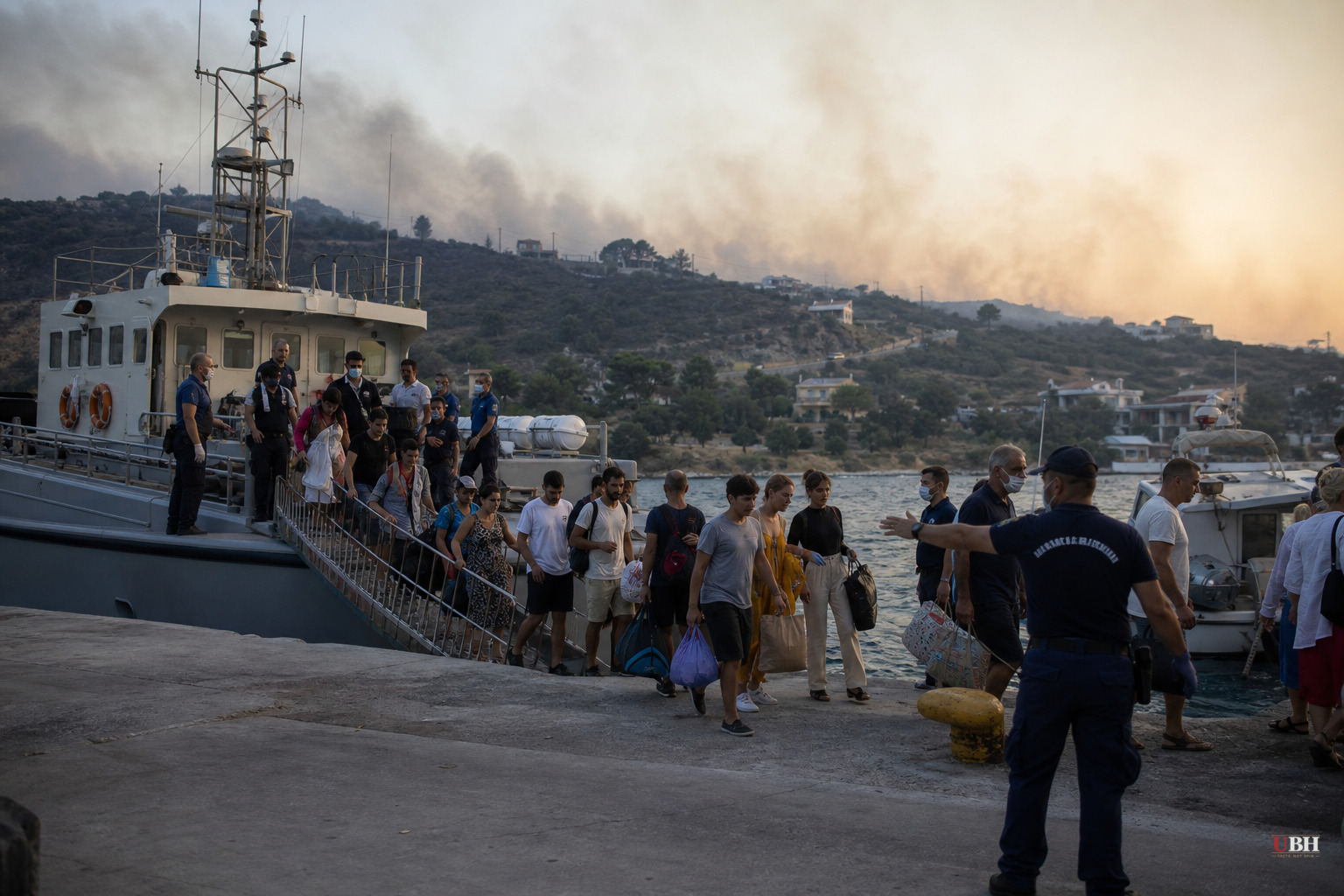
Greece is battling wildfires across multiple regions. On Friday, the fire near Agios Vasileios in Viotia got bad enough that the only way out was the sea.
About 500 people, mostly tourists, got trapped when a fire broke out near the coastal town Friday morning and spread fast on strong winds, according to Greek news agency Amna and reported by the BBC. More than 200 were evacuated by boat, with another 100 slated to follow, while emergency crews worked to pull out everyone still stuck in town.
Tourist Katerina Karanatsi described the scene to Kathimerini English Edition while waiting to board an evacuation boat. "There is panic," she said, adding that evacuees had not been told where they were being taken. Greece's 112 emergency alert system had told people to head toward the village of Kaparelli, but the fire moved faster than people could drive.
Authorities opened a backup escape route along an unpaved road, according to Kathimerini, but only let 10 cars through at a time to keep vehicles from getting trapped. A second fire broke out further down the coast and burned through farmland before tearing through the rural town of Xironomi, the BBC reported.
Crete's Fire Forced a Fisherman-Led Rescue
A separate wildfire hit Crete's Rethymno region earlier in the week, and the Greek Coast Guard evacuated 31 people by sea from the Agios Pavlos area on the island's southern coast, according to Marine Industry News. That operation happened Wednesday, July 29, and moved people to the port of Kokkinos Pyrgos.
The rescue involved two Greek Coast Guard patrol boats, a Greek Navy vessel, a Frontex patrol craft, and private fishing boats, according to the Joint Rescue Coordination Center. One of those private boat owners, fisherman Nikos Matthaiakis, told Cretalive.gr he got a call from the Port Authority around 4 p.m. asking for help and went out with his own boat.
"It was stifling in terms of fire and smoke, but the winds were hurricane-force," Matthaiakis said, adding that gusts hit 160 kilometers per hour. He described tavernas and guesthouses burning above the shoreline as he made repeat trips ferrying tourists to safety, and said exploding bottles created loud bangs as flames engulfed nearby buildings.
Two firefighters died battling the Crete blaze, and a third died fighting a separate fire on the Greek mainland, according to Marine Industry News. More than 200 firefighters have been deployed to contain the fires, which have damaged homes and farmland across the region. Fires have also broken out on the islands of Paros, Andros and Kalymnos, per the BBC.
Spain and Portugal are still dealing with their own fire disasters. More than 200,000 hectares have burned in Spain so far in 2026, roughly five times the average pace for this point in the year, according to EU data cited by the BBC. A fire in Spain's Ávila region, now stabilized, is being called the largest wildfire recorded in the country's history.
In northern Portugal, hundreds of firefighters battled a blaze near Valpaços that tore through 15,000 hectares, including vineyards and olive groves, according to news agency Lusa. Five people were injured in that fire, which had been burning since Tuesday, July 28.
Officials are warning of continued fire risk across most of Spain through at least Sunday, August 2, and a new heatwave this week raised concern about a massive fire near Madrid reigniting after it had been contained. Turkey also has four active fires along its Mediterranean coast, including near a popular tourist area, per the BBC.
What's Driving It
Most wildfires start from human activity, whether accidental or deliberate. In one related case, 13 people were arrested after fireworks launched from a superyacht are believed to have sparked a separate forest fire in Greece, according to Marine Industry News.
But the conditions that let these fires spread out of control are getting worse. Scientists say rising temperatures and drought are extending fire seasons and increasing the odds that a spark turns into a disaster, particularly in the Mediterranean, though individual fires depend on a mix of weather, vegetation, land management and ignition source. Greece's mild, wet winter encouraged vegetation growth that then dried into fuel during repeated summer heatwaves, according to the BBC.
For now, Greek officials haven't said how many firefighters or aircraft remain committed to the Viotia operation, and containment lines on both the mainland and Crete blazes were still not confirmed as of Friday. Whether the current heatwave breaks before the weekend or whether Spain's warning about fires reigniting near Madrid becomes the next flashpoint remains unclear in a summer that has already produced the country's largest wildfire on record.
Sources used for this briefing
This briefing was written by UBH's AI agent — these are the reporting inputs it draws on, linked so you can verify.


