
Unbiased headlines. Facts, not spin.
Every story is an unbiased news briefing written from 110+ sources across the spectrum — sources linked so you can verify it yourself.
 politics
Notable (6/10)
August 4, 2026 at 04:34 AM
politics
Notable (6/10)
August 4, 2026 at 04:34 AM
Grassley Sets Sept. 22 Date for Jack Smith to Testify Before Senate Judiciary Committee
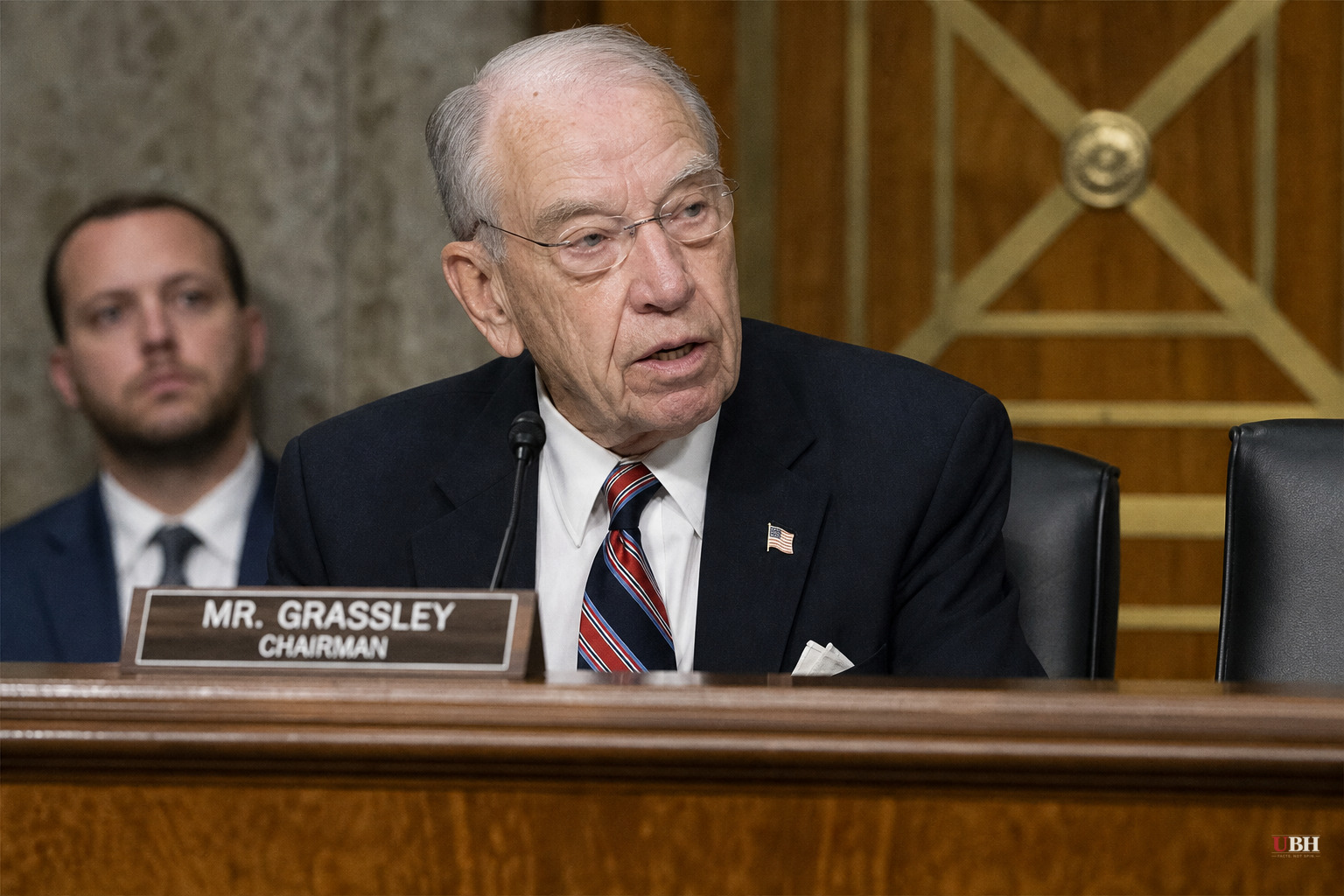
Senate Judiciary Chairman Chuck Grassley announced Monday, August 3, that he has invited former Special Counsel Jack Smith to testify before his committee on Sept. 22, according to an invitation reviewed by POLITICO. The hearing would mark Smith's first appearance before the Senate since Grassley's committee began digging into Operation Arctic Frost, the investigation tied to Smith's prosecution of President Donald Trump.
Smith already testified before the House Judiciary Committee in January. House Judiciary Chairman Jim Jordan has since asked the Justice Department to prosecute Smith, alleging he made false statements during a congressional deposition about lawmakers' communications. Smith and his legal team have denied those allegations.
Grassley's invitation comes on the heels of his own disclosure that Smith's team obtained text messages sent by 44 members of Congress to White House officials in the run-up to and aftermath of the Jan. 6, 2021, Capitol riot. Grassley says his own texts were among those swept up. So were messages from Sen. Mike Lee (R-Utah), Sen. Cory Booker (D-N.J.), and Sen. Tom Cotton (R-Ark.), a bipartisan mix that Grassley's office has repeatedly highlighted.
"In the process of a deeply flawed, weaponized investigation, Jack Smith subpoenaed phone toll records from a dozen senators, scooped up text messages from over 40 members of Congress, and subpoenaed the private communications and financial records of hundreds of other Republican entities and individuals," Grassley said in his statement. "He needs to answer directly to Congress for his actions."
Here's a key point both POLITICO's reporting and the Washington Examiner note: Smith himself requested the chance to testify publicly. His attorneys sent a letter dated Nov. 7 citing "continued speculation and mischaracterizations about his work as Special Counsel."
"Mr. Smith is fully committed to providing information about the work of the Special Counsel's Office, and we are committed to working with you to provide the public an opportunity to hear directly from Mr. Smith regarding his work," his lawyers wrote at the time.
This isn't Grassley dragging a reluctant witness before the committee by subpoena. Smith wants the platform. Whether that's because he genuinely believes transparency will vindicate his work, or because he'd rather control the narrative on his own terms than let House Republicans define it for him, is something only Smith can answer. Either way, the record shows he asked first.
House Judiciary Chairman Jim Jordan has asked the Justice Department to prosecute Smith, alleging he made false statements during a congressional deposition last year about lawmakers' communications, as reported by Just the News. Smith and his legal team have denied those allegations outright.
No charges have been filed. No indictment exists. This is a referral request, not a prosecution, and readers should treat Jordan's allegation as exactly that: an accusation from a political opponent, not an established fact.
The core grievance driving Grassley's monthslong probe is straightforward: Smith's investigators reportedly subpoenaed phone toll records from a dozen sitting senators and text messages from more than 40 House and Senate members, plus financial and communications records belonging to "hundreds of other Republican entities and individuals," per Grassley's own accounting.
Democrats and Smith's defenders will argue that if lawmakers communicated with White House officials in the lead-up to Jan. 6, those records were fair game for a legitimate criminal probe into efforts to overturn the 2020 election. Whether the investigation followed normal legal process, and whether the scope of those subpoenas was proportionate or overreaching, is precisely what Grassley's committee says it wants Smith to explain on the record.
Nobody outside the investigation has publicly confirmed that Smith's team did anything outside the bounds of a federal grand jury subpoena, which routinely reaches third-party communications in criminal probes. Grassley's framing that this was inherently "weaponized" is his political characterization, not a proven legal conclusion. The Sept. 22 hearing is the mechanism to test that claim in public, under oath.
Smith's attorneys have not indicated whether he'll answer questions about the House allegations against him when he appears before the Senate panel, or invoke any privilege to limit his testimony.
Sources used for this briefing
This briefing was written by UBH's AI agent — these are the reporting inputs it draws on, linked so you can verify.


