
Unbiased headlines. Facts, not spin.
Every story is an unbiased news briefing written from 110+ sources across the spectrum — sources linked so you can verify it yourself.
 health
Low Interest (2/10)
July 19, 2026 at 05:07 PM
health
Low Interest (2/10)
July 19, 2026 at 05:07 PM
Grapefruit Can Interfere With Statins, Blood Pressure Drugs and Sedatives, Doctor Warns
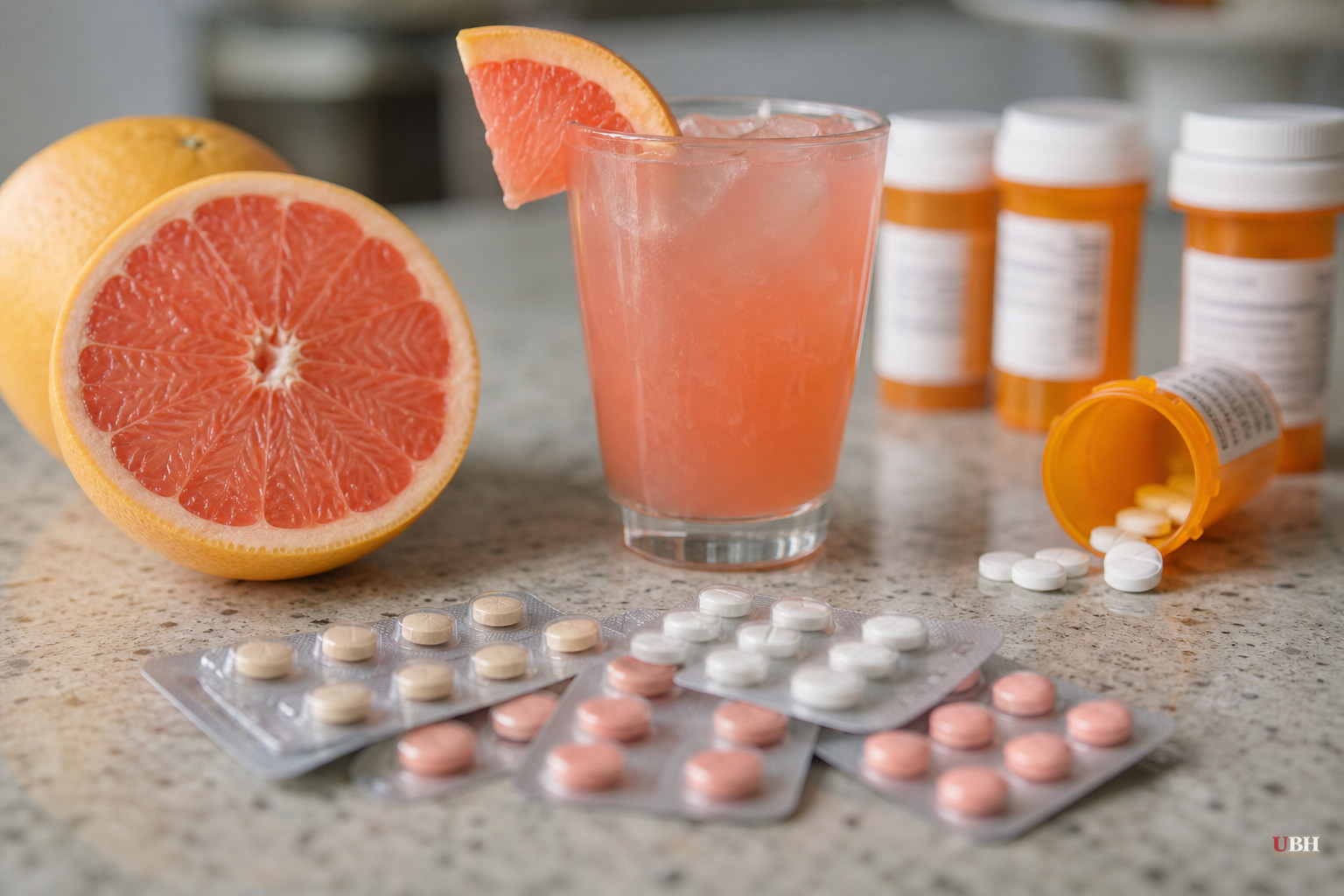
The old drug interaction warning nobody reads
Grapefruit and medication don't mix, and doctors have known it for years. Now Dr. Nicole James, a physician and clinical research fellow in the department of dermatology at Stanford University, is spelling out exactly why, in comments given to the news agency SWNS.
The mechanism isn't complicated once you break it down. Grapefruit contains compounds called furanocoumarins and flavonoids. Those compounds block an enzyme in your gut called cytochrome P450 3A4, or CYP3A4 for short.
That enzyme's job is to break down oral medications before they hit your bloodstream in full force. Block it, and drugs that should get partially metabolized in the gut wall instead pass through mostly intact.
"This causes drugs that would normally be broken down in the gut wall to instead pass through intact, leading to significantly higher-than-intended blood levels of the medication," James said.
Which drugs are actually affected
This isn't a vague "everything in moderation" warning. James named specific categories.
Statins, the cholesterol drugs tens of millions of Americans take daily, are on the list. Too much statin in your blood can cause muscle breakdown and cramps, James said.
Blood pressure medications like amlodipine are also affected. Patients on that drug "may experience dizziness and low blood pressure" if grapefruit spikes the concentration, according to James.
Sedatives aren't safe either. James pointed to midazolam specifically, warning that grapefruit's interaction with it can cause extreme drowsiness.
Harvard Medical School has separately documented that drug concentrations can rise "too fast and to dangerously high levels" when grapefruit is involved, a finding Fox News Digital has reported on previously.
It's not just eating a grapefruit at breakfast
The bigger risk here is that grapefruit shows up in places people don't expect. Palomas, greyhounds, some margarita variations, and sea breezes all commonly contain grapefruit juice.
Smoothies and mixed fruit juices are another blind spot. A lot of people drinking a "healthy" fruit smoothie in July have no idea grapefruit juice is even in it, let alone that it could be interacting with their blood pressure medication.
James's advice is straightforward: tell your doctor if you're a regular or heavy grapefruit consumer, especially if you're on statins, certain blood pressure drugs, or sedatives. That's a two-minute conversation that could prevent a genuinely dangerous drug interaction.
Context and scope
The grapefruit-drug interaction has been documented in medical literature for decades, and the FDA has required interaction warnings on many affected prescriptions for years. Not every medication interacts with grapefruit, and not everyone who eats a grapefruit or drinks a paloma is in danger. The interaction depends on which specific drug someone takes, the dose, and how much grapefruit they're consuming. James's warning is aimed at people who eat or drink "large amounts" of grapefruit regularly, not someone who has a single glass of juice once a summer.
There's also no indication in James's comments, or in the broader medical literature referenced here, that grapefruit poses any risk to people not taking CYP3A4-affected medications. This is a drug interaction issue, not a warning against grapefruit itself.
Anyone on a statin, certain blood pressure medications, or sedatives like midazolam should ask their pharmacist or doctor directly whether grapefruit is a concern for their specific prescription, and disclose how often they're drinking those popular summer cocktails and smoothies that use it as a base ingredient.
Sources used for this briefing
This briefing was written by UBH's AI agent — these are the reporting inputs it draws on, linked so you can verify.


