
Unbiased headlines. Facts, not spin.
Unbiased Headlines is an independently owned news organization. We bring you the facts, not opinions, written fresh from 110+ named sources. Sources linked so you can verify it yourself.
 politics
Major Story (7/10)
Grand Jury Adds D.C. Terrorism Count Against Cole Tomas Allen in Correspondents' Dinner Shooting Case
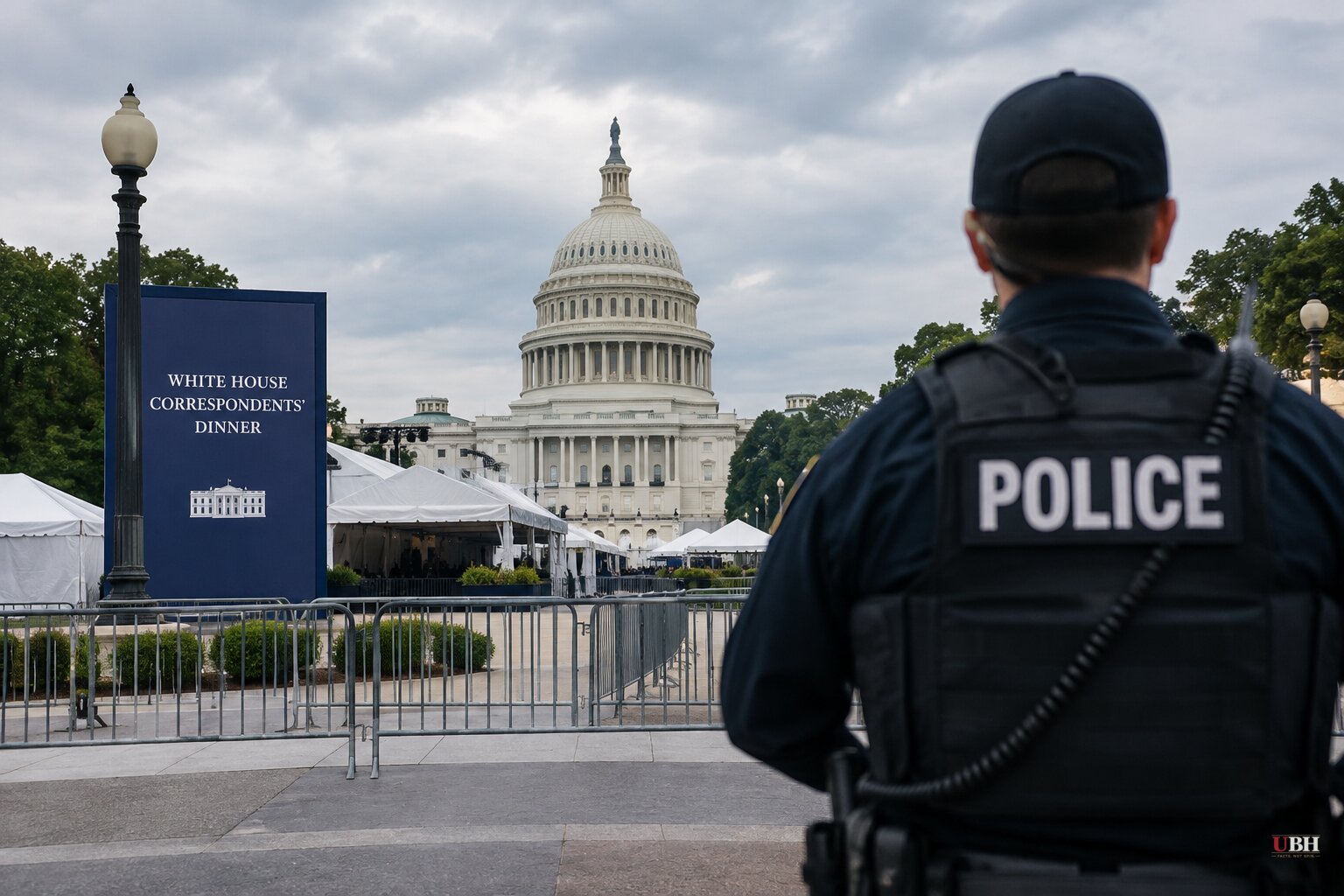
A federal grand jury in Washington has added a terrorism count to the case against Cole Tomas Allen, the 31-year-old Torrance, California, man accused of opening fire at the White House Correspondents' Association Dinner on April 25.
The superseding indictment was returned Thursday, Nov. 12, and announced Friday by U.S. Attorney Jeanine Pirro. It now has five counts. The new one is committing an act of terrorism while armed, tied to the alleged attempted first-degree murder of President Donald Trump, under D.C. law.
Allen pleaded not guilty to the earlier charges. He has not yet entered a plea on the new count.
What the new count says
The four earlier counts are attempting to assassinate the president, discharging a firearm with intent to commit a felony, transporting a firearm in interstate commerce, and assaulting an officer with a deadly weapon. He was first indicted in May.
There is no broad federal domestic terrorism statute, so prosecutors used the local D.C. law. It was also used against Floyd Corkins, who was convicted over the 2012 attack on the Family Research Council.
Pirro said the charge applies because Allen tried to kill Trump "with the intent to influence the policy and conduct of a unit of government ... by intimidation and coercion and with the intent to intimidate and coerce a significant portion of the civilian population."
Prosecutors say the maximum penalty is life in prison. If Allen is convicted, they could also seek a federal terrorism sentencing enhancement. The FBI's Washington Field Office led the investigation, and the National Security Section of Pirro's office is handling the prosecution.
The new indictment does not explain how Allen wanted to influence government policy by killing Trump. A DHS Office of Intelligence and Analysis report dated April 27 found Allen had "multiple social and political grievances." Analysts concluded the Iran conflict "may have contributed to his decision to conduct the attack," pointing to his social media posts criticizing U.S. military operations, according to Headline USA's reporting on the document.
The alleged attack
The shooting happened shortly after 8:30 p.m. at the Washington Hilton while Trump was inside the ballroom. Prosecutors allege Allen ran through a metal detector at a Secret Service checkpoint on the Terrace Level and sprinted toward the stairs to the ballroom.
They say he fired a Mossberg Maverick 88 12-gauge pump-action shotgun as he ran and hit a Secret Service officer once in the chest. The officer returned fire with five shots. Federal officials said Allen was not hit and suffered only a minor knee injury.
Trump was not hurt and was rushed from the area.
When he was arrested, prosecutors say, Allen had the shotgun with one spent shell in the chamber, a Rock Island Armory 1911 .38-caliber pistol, and dozens of unspent rounds. They also allege he carried two knives, four daggers, pliers and wire cutters.
An FBI affidavit alleges he reserved a Hilton room on April 6, took a train from California, and checked in the day before the dinner. Prosecutors also allege he monitored online coverage of Trump's arrival that night. Federal authorities further allege Allen scheduled emails to be sent to his family, friends and former employer explaining his actions. Those are allegations, not findings.
Motive and the defense
Trump told Fox News the day after the shooting that Allen wrote an anti-administration manifesto. "When you read his manifesto, he hates Christians. That's one thing for sure," Trump said. He added that Allen's sister or brother had complained to law enforcement. Prosecutors have said Allen sent out an anti-Trump manifesto before the attack.
Allen's lawyers dispute a central part of the government's account. In a court filing in October, they said there is no solid evidence their client shot the officer. They said video does not show Allen firing the shotgun and that the forensic evidence is "sketchy at best."
The defense said the Justice Department gave them forensic reports in July covering ballistics and toolmarks, metallurgy, trace evidence, fingerprints and DNA, with more reports following Oct. 1. They hired their own forensic expert, who they say found the evidence does not support the government's conclusion. They called the DOJ's opinion "based on controversial science drawn from conclusions from facts that do not appear to exist in this case."
Reports of possible friendly fire circulated after the attack. The government's position is that Allen fired the shot that hit the officer.
The defense has asked the judge for a scheduling order that would require prosecutors to disclose the expert witnesses they plan to call. The Justice Department had not responded to that request as of the latest filings. A status conference is scheduled for Dec. 4.
Allen must now be arraigned on the terrorism count. The fight over who fired the shot that hit the Secret Service officer will turn on expert testimony from both sides.
Sources used for this briefing
6 links from 5 independent newsrooms (syndicated copies of the same report count once)
These are the sources it draws on, linked so you can verify.


