
Unbiased headlines. Facts, not spin.
Unbiased Headlines is an independently owned news organization. We bring you the facts, not opinions, written fresh from 110+ named sources. Sources linked so you can verify it yourself.
 politics
Major Story (7/10)
Alito Says Congress Can 'Turn Off the Lights' at Supreme Court Days After Democrats Win Senate
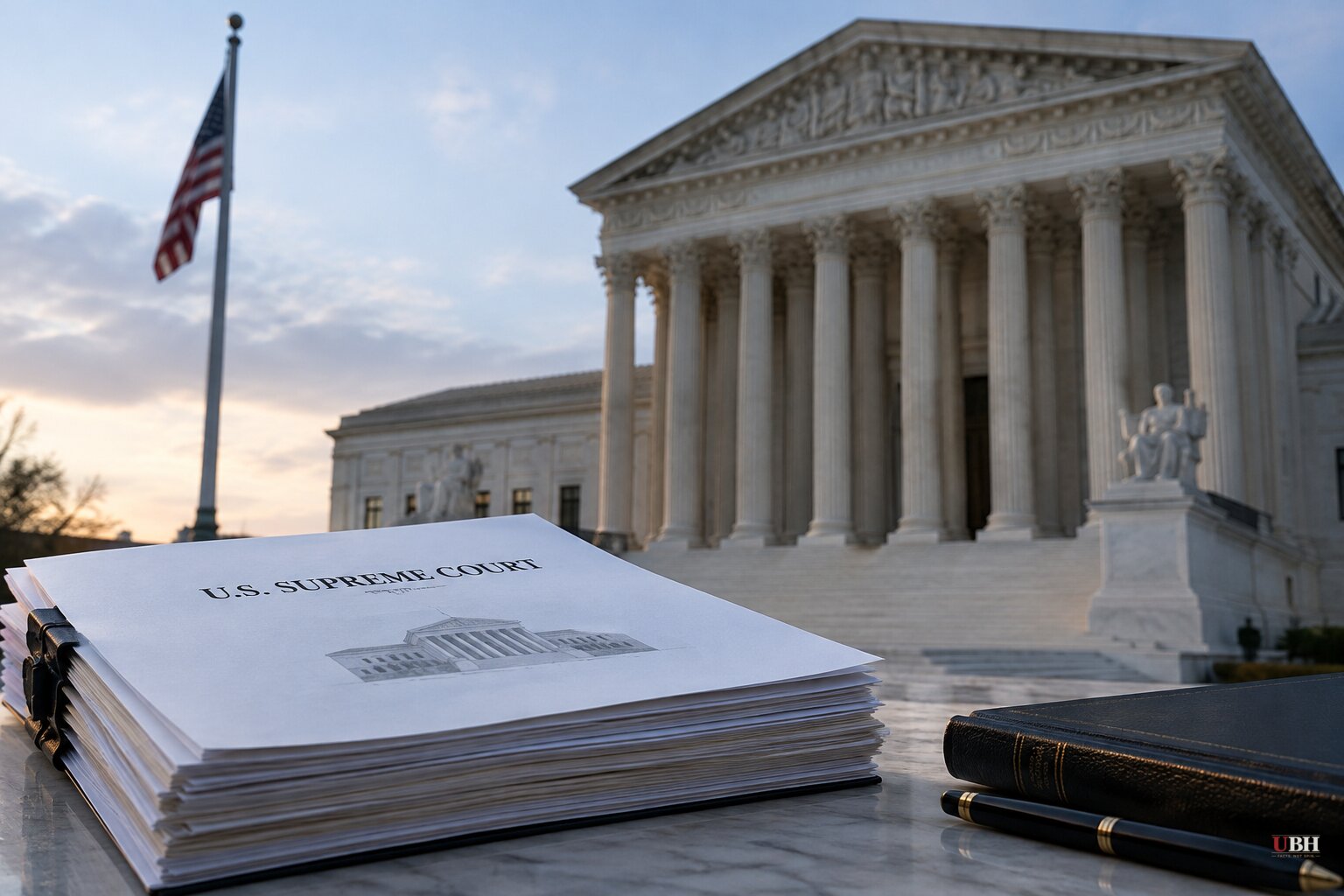
Justice Samuel Alito told a room of more than 1,000 conservative lawyers on Thursday, Nov. 12, that Congress holds the power to shut the Supreme Court down.
"Congress can turn off the lights at the Supreme Court and stop everything from happening if they want to defund their activities," Alito said at the Federalist Society's annual Antonin Scalia Memorial Dinner. "And there are many, many, many other things that they can do, or at least try to do."
He added: "So, it is important to preserve the independence of the judiciary. If that is eliminated, then the Constitution as adopted in 1789 will no longer be the same."
What Congress can and cannot touch
The Constitution protects justices' salaries from being cut. It does not protect the money for clerks, staff and building upkeep. Those come from appropriations, and appropriations come from Congress.
Alito did not mention the Democratic Party or Tuesday's election in his remarks. He called the judiciary the least powerful branch and the one most "vulnerable" to Congress. Then he offered an analogy: a hand grenade, a 500-pound bomb and a nuclear weapon. "The hand grenade is the least dangerous," he said. "But that is not to say that it is not dangerous."
He also took a swipe at lower-court judges who have blocked presidential policies. "They are dedicated and they are skillful, but they're not perfect and they make mistakes," Alito said. "And in some instances, I think they have gone far astray in abuse of their powers."
The election behind the speech
The Nov. 3 midterms were a rout for Republicans. With 24 House races still uncalled, Democrats had won 254 seats to the GOP's 157, according to the tally cited by law professor John Yoo in a Fox News column. In the Senate, Democrats flipped at least seven seats for a 54-44 majority in that same count, with Democratic challengers narrowly ahead in the two remaining races. Races in Mississippi and Alaska were still described as too close to call as of midweek.
Vice President JD Vance blamed the war. "The reason we lost is the war. The president himself said so last night," Vance said Wednesday. "If you'd like to argue it was worth it, that losing the Senate for the next six years was worth it, then do so." He warned the GOP could stay out of Senate control until at least 2032.
House Democratic leader Hakeem Jeffries, announcing a run for speaker, wrote to colleagues that they must "clean up the mess at the Supreme Court." He did not spell out specifics in the portion of the letter that has been quoted. Court expansion, term limits and new ethics rules are the options commonly floated on the Democratic side.
Yoo, a Berkeley law professor and Bush-era Justice Department lawyer, argues the real target of the blue wave is the court itself. He writes that Democrats will try to interfere with basic institutions and that expanding the court "may pose the greatest threat to the American system of limited government and natural rights." That is Yoo's prediction. No Democratic leader quoted so far has formally proposed adding seats.
The retirement question
The Senate math is why Alito's future is a live topic. He is 76. Clarence Thomas is 78. The court's 6-3 conservative majority depends on those seats staying filled by like-minded justices.
The New York Times, citing people close to Alito, reported he has no plans to step down immediately. He has said as much himself. "I intend to stick around through this term," he told Bloomberg News earlier.
In an October CBS News interview, Alito told Jan Crawford he had weighed retiring this year despite "pretty intense pressure" from GOP officials. He stayed because "I thought that I could still make a valuable contribution." He also said: "It's too hard to predict what the political situation will be, and what any president might do with respect to a replacement." Asked whether he would revisit the decision each year, he said, "Yeah, I think I have to."
Conservative legal commentator Ed Whelan of the Ethics and Public Policy Center, writing in National Review, sees a closed window. He says no justice will retire during the last two years of Trump's term and no confirmation can happen in the lame-duck session. Republicans fall to 52 seats when Sherrod Brown is sworn in for Ohio in December. Whelan says Susan Collins and Lisa Murkowski can be counted as no votes on a Trump nominee. John Cornyn, Thom Tillis and Bill Cassidy, he writes, "aren't going to be eager to support a MAGA nominee."
Whelan's longer view is stark. If a Republican wins the presidency in 2028 and still faces a Democratic Senate, he writes, no justice will retire and the president will get few if any judicial confirmations. If a Democrat wins, Sonia Sotomayor, who turns 75 in 2029, could step down by 2031. He says Thomas and Alito may not be able to retire before 2033 without being replaced by someone of a very different judicial philosophy.
A wider oversight fight
The court is one front. On Wednesday, Nov. 11, the White House counsel sent a letter vowing to fight "tooth and nail" against what it called "inappropriate" investigations by incoming House Democrats. Robert Garcia, the incoming House Oversight chair, responded Thursday.
The new Congress is seated Jan. 3, 2027. Alito's next decision point on retirement comes with the end of the court's current term, typically in late spring or early summer. The appropriations bills that would fund the court come due in the same Congress that Democrats will control.
Sources used for this briefing
7 links from 6 independent newsrooms (syndicated copies of the same report count once)
These are the sources it draws on, linked so you can verify.


