
Unbiased headlines. Facts, not spin.
Unbiased Headlines is an independently owned news organization. We bring you the facts, not opinions, written fresh from 110+ named sources. Sources linked so you can verify it yourself.
 politics
Major Story (7/10)
Event date: November 1, 2025 ·
Alaska Senate Race Uncalled: Peltola Leads Sullivan in First-Choice Votes, Ranked-Choice Count Set for Nov. 18
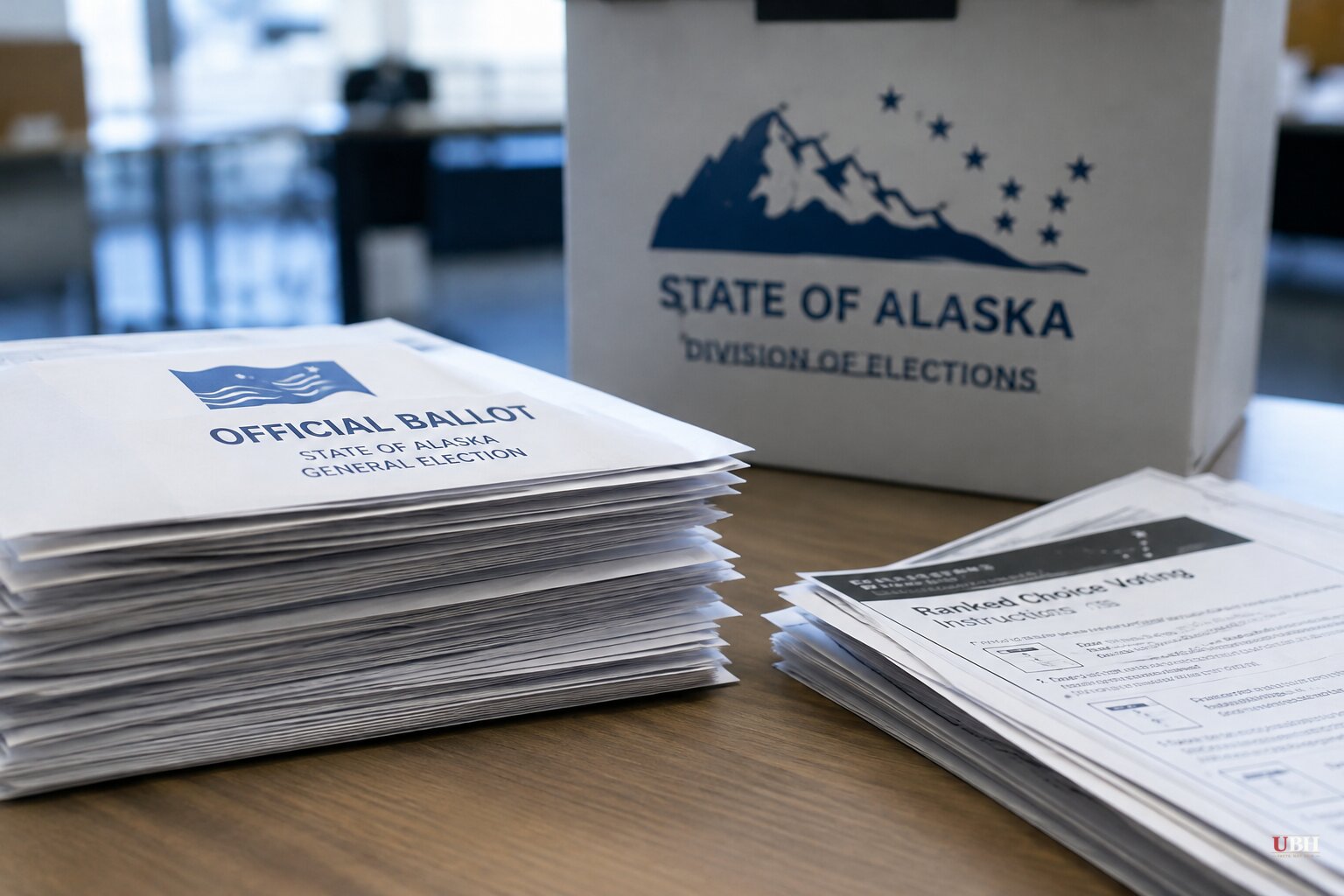
Since the Justice Department filed a preemptive lawsuit in late October to block certification of Alaska's Senate result, and a federal judge dismissed it on Nov. 1, the fight has moved from the courtroom to the vote count. The count is not finished.
As of 10:59 p.m. Eastern on Nov. 12, the Alaska Division of Elections' unofficial results showed Democrat Mary Peltola with 125,157 first-choice votes and Republican Sen. Dan S. Sullivan with 119,357. Gerald Heikes had 5,490. Daniel J. Sullivan Jr., the retired Petersburg schoolteacher at the center of the dispute, had 4,199.
The Associated Press estimated 88 percent of the vote counted and had not called the race. If no candidate wins more than 50 percent of first-choice votes, the state runs a ranked-choice tabulation, scheduled for Nov. 18.
What is still outstanding
Domestic absentee ballots postmarked by Election Day are accepted through today, Nov. 13. Overseas ballots can arrive through Nov. 18. Certification is targeted for Nov. 25.
The count is incomplete, and the ranked-choice rounds will redistribute votes only according to the rankings voters actually made.
Trump keeps posting
On Tuesday, Nov. 10, Trump posted on Truth Social: "Dan Sullivan PLUS Dan Sullivan." He called the contest a "rigged election" and demanded that every vote for the schoolteacher go to the senator.
Alaska's ballot does not work that way. Votes transfer only through rankings voters chose themselves, and only when no candidate clears 50 percent of first choices.
Newsweek logged more than 30 dated events in the dispute since April: presidential posts, court filings, Justice Department statements and state actions. Its tally found that twice this fall a Trump post was followed within a day by a Justice Department legal action, and twice more the two landed on the same news day. Newsweek also noted the record does not show the posts caused the department's moves, and that the federal inquiry began before the heaviest posting.
Trump has been direct about his role in the lawsuit. "I'm the one that said 'do it,'" he told reporters in Florida the Friday after it was filed. Attorney General Todd Blanche said the department did not coordinate with any campaign or candidate, and described the suit as aimed at preserving ballot information so Alaska officials could judge whether voters were confused.
Why the lawsuit failed
The suit leaned on the preamble of the National Voter Registration Act. It asked the court to stop certification pending an investigation into whether voters were confused by two similarly named candidates, if Sullivan lost by fewer votes than Daniel J. Sullivan received.
U.S. District Judge Sharon Gleason, an Obama nominee, ruled the federal government cannot bring the case. She also found the requested order would likely violate Alaskans' right to a secret ballot. "The absence of any explanation from the United States as to how its requested relief could redress its alleged injury while simultaneously maintaining the secrecy of the ballot is telling," she wrote.
Derek Muller, an election law professor at Notre Dame, had called the theory "strange and unusual" before the ruling. David Becker of the Center for Election Innovation & Research called the filing an "unprecedented intervention by the federal government." The ACLU's Sophia Lin Lakin said it was "a reckless waste of taxpayer money."
DOJ spokesperson Kiersten Pels said the department plans to appeal. "Alaskan voters deserve a fair election, not to be misled in an attempt to rig outcomes," she said.
The spoiler allegation
The underlying Republican complaint is that Daniel J. Sullivan Jr. was put on the ballot to peel votes from the incumbent. Sen. Sullivan called him a "sham candidate" in June. The DOJ's complaint says the candidacy's "sole purpose" is to benefit Peltola.
On Oct. 28, The New York Times reported that operatives aligned with Peltola helped recruit Sullivan Jr. and others to run. NPR has not independently confirmed the Times account. Gov. Mike Dunleavy, a Republican, ordered a criminal investigation the next day. Peltola denied any role: "I knew nothing about any other candidates on the ballot except for me and the incumbent."
Daniel J. Sullivan Jr. has called the allegations "entirely false" and says he is running as a Republican under his lawful name. Alaska's courts restored him to the ballot in June after the state's elections director tried to remove him, and the Alaska Supreme Court ruled he has the right to run.
In the August primary, the incumbent drew 68,726 votes and Daniel J. Sullivan 4,107. State officials listed the incumbent on the general-election ballot as "Registered Republican" and "incumbent," and the other Sullivan with no party label.
Sen. Sullivan has said he would accept the results even if he does not win. His spokesman, Nate Adams, said the senator would "let the DOJ complaint run its course."
FairVote, which advocates for ranked-choice voting, argues the system works against same-name tactics because voters unsure about the two Sullivans can rank both. It points to a campaign jingle the senator boosted telling voters, "Dan S. is your number 1, if he's not rank him second."
What comes next
The next tests are the close of absentee receipt, the Nov. 18 tabulation and the Nov. 25 certification target. NPR reported that Dunleavy has indicated the state's certification could depend on how his criminal investigation proceeds. Whether the DOJ files its promised appeal, and whether any finding from the state probe reaches certification, are unresolved.
Sources used for this briefing
7 links from 7 independent newsrooms (syndicated copies of the same report count once)
These are the sources it draws on, linked so you can verify.


