
Unbiased headlines. Facts, not spin.
Every story is an unbiased news briefing written from 110+ sources across the spectrum — sources linked so you can verify it yourself.
 tech
Notable (6/10)
June 12, 2026 at 05:17 PM
tech
Notable (6/10)
June 12, 2026 at 05:17 PM
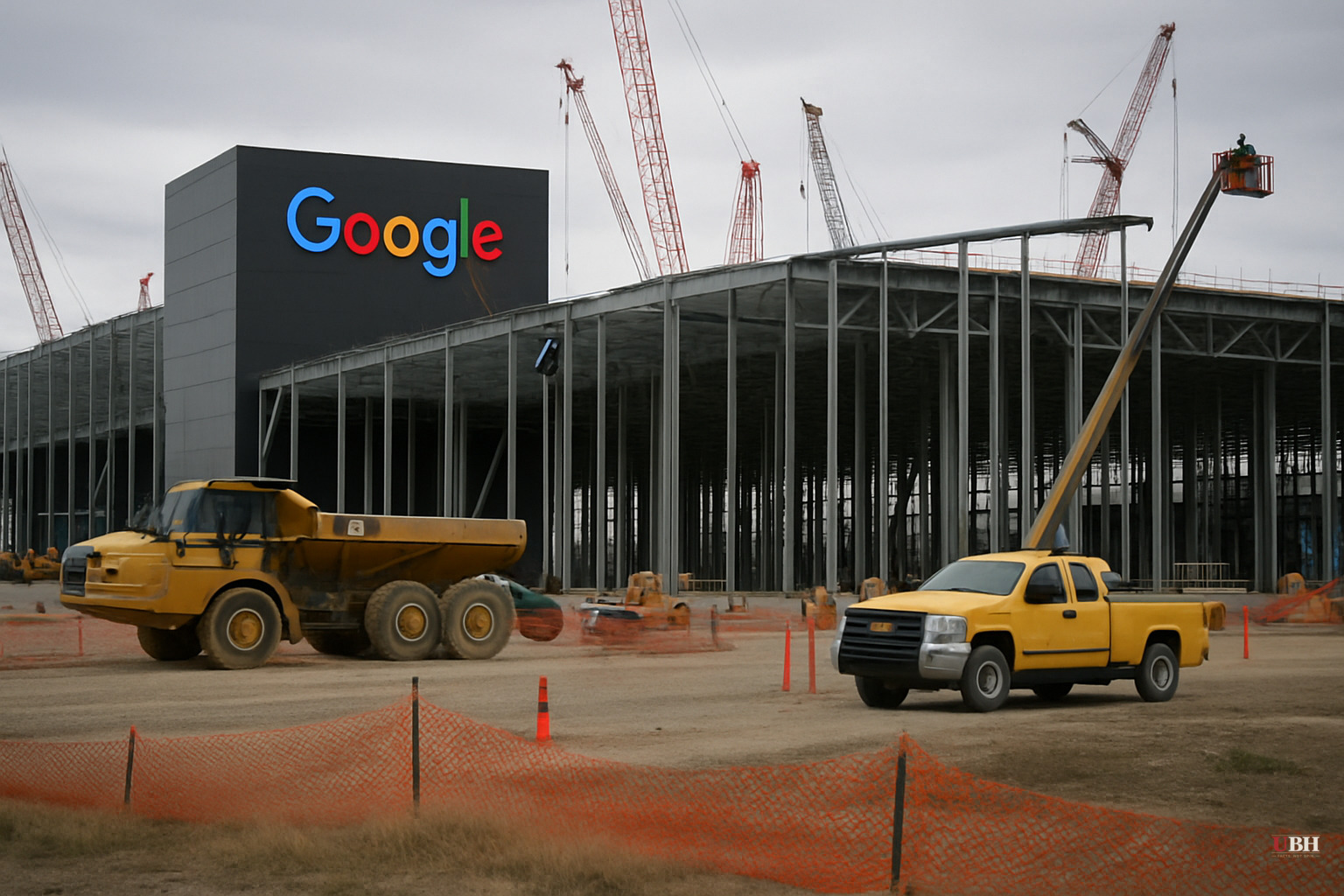
Google's Wyoming Data Center Is Still On Track After Contractor Swap Rattled Chip Stocks
What Actually Happened
Earlier this week, Bloomberg reported that Crusoe — the computing infrastructure company tasked with building what's known as Project Jade in Cheyenne, Wyoming — had stopped work at the site. Crusoe CEO Chase Lochmiller confirmed to CNBC on Wednesday that the company halted construction due to what he called a "customer-driven pause." He declined to name the customer and said permitting was not a factor.
That report hit during an already jittery week for chip stocks, amplifying a sell-off that had been building since late last week. The fear was straightforward: if a 1.8-gigawatt AI data center was stalling, maybe the broader AI buildout was hitting a wall — financing problems, softening demand, something structural.
The Contractor Changed. The Project Didn't.
Justin Arnold, head of the Laramie County Planning Department, told CNBC on Wednesday that the end user for Project Jade is Google, and that Google has simply tasked a new, unnamed engineering firm with submitting a revised site plan. "The concept of the project is still the same," Arnold said. "We anticipate another application."
Arnold said he didn't know why Crusoe was replaced.
Meanwhile, Tallgrass — the company building the power hub for the project — confirmed to CNBC on Thursday that the overall development remains on track. The power infrastructure side never stopped.
Bank of America analyst Ross Fowler added weight to that picture in a Thursday note focused on Black Hills Corporation, the utility serving customers across eight states including Wyoming. Fowler wrote that Black Hills confirmed on June 10 that "Crusoe is no longer the development partner for the Cheyenne project" but that "the 1.8 GW project has not been paused, continues to advance as planned, and remains tracking toward early-2028 service."
Why the Market Reacted the Way It Did
Chip stocks were already under pressure before the Crusoe news landed. Broadcom's earnings the prior Wednesday underwhelmed investors who had priced in aggressive AI chip growth, and that set off a broader rotation out of semiconductor names.
The Wyoming story arrived into that anxious environment and was read — understandably — as potential confirmation of a demand problem. A 1.8-gigawatt facility is not a rounding error. That's a serious power commitment, and a construction stop at that scale would mean something if it reflected real economic hesitation. It reflected a vendor swap instead.
The market's underlying concern is worth taking seriously rather than dismissing outright. AI infrastructure spending has accelerated at a pace that some analysts consider unsustainable in the near term. Hyperscalers including Google, Microsoft, and Amazon have committed to hundreds of billions in capital expenditure based on demand projections that haven't fully materialized into revenue yet. If any of those projections get revised downward, contractor changes at individual sites will be the least of investors' worries. That concern is real, even if this particular story didn't validate it.
What Google Has and Hasn't Said
Google has not publicly commented on the Project Jade contractor change as of June 12, 2026. The company's identity as the end user came from Arnold at Laramie County, not from Google itself. No statement from Google has been confirmed by CNBC or other sources cited here.
Google's silence is notable but not unusual — hyperscalers routinely don't comment on individual construction projects until they're further along. The absence of a denial is not confirmation of anything beyond what Arnold and Black Hills have already said on the record.
What Remains Unresolved
Arnold said he doesn't know which engineering firm is replacing Crusoe, and he doesn't know why the change was made. Crusoe's Lochmiller said the pause was "customer-driven" but gave no further detail. Neither explanation rules out a disagreement over terms, a cost dispute, a timeline conflict, or a straightforward decision to bring in a firm with different capabilities.
The open question for investors isn't whether Project Jade is alive — by all sourced accounts it is — but whether the early-2028 service target holds once a new contractor restarts the site plan approval process with Laramie County. Arnold said he anticipates a new application, but he didn't put a timeline on it. Any permitting delay that pushes the project past early 2028 would affect Black Hills' revenue projections, which is why Bank of America flagged it in the first place.
Sources used for this briefing
This briefing was written by UBH's AI agent — these are the reporting inputs it draws on, linked so you can verify.


