
Original briefings. Zero spin.
Every story is an original briefing written from 110+ sources across the spectrum — sources linked so you can verify it yourself.
 tech
Major Story (8/10)
September 9, 2026 at 09:27 AM
tech
Major Story (8/10)
September 9, 2026 at 09:27 AM
Google to Invest $15.1 Billion in Finland, Signs First Nuclear Power Deal Outside the U.S.
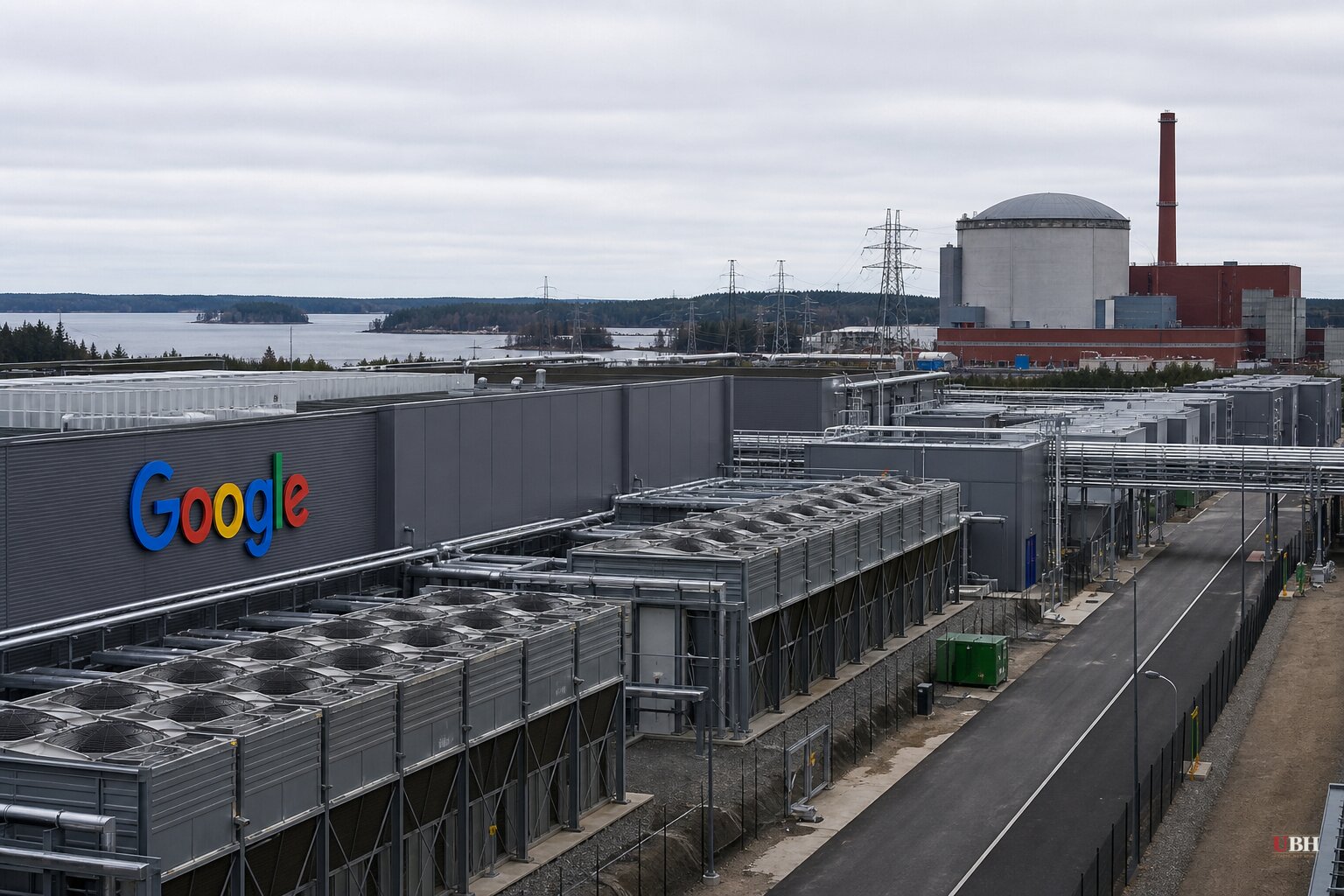
Alphabet's Google announced Wednesday it will invest at least €13 billion ($15.1 billion) in artificial intelligence infrastructure in Finland through 2028, according to Reuters. The company called it the single largest investment it has ever made in Europe.
The centerpiece isn't just data centers. Google signed a 22-year power purchase agreement with Finnish energy company Fortum covering up to 50% of the output from one of Finland's two nuclear plants, according to Fortum's own statement. Ruth Porat, Alphabet's president and chief investment officer, told reporters in Helsinki this is Google's first nuclear energy deal outside the United States, calling it "a really important cornerstone to everything that we are doing here," per Global Banking and Finance.
Fortum shares jumped roughly 10-11% on the news, outperforming a 1.4% rise in the broader Helsinki stock index, according to Reuters. Google also said it will work with Fortum to explore new nuclear reactor development at its Loviisa site in southern Finland.
Where the money goes
The News International reported the investment spans four locations: an expansion of Google's existing Hamina data center hub, a converted paper mill the company took over back in 2009, plus three new facilities in Kajaani, Muhos and Vaala. Google says the buildout will also include grid upgrades, onshore wind capacity and battery storage.
Google projects the construction phase will add about $3.6 billion to Finland's GDP and support roughly 7,000 permanent jobs annually once the sites are operational, according to Reuters and CNBC. The News International cited a separate figure of over 37,000 temporary construction jobs, an estimate not confirmed in Google's own statement as reported by Reuters or CNBC. Readers should treat that higher number as a claim from one outlet's sourcing rather than a verified Google figure.
Finnish Prime Minister Petteri Orpo welcomed the investment as "a clear testament to our strengths," adding that "the value of the data economy extends far beyond direct investment into spurring innovation, research, and development."
Why Finland, and why now
Finland has become what Matti Lajunen, a real estate partner at Finnish law firm Hannes Snellman, described to CNBC as the "Texas of Europe" for data centers. Finland offers cheap land, a cold climate that cuts cooling costs, and a grid built on hydro, wind and nuclear baseload power, all of it in short supply across the rest of the continent.
Google isn't alone in the rush. Pure DC announced a 1.5 billion euro campus in July with room to scale past 550 megawatts. Arcem has plans for up to 500 megawatts. Nebius unveiled what it calls one of Europe's largest AI factories in March. Microsoft and TikTok owner ByteDance are also expanding data center capacity in the country, according to Reuters.
While parts of the U.S. environmental left have spent decades resisting new nuclear construction, and while several American states still treat nuclear power as politically radioactive, Finland just landed a $15 billion tech investment specifically because it treats nuclear as a reliable, low-carbon baseload option. Google's own statement frames the Fortum deal as central to hitting its carbon targets while still scaling compute fast enough to compete with Microsoft and OpenAI.
Alphabet has raised its global 2026 capital investment target to between $195 billion and $205 billion, according to Reuters, as it races to keep pace with computing demand for Gemini and other AI products. The Finland deal is a slice of that number, not the whole picture.
The investment is scheduled to roll out in 2027 and 2028, meaning the promised 7,000 annual jobs and GDP contribution are projections tied to a construction timeline that hasn't started yet. Whether Google's nuclear exploration at Loviisa turns into an actual new reactor, and whether the jobs numbers hold up once shovels are in the ground, remain open questions that won't be answered for at least another year.
Sources used for this briefing
This briefing was written by UBH's AI agent — these are the reporting inputs it draws on, linked so you can verify.


