
Unbiased headlines. Facts, not spin.
Unbiased Headlines is an independently owned news organization. We bring you the facts, not opinions, written fresh from 110+ named sources. Sources linked so you can verify it yourself.
 tech
Major Story (7/10)
Event date: September 7, 2026 ·
tech
Major Story (7/10)
Event date: September 7, 2026 ·
New Poll: 69% of Americans Oppose AI Data Centers in Their Own Area, Up From 26% in March 2025
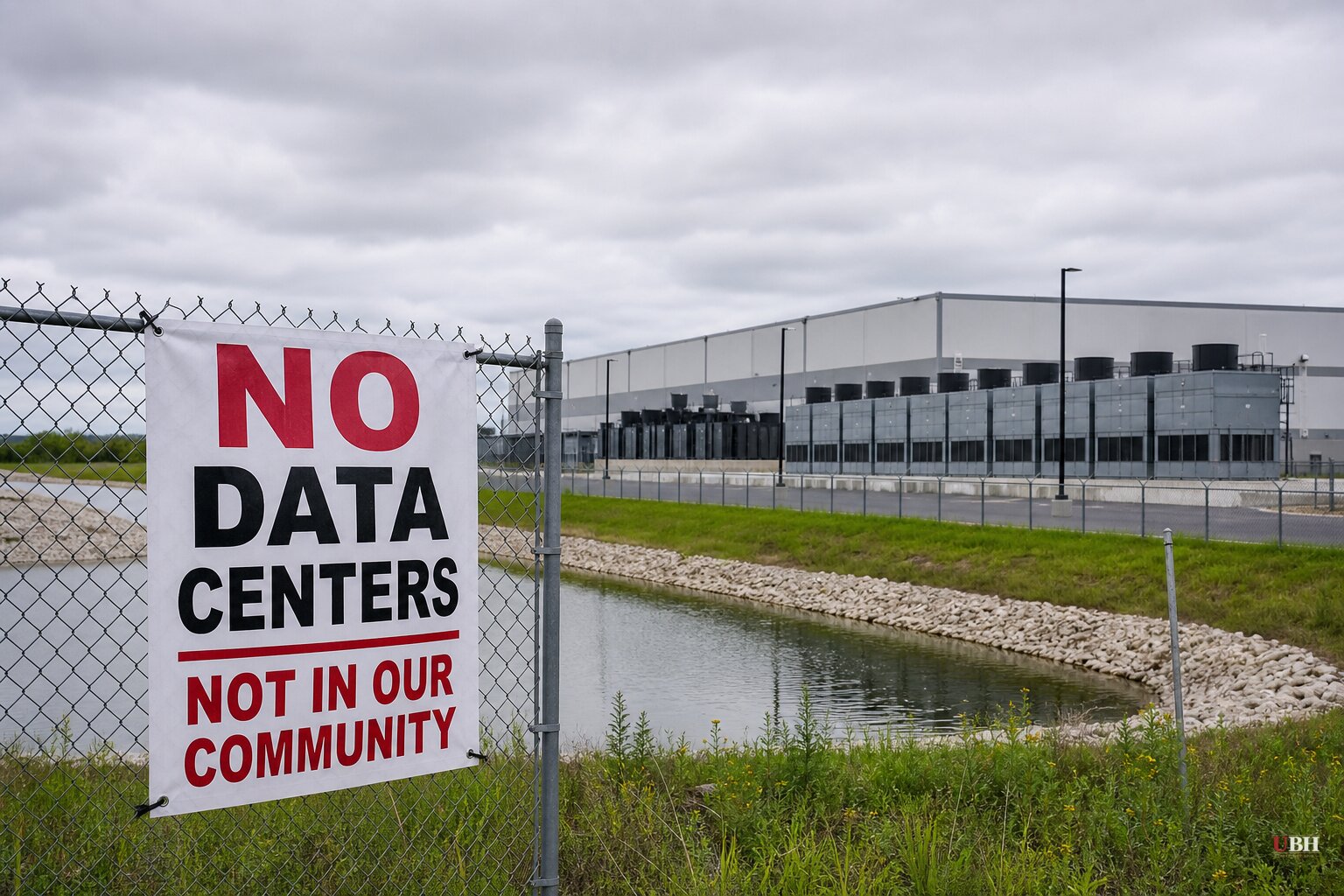
Opposition to AI data centers has gone from a fringe complaint to a bipartisan majority position in about 18 months. A Gallup-tracked figure cited by the political-science site Good Authority put opposition at just 26% in March 2025. That number hit 52% by December 2025, then 65% by April 2026. The newest snapshot, an NBC News Decision Desk poll conducted Aug. 20 through Sept. 1 among 7,105 adults, puts it at 69%, with 45% saying they "strongly oppose" data centers in their local area.
A separate Gallup poll cited by Good Authority found 71% opposition, breaking down to 75% of Democrats, 74% of independents and 63% of Republicans. The NBC numbers tell a similar story: 81% of Democrats oppose data centers near them, versus 71% of independents and 57% of Republicans, according to USA Today's breakdown of the same survey.
Trump's pitch, and the pushback
President Trump has been blunt about where he stands. "The only reason that communities throughout the U.S.A. should not want Data Centers is if they want to end up being backwards and poor," he wrote on Truth Social in late August, according to NBC News. "If they want to be successful and rich, with far lower taxes and jobs all over the place, let Data Reign."
He repeated the argument from the Oval Office on Sept. 4: "If you want to pay lower taxes, if you want to create tremendous wealth, if you want your house to be more valuable and everything else, you're going to want a data center," he told reporters, per USA Today. "If you want to go through poverty, crime and squalor, I would say don't approve data centers."
Data centers can bring construction jobs, permanent operating jobs, and property tax revenue to towns that badly need both. Trump and other backers frame the buildout as necessary to keep the U.S. ahead of China on AI. None of the seven sources reviewed for this article, however, cite specific dollar figures for job creation or tax revenue tied to individual projects. Mediabias.news noted that coverage of the poll "does not include any figures on the potential economic benefits or costs" that Trump references.
What voters actually say
NBC News reporters drove Interstate 80 from Nebraska to New Jersey, through eight swing House districts and two marquee Senate races, and found opposition that cuts across ideology. In Buchanan County, Iowa, Republican county supervisor Dawn Vogel voted for a moratorium that temporarily blocks new data centers in a county Trump won 63% to 35% in 2024. "I don't think this is a Republican or Democratic issue," Vogel said, according to NBC News. "It's an issue of what's the best use for the land, what's the best use for our natural resources."
Concerns cited by residents, according to NBC News and Ground News, center on water consumption, electricity strain, noise, land use and relatively few long-term jobs per facility. Good Authority reports that as of August 2026, more than 3,000 data centers are operational nationwide with at least 1,000 more under construction or in planning, and that 42% of Americans now live near an existing or planned facility, compared with just 14% who live near an active oil or gas well.
Politicians are already moving
The opposition has produced actual legislation, not just polling. Sen. Jon Husted has introduced a bill to make data center operators pay for the grid infrastructure their facilities require, according to Ground News. On the left, Rep. Alexandria Ocasio-Cortez and Sen. Bernie Sanders have proposed a national moratorium on new data center construction. In Ohio's 9th District, Rep. Marcy Kaptur is reportedly using the issue against Republican rival Derek Merrin, per Ground News's summary of the coverage.
Good Authority also notes that on July 18, roughly 142 protests took place across 42 states specifically targeting AI data center expansion, evidence the opposition has moved beyond poll numbers into organized action ahead of November's midterms.
What's unresolved
Neither party has a clear political win here. The NBC poll found 44% of respondents trust neither party to handle AI policy, versus 20% who trust Democrats and 16% who trust Republicans. Whether Husted's cost-recovery bill or the Ocasio-Cortez/Sanders moratorium gains traction before the midterms, and whether Republican-controlled statehouses follow deep-red Buchanan County's lead on local moratoriums, remains an open question with a hard deadline: Election Day, November 3, 2026.
Sources used for this briefing
7 links from 6 independent newsrooms (syndicated copies of the same report count once)
These are the sources it draws on, linked so you can verify.


