
Unbiased headlines. Facts, not spin.
Unbiased Headlines is an independently owned news organization. We bring you the facts, not opinions, written fresh from 110+ named sources. Sources linked so you can verify it yourself.
 tech
Notable (6/10)
Finnish Regulator Halts Google Data Center Sites After an Estimated 400,000 Trees Cleared Before Environmental Review
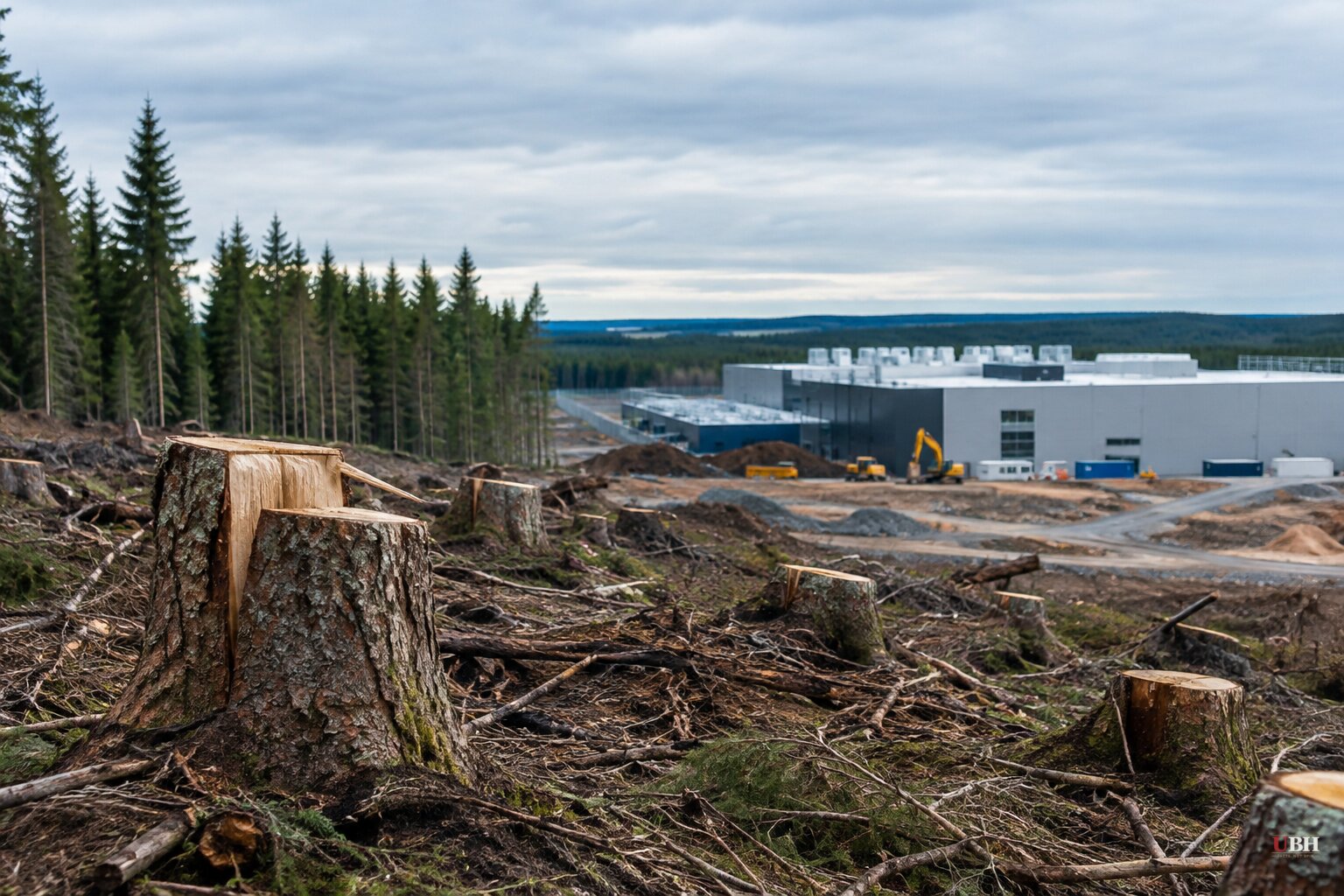
Finland's Licensing and Supervision Authority (LVV) ordered Google's local subsidiary, Tuike Finland Oy, to stop major site preparation at two planned data center sites on Oct. 6. The agency found that large-scale clearing had happened before the legally required environmental impact assessments (EIA) were finished.
The sites are in Muhos, in northern Finland, and Otanmäki. Both are part of Google's €13 billion AI infrastructure project, announced in September and described as the largest of its kind in the Nordic country.
What was cleared
At Muhos, about 330 hectares (815 acres) of forest were cleared. An investigation by The Guardian estimates roughly 250,000 trees were felled there, and the topsoil was stripped as well. Nearly 200 hectares were logged at Otanmäki, where the same investigation puts the toll at about 150,000 trees.
That is an estimated 400,000 trees across the two sites. The tree counts are estimates, not an official tally.
LVV said extensive preparatory work had already been done based on the reports it had: tree removal, topsoil stripping, construction roads and storage areas, and changes to ditches, culverts and stormwater arrangements. The order covers that kind of work until the EIA process is complete. Planning, surveying and soil studies may continue.
The order is a suspension, not a penalty. The timber cannot legally be sold to processing plants because it was harvested without the required review.
Google's response
Google first said its forestry work complied with Finnish law, according to the Guardian's reporting. Antti Järvinen, the company's Finland country manager, later apologized for the clearings. He said Google acted "on the best understanding we had of the legislation at the time."
The company has also said it "fell short of our own high standards." A Google spokesperson confirmed that preparatory work stopped and said the company would comply with the regulator while continuing talks with Finnish authorities.
Google has proposed replanting trees across about 130 hectares at Muhos. That is well under half of the 330 hectares cleared there.
Hanna Halmeenpää, chair of the Finnish Association for Nature Conservation (SLL), called the plan insufficient. "They bought the vast land area and they just started to cut it, just like that. It's pure arrogance and it's amazing," she said. She added that she had never heard of any company doing anything like this in Finland.
Runoff, noise and wolves
Residents say brown water from the Muhos site is running into a stream that feeds the Oulujoki River. Mari Annala, an SLL ecologist, looked at drone footage of the cleared ground and said: "It doesn't end. It goes on and on."
Anni Ranta, 53, whose family has lived in Otanmäki for generations, said wolves have come into the village. "We had wolves coming into the village because all the wild animals moved out of the forest," she said. She also described the noise from construction on hard rock as "like a drum."
The wolf claim comes from residents. No wildlife authority has been quoted confirming a link between the clearing and wolves entering the village.
Money against land
The Finnish government has backed the investment. Prime Minister Petteri Orpo called attracting investment a "top priority" when the plans were announced last month. He said the Google deal would "deliver lasting benefits for both parties." President Donald Trump has criticized the project and called on Google to reconsider, saying he would rather the centers be built in the U.S.
Some locals accept the trade-off. Vesa Hyyryläinen, a biologist and chair of the local SLL district, questioned the environmental cost but acknowledged how hard it is for sparsely populated regions to keep people. "Young people go to Helsinki and Berlin and Paris... There are so few people. We have to sacrifice," he said. He also said the country gives everything away "too easily."
Another resident, Antti Jakonen of Muhos, put it bluntly: "It has been done in the wrong way. American style. No sense. No sense at all."
The permitting problem
The EIA requirement is not a technicality. Finnish law makes large projects finish the review before major land alteration, so that the public and regulators can weigh a project's impact before the ground is changed. Clearing first and apologizing later reverses that order, and a replanting pledge cannot restore a boreal forest that took decades to grow.
Finland has 145 data centers at various stages of planning, drawn by cool weather, stable geology and cheap land. A public petition calling for stricter regulation of data center development has gathered more than 93,000 signatures.
The same pressure is visible in the U.S. Pew Research Center, as cited by Business Insider, counts more than 3,000 operating data centers nationwide and over 1,500 more under development. Berkeley Lab projects they will use 11.8% of U.S. electricity by 2030, up from about 4.4% in 2023.
What comes next
The suspension stays in place until the EIA process is complete. Google has said it will keep talking with Finnish authorities. LVV has not said when work could resume, and Google has not said whether it will revise its 130-hectare replanting offer.
Sources used for this briefing
8 links from 8 independent newsrooms (syndicated copies of the same report count once)
These are the sources it draws on, linked so you can verify.


