
Unbiased headlines. Facts, not spin.
Unbiased Headlines is an independently owned news organization. We bring you the facts, not opinions, written fresh from 110+ named sources. Sources linked so you can verify it yourself.
 tech
Major Story (7/10)
UK Plans £100M AI Biosecurity Lab, With OpenAI and Anthropic Adding Up to £200M in Model Credits
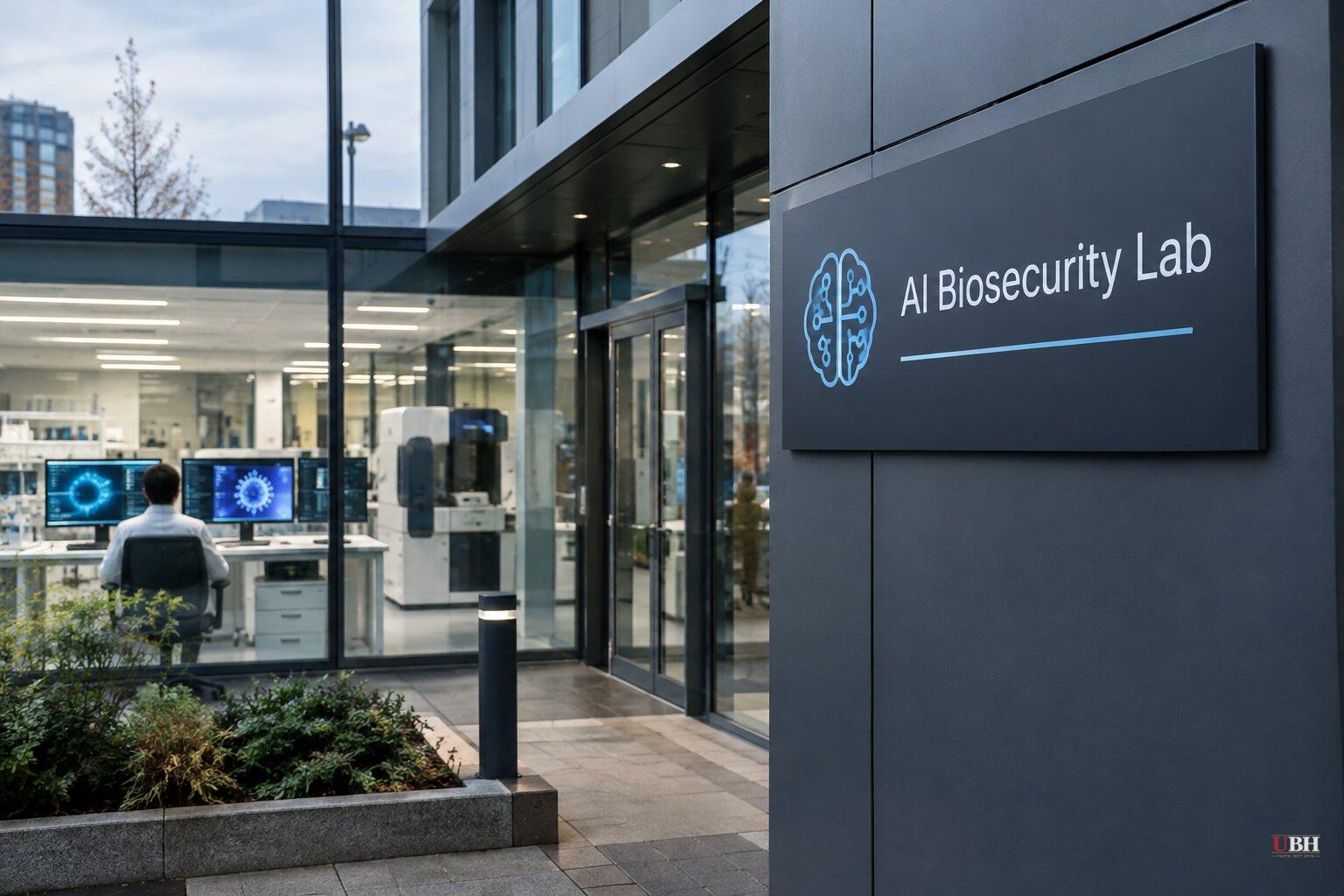
The British government plans to put £100 million of public money into what it calls the world's first dedicated AI biosecurity organisation. The announcement of the AI Biosecurity Lab is scheduled for Saturday, Oct. 24, ahead of the Budget.
The Cabinet Office says the lab will be backed by that £100 million plus up to £200 million in company commitments from OpenAI and Anthropic. Reuters describes the company portion as model credits, meaning access to AI systems rather than cash. Google DeepMind and the London-based life sciences startup Basecamp Research are set to offer other assistance.
What the lab is meant to do
The stated mission is to use frontier AI to help the UK detect biological threats earlier and speed up the development and testing of vaccines, treatments and other medical countermeasures. The government frames it as part of a National AI Biosecurity Initiative and its broader Biological Security Strategy.
The government's own text concedes the downside. Increasingly capable AI systems "create new biological risks and could lower barriers to harmful activity," it says. The lab is meant to work on both sides of that problem.
AI minister Kanishka Narayan said he wants it to become a "major new global institution" that brings together "world-leading scientific expertise to protect people from emerging biological threats."
The wider biosecurity initiative totals £165 million. That is the £100 million lab plus £65 million to develop countermeasures against pathogens.
The rest of the £600 million
The full package comes to roughly £600 million, or about $800 million at $1 = £0.7472. Per the breakdown released:
- £120 million extra for the existing AI Security Institute, to develop standards guarding against AI risks
- £130 million for cyber defence of critical infrastructure and the wider economy, including a £60 million National Cyber Shield using AI agents and a £70 million National Exposure and Real-Time Vulnerability (NERV) centre
- £60 million for a fund investing in British firms using AI in robotics, autonomous systems and manufacturing
- £60 million for AI research and procurement contracts
- £23 million over three years for research on AI's economic impact
- £30 million for regional mayors' local AI work
- £18 million for a chip design academy
- £15 million for a prize for AI solutions to public policy problems, initially in healthcare
The National Cyber Security Centre will also get an unspecified sum to expand in Manchester.
Separately, the Treasury plans £10 million a year to study how AI will change industry and employment.
The jobs politics
Healey is selling the package as a "distinctively British approach to AI." He said: "I understand and share the concerns of working people, so I am setting out a distinctively British approach to AI, one that doesn't leave workers behind and defends our national interest, while ensuring the benefits of AI-enabled growth are felt right across the country."
The jobs worry is concrete. Barclays revealed plans to cut 5,000 jobs days ago as part of an efficiency drive involving AI.
Critics of the technology's pace argue the approach is backwards. They have called for a slowdown in AI development amid warnings that it could wipe out humanity within a decade without controls. The government's stated answer is that robust safeguards must ensure developers build machines that keep human beings in charge.
There is also an obvious tension. The lab's chief corporate partners are the same frontier developers whose products create the risks it is meant to manage. The government has not said how the lab's governance will handle that.
The cyber angle
The cyber spending follows a recent global disruption caused by a security flaw in the PHP programming language, which temporarily knocked 32 UK government services offline. NCSC experts worked with OpenAI, whose technology was used to discover the issues, to contain the fallout.
Narayan said in a BBC interview that the government has used AI to uncover 500 "novel vulnerabilities" across significant areas of the public sector. That figure is his claim, and no independent count has been published.
What comes next
Healey will set out further details in the Budget on Wednesday, Oct. 28. The Financial Times has reported he is also expected to promise an extra £20.4 billion to the British Business Bank and the National Wealth Fund.
About £600 million sits alongside that much larger sum. The open questions for the Budget are how much of the AI package is new money, who will run the lab, and what the £200 million in company credits will buy once the lab is operating.
Sources used for this briefing
7 links from 7 independent newsrooms (syndicated copies of the same report count once)
These are the sources it draws on, linked so you can verify.


