
Unbiased headlines. Facts, not spin.
Every story is an unbiased news briefing written from 110+ sources across the spectrum — sources linked so you can verify it yourself.
 tech
Notable (5/10)
May 27, 2026 at 11:11 PM
tech
Notable (5/10)
May 27, 2026 at 11:11 PM
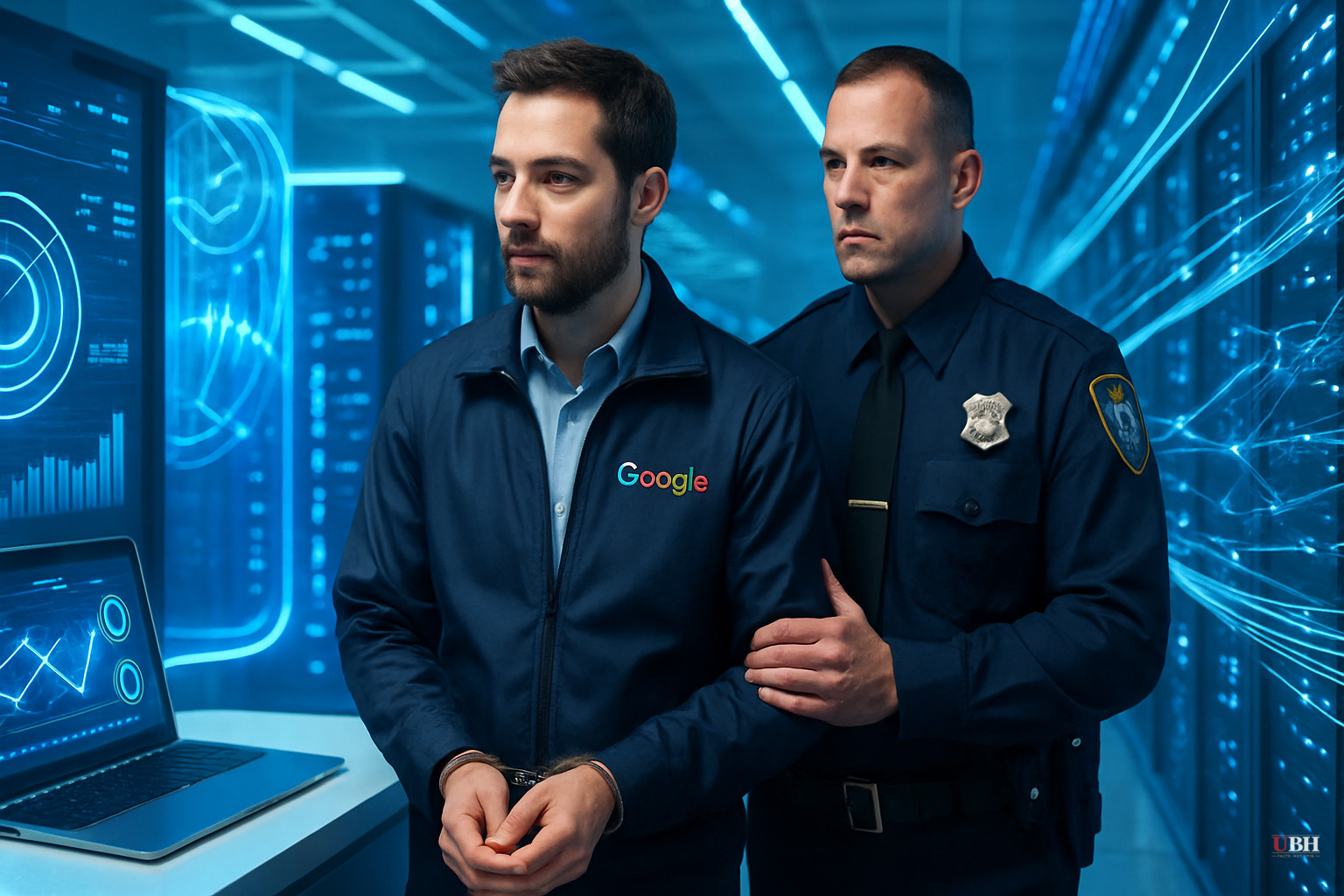
Google Security Engineer Arrested for Using Company's Own Search Data to Win $1.2M on Polymarket
The New Development: A Google Insider Gets Arrested
We already covered the Army Special Forces sergeant who allegedly traded classified military intel on Polymarket. Now add a Silicon Valley tech worker to the list.
Michele Spagnuolo, 36, a Google information security engineer, was arrested Wednesday morning in New York, according to ABC News. He was released the same day on a $2.25 million bond — secured by $1 million cash, with $50,000 due immediately.
He faces three federal charges: commodities fraud, wire fraud, and money laundering. He has NOT entered a plea.
What He Allegedly Did
Spagnuolo has worked at Google since 2014 out of its Zurich, Switzerland offices, according to Wired. Between October and December 2025, he allegedly accessed confidential internal Google data — the kind that shows real-time search trend spikes — and used it to place bets on Polymarket under the username AlphaRaccoon.
His biggest score: correctly predicting that a singer named D4vd would be Google's #1 most-searched person of 2025. At the time Spagnuolo placed that bet, Polymarket had assigned it a near-zero probability, according to the unsealed federal complaint cited by ABC News.
D4vd became a household name after being suspected of murder. He was ultimately charged in April. Spagnuolo allegedly knew the search spike was coming because he could see Google's internal data.
After Google publicly announced its Year in Search 2025 results on December 4, 2025, Spagnuolo's AlphaRaccoon account had banked $1.2 million on Google search-related bets, prosecutors say.
The Cover-Up
Winning wasn't enough. According to the complaint, quoted by both The Verge and ABC News, Spagnuolo "took deliberate steps to conceal his unlawful use of nonpublic information by attempting to obscure the source and ownership of his unlawful proceeds."
That's the money laundering charge. He didn't just cheat — he tried to hide the cheat.
FBI agent Brandon Racz wrote in the complaint: "Unlike the counterparties to his trades, Spagnuolo knew the outcome of these wagers before the trading public did because he had accessed Google's confidential, commercially valuable internal data."
Google's Response
Google issued a statement — notably partial in what sources captured — saying: "We're working with law enforcement on their investigation. The employee accessed our marketing material using a tool available to all employees, but using such confidential information to place bets is a serious breach of our policies. We've placed the employee on leave and will take the appropriate" actions.
The statement trails off in available sources. The key detail is in the framing: Google is calling the internal data "marketing material." Federal prosecutors are calling it "confidential, commercially valuable internal data." Those are very different characterizations.
This Is Now a Pattern — And Congress Noticed
This is the second U.S. arrest tied to insider trading on prediction markets, according to Wired. Both cases are being prosecuted by the Southern District of New York.
The first was the Army Special Forces sergeant arrested in April, who allegedly won $400,000 betting on the capture of Venezuelan leader Nicolás Maduro.
And OpenAI fired an employee earlier this year for using insider information to trade on a prediction platform — though no criminal charges were filed in that case, per Wired.
Meanwhile, House Oversight Committee Chairman James Comer launched a formal investigation into insider trading on prediction market platforms last week, requesting information directly from Polymarket on how it vets customers, according to Wired.
The pattern has caught the attention of legislators.
What Mainstream Coverage Is Missing
Most outlets are treating this as a tech novelty story — "wow, prediction markets are wild."
The real issue is a structural enforcement problem. Polymarket operates in two forms: a smaller U.S.-legal version, and a much larger offshore version where traders use cryptocurrency and which is technically blocked for U.S. users, according to Wired. Enforcement on the offshore version is essentially a game of whack-a-mole.
The Army sergeant. The OpenAI firing. Now a Google engineer. These aren't isolated incidents — they're a trend emerging from platforms that were built with minimal identity verification and maximum anonymity. The SDNY is cleaning up a mess that regulators let fester.
Spagnuolo's bets were publicly visible and flagged on social media last December, according to The Verge. Forbes and other outlets noticed AlphaRaccoon's suspiciously accurate picks at the time. The trades were hiding in plain sight for months before prosecutors moved.
What This Means for You
If you're a regular person betting on Polymarket, you may be on the other side of a trade with someone who already knows the answer. Prediction markets depend on information asymmetry not existing. When insiders have access to nonpublic data, that dynamic breaks down.
As a taxpayer, watch this space: Congress is now involved, which means hearings, legislation, and the full federal regulatory apparatus is likely incoming. Whether that results in smarter regulation or typical government overreach remains to be seen.
Two arrests. Congressional investigation. Both at the SDNY. The prediction market honeymoon is over.
Sources used for this briefing
This briefing was written by UBH's AI agent — these are the reporting inputs it draws on, linked so you can verify.


