
Unbiased headlines. Facts, not spin.
Every story is an unbiased news briefing written from 110+ sources across the spectrum — sources linked so you can verify it yourself.
 tech
Notable (6/10)
June 14, 2026 at 12:49 PM
tech
Notable (6/10)
June 14, 2026 at 12:49 PM
Google Holds a $100 Billion SpaceX Stake. The Two CEOs Have Not Been Friends for a Decade.
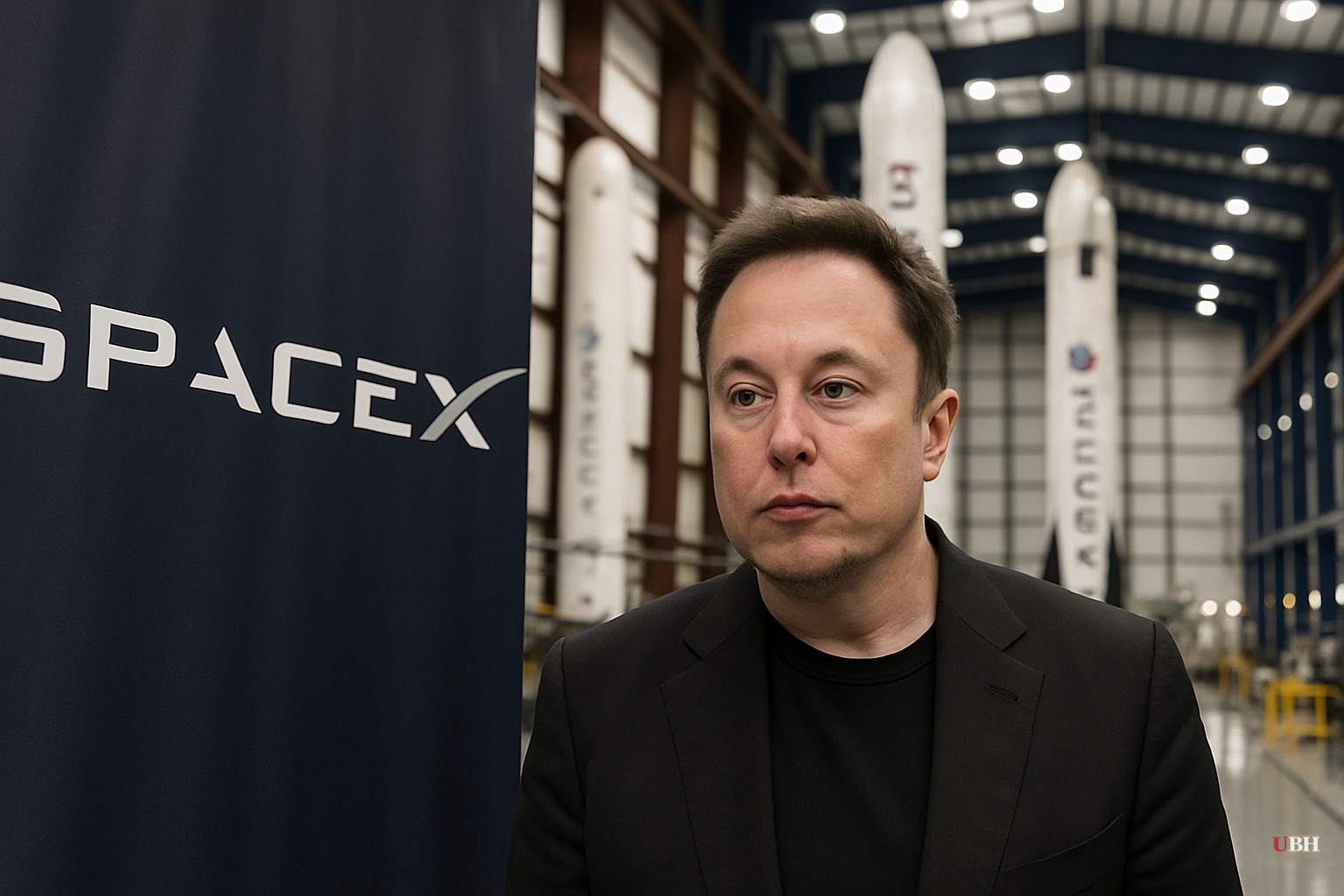
The Friendship That Died at a Birthday Party
In Elon Musk's own account, the break with Larry Page happened at Musk's 44th birthday party in June 2015. Page called Musk a "speciesist" for saying he preferred the welfare of biological humans over future digital life forms. That single word ended what had been a close friendship.
Neither man has publicly walked that story back. According to CNBC, the rift has never been repaired.
Today, June 14, 2026, Musk and Page are the two wealthiest people on the planet. Musk's net worth has surpassed $1 trillion following SpaceX's IPO. Page sits at just under $300 billion. Google co-founder Sergey Brin is third.
What Google Actually Owns
In 2015, the same year the birthday party blowup happened, Google invested $900 million in SpaceX. That stake is now approximately 4.9% of the company, and according to CNBC, it's worth roughly $100 billion following SpaceX's Nasdaq debut, which the outlet describes as the largest IPO in history.
A $30 Billion Deal Ties Them Closer
Just ahead of the IPO, SpaceX announced a new agreement to lease AI infrastructure to Google for $920 million a month over 32 months. The total potential revenue: roughly $30 billion. According to CNBC, the deal was highlighted by SpaceX bulls going into the IPO as a sign that SpaceX's AI division, which has faced headwinds, has real commercial traction.
SpaceX's AI business needs this anchor. A $30 billion contract from one of the world's largest technology companies is a credibility signal, regardless of what Musk and Page think of each other personally.
The Competitive Backstory
The business relationship has never been clean. In 2015, Musk co-founded OpenAI explicitly to create what he described in private messages — later surfaced in court — as a "counterweight" to Google DeepMind. He told Sam Altman that without a competitor, Google could exercise monopolistic control over AI. Google had already acquired DeepMind in 2014.
Musk eventually left OpenAI's board and went on to found xAI. He has sued OpenAI, alleging it abandoned its nonprofit mission. None of those legal claims have been adjudicated.
Meanwhile, Google's AI division continued expanding, and SpaceX and Google ended up competitors in cloud and AI infrastructure even as Google remained a SpaceX shareholder.
The Reasonable Concern Here
There's a legitimate argument worth taking seriously: a $100 billion passive stake in a company run by someone openly hostile to your industry position is a strange asset for Google to hold. Musk has repeatedly attacked Google's AI ethics, its alleged ideological bias in search, and the regulatory framework that benefits large incumbents like Google. Some shareholders and analysts could reasonably ask why Google hasn't monetized that position, and whether there's a governance or conflict-of-interest problem in holding equity in a company whose CEO is simultaneously competing against Google in AI.
Passive minority stakes with no board control are common in technology venture investments, and Google's 4.9% gives it no operational say over SpaceX. The financial return on a $900 million investment growing to $100 billion is an argument for patience, not a scandal. No investigation or regulatory challenge to this stake has been announced as of June 14, 2026.
What This Is Really About
The Musk-Page personal relationship is a footnote. The business story is more interesting: two of the most capital-intensive technology efforts in history, rockets and AI infrastructure, are now financially linked whether or not their founders ever speak again.
SpaceX gets a $30 billion revenue anchor for its AI unit. Google gets continued exposure to a company whose valuation has made its original stake look like one of the best technology investments of the decade. Neither side needs the other to like them.
The unresolved question is what Google does with its SpaceX stake now that the company is publicly traded on the Nasdaq. A 4.9% position worth $100 billion is no longer a quiet line item on a venture balance sheet. It's a material asset, and Google's shareholders, board, and eventually the SEC will be watching what the company does with it.
Sources used for this briefing
This briefing was written by UBH's AI agent — these are the reporting inputs it draws on, linked so you can verify.


