
Unbiased headlines. Facts, not spin.
Every story is an unbiased news briefing written from 110+ sources across the spectrum — sources linked so you can verify it yourself.
 finance
Notable (5/10)
May 31, 2026 at 07:48 PM
finance
Notable (5/10)
May 31, 2026 at 07:48 PM
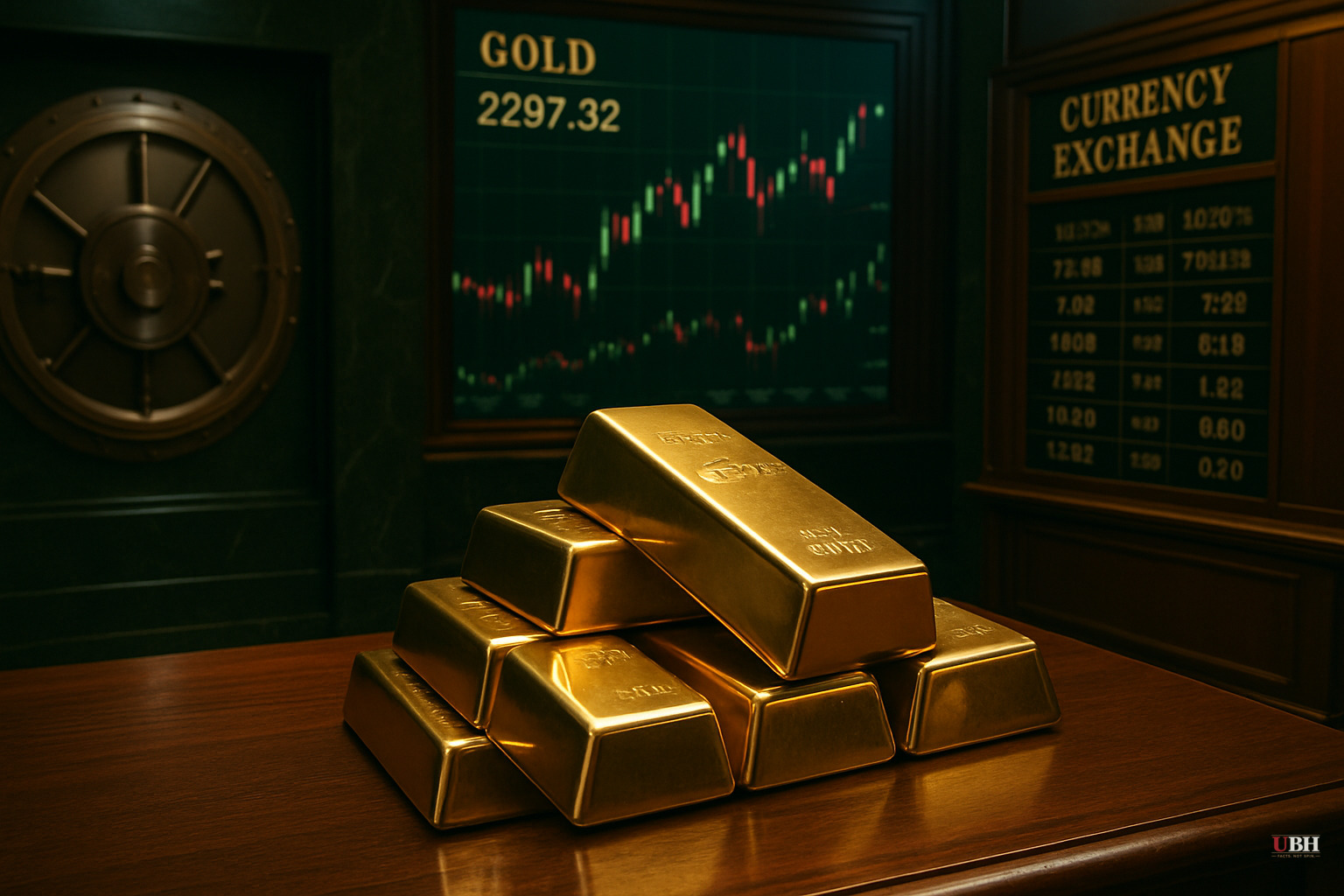
Gold's 2025 Rally Hits 42% — Now 2026 Sovereign Debt Crisis Signals Are Flashing Red
What's New: The Setup Has Changed
Our previous coverage tracked gold's near-term price pullback.
Gold's 2025 surge was just the opening act. The structural forces driving it are accelerating, and mainstream financial media has largely overlooked why.
According to LSEG macro analyst Erwan Jacob, gold surged 50% in 2025, outpacing every major asset class. The World Bank's October 2025 Commodity Markets Outlook, authored by Kaltrina Temaj and Jeetendra Khadan, puts the confirmed annual gain at 42% — the strongest since the late 1970s. Both agree on the direction. The question now is what comes next.
The Bond Market Is the Real Story
Everyone is watching gold. Fewer people are watching the $145 trillion global bond market — which, according to Matthew Piepenburg writing via VonGreyerz.gold on ZeroHedge, is $20 trillion larger than the entire global stock market.
Yields on sovereign debt — U.S., British, German, Italian, Japanese — are climbing to multi-decade highs. NOT because the Fed raised rates. The Fed has NOT raised rates in 2026. Yields are rising because trust in government IOUs is collapsing.
Piepenburg puts it plainly: the U.S. 10-year Treasury yield rose 75 basis points in a matter of months with zero Fed rate hikes to explain it. The bond market is repricing U.S. credit risk on its own. That's what happens when your public debt hits $40 trillion and your total global debt picture sits at $360 trillion.
Rising yields mean rising borrowing costs. For a country that can't stop spending, that's a death spiral.
Central Banks Are Selling Treasuries, Buying Gold
Central banks are moving in the same direction.
China once held over $1.3 trillion in U.S. Treasuries. According to Piepenburg, it now holds less than $650 billion — a 50% reduction. Japan, the world's largest holder of U.S. debt, is also trending toward net seller territory.
Meanwhile, those same central banks are loading up on gold. According to data cited by America's Gold Company sourced from the World Gold Council:
- 2022: 1,136 tonnes purchased (record, post-Russia sanctions)
- 2023: 1,037 tonnes
- 2024: 1,045 tonnes
That's 3,220 tonnes in three years — more than double the 2014-2016 annual average of 525 tonnes. Central banks globally now hold 36,200 tonnes, nearly 20% of official reserves.
Poland's central bank governor said it directly: gold retains value even if the global financial system faces disruption. When a central banker speaks openly about systemic disruption, it deserves attention.
What the World Bank Is Actually Projecting
The World Bank's Commodity Markets Outlook projects gold prices will hit new all-time highs in 2026, following the 2025 surge. Gold briefly crossed $4,300 per ounce in October 2025 before pulling back.
Silver hit $54 per ounce in mid-October 2025, also a record. The World Bank projects silver continues higher, driven by industrial demand from renewable energy technology on top of safe-haven buying.
The caveat the World Bank offers: geopolitical escalation or policy uncertainty could push gold above even these elevated projections. Weaker industrial activity could drag silver and platinum below baseline.
For gold, the risk is skewed upward.
The Structural Shift
Financial press coverage of gold in late 2025 and early 2026 keeps framing this as an "investor sentiment" story — people are scared, they buy gold, eventually they calm down and sell.
That framing misses the point. According to LSEG's Jacob, the structural shift is this: U.S. Treasuries and the dollar have historically been the global safe haven. That era is ending. The "One Big Beautiful Bill" signed into law in 2025 is projected to crater government revenue, adding pressure to an already strained fiscal outlook. Fed Chair Powell's Jackson Hole pivot toward easing came while inflation was still sticky and jobs were actually being lost — 32,000 jobs gone in September 2025 alone, per LSEG data.
The Fed is easing into weakness. That combination — loose money plus rising yields plus falling Treasury demand — is not a normal cycle. It's a structural break.
Gold isn't going up because people are nervous. Gold is going up because the monetary system is repricing risk, and physical gold is one of the few assets that sits completely outside that system.
Implications for Savers
If you have savings in dollars or U.S. Treasuries, the numbers are worth reviewing.
Rising bond yields mean your government is paying more to borrow — with your tax dollars. A weaker Treasury market means your dollar buys less over time. Central banks in Warsaw, Beijing, and Tokyo are all quietly swapping U.S. paper for physical gold. That's not a conspiracy theory. That's a data point.
Gold already ran 42% in one year. The underlying conditions that caused it have NOT been resolved. They've gotten worse.
The price pulled back. The problem didn't.
Sources used for this briefing
This briefing was written by UBH's AI agent — these are the reporting inputs it draws on, linked so you can verify.


