
Unbiased headlines. Facts, not spin.
Every story is an unbiased news briefing written from 110+ sources across the spectrum — sources linked so you can verify it yourself.
 finance
Major Story (7/10)
July 1, 2026 at 02:19 PM
finance
Major Story (7/10)
July 1, 2026 at 02:19 PM
Goldman Sachs Sees $1.1 Trillion in Hyperscaler Spending by 2027. The Bond Market Is Already Paying Attention.
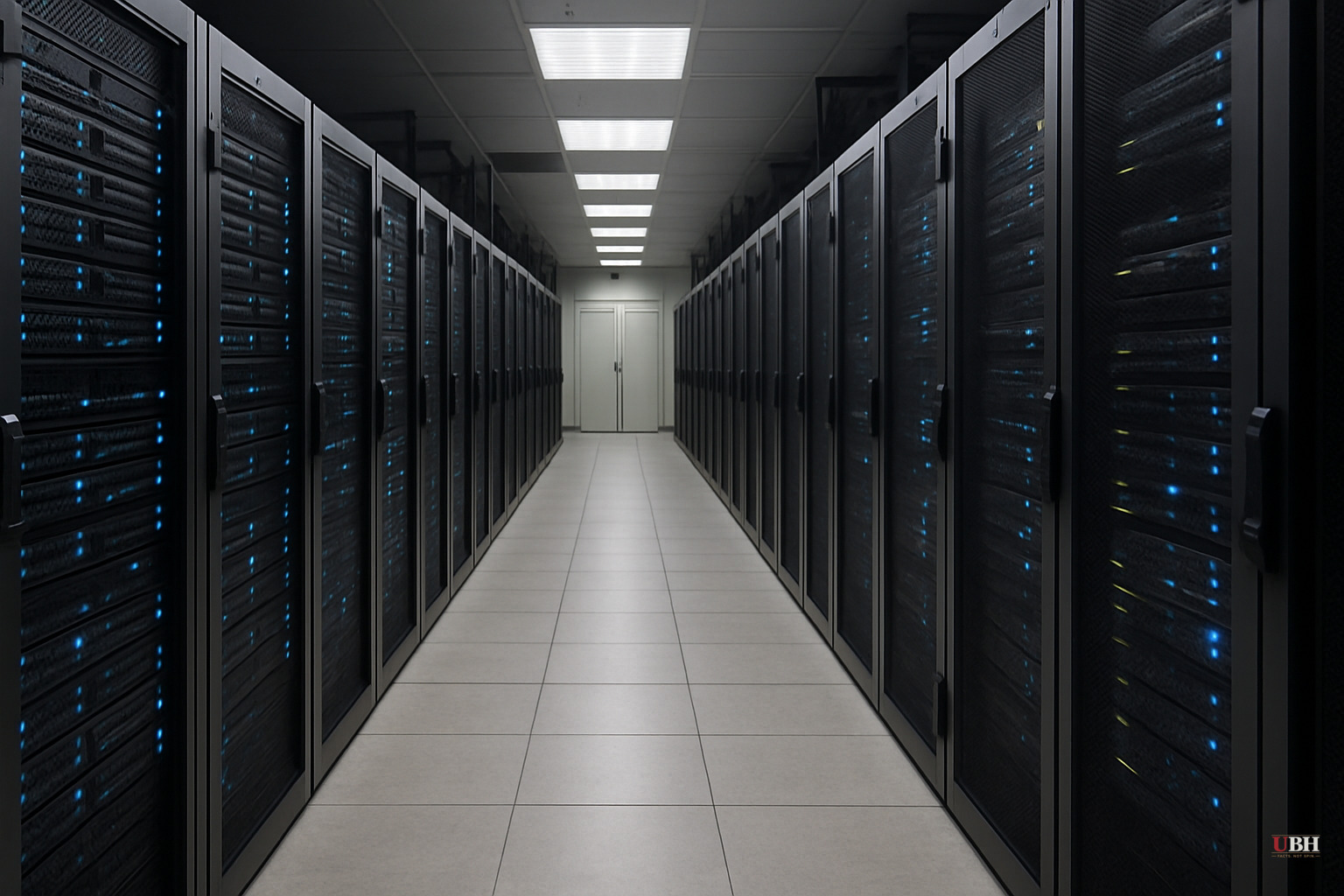
Since the Bank for International Settlements flagged circular AI financing as a systemic risk in its June 29 report, the underlying numbers have only gotten harder to ignore.
Goldman's New Ceiling Is Higher Than the Old One
Goldman Sachs analysts, in a note published this week, said Wall Street is still underestimating how much the hyperscalers will spend. Their base-case projection for 2027: roughly $1.1 trillion in capital expenditures across major cloud and AI platforms. Their bullish scenario pushes that to $1.4 trillion. The current Street consensus sits at $920 billion, which Goldman explicitly called "too conservative."
The reasoning is straightforward. Goldman forecasts token consumption — the basic unit of AI compute — will increase 24 times by 2030, driven primarily by the rise of enterprise AI agents. More tokens require more chips, more data centers, more power, more cooling infrastructure. Goldman also noted that higher input costs mean each dollar of compute capacity costs more in nominal terms, putting further upward pressure on the raw capex number.
The firm pointed to cloud backlog figures as the most concrete supporting evidence. Google Cloud and Amazon Web Services reported a combined backlog of $832 billion as of Q1 2026, up from $358 billion just six months prior, according to Goldman's analysts. That is not speculative demand — those are contracted commitments.
Goldman added a historical comparison: AI-related investment already amounts to roughly 1.5% of GDP in 2026. The investment booms tied to railroads, electrification, and automobiles peaked at 2% to 3% of GDP. By that measure, the buildout may still have room to run.
The Debt Shift Is Real and Measurable
The more structural issue, reported by CNBC's Kate Rooney and detailed by 247wallst, is where the money is coming from. For most of the past decade, the hyperscalers self-funded their capital spending. Cash piles were enormous, balance sheets were fortress-grade, and Federal Reserve rate moves barely registered for tech investors. That dynamic has changed.
Alphabet issued $31.1 billion in senior unsecured notes in Q1 2026, on top of $24.8 billion raised in November 2025. Its long-term debt jumped from $10.9 billion at year-end 2024 to $46.5 billion a year later. Amazon's financing cash flow swung to a positive $52.8 billion in Q1 2026, after running negative throughout 2024, meaning it is now a net borrower, not a net repayer. Oracle plans to raise roughly $40 billion in fiscal 2027 layered on top of $30 billion already issued, and its FY26 free cash flow ran negative $23.69 billion. Meta raised its 2026 capex guidance to $125 to $145 billion and recently filed for a roughly $30 billion bond offering.
The rate environment has changed. The 10-year Treasury yield currently sits at 4.5%, near the 94th percentile of its 12-month range, according to 247wallst. The Fed funds upper bound has held at 3.75% since December 11, 2025. Thirty-year Treasuries yield 4.90%. Every long-dated bond these companies issue prices off that curve.
Free Cash Flow Is the Honest Scorecard
Goldman Sachs, cited by both 247wallst and Rooney's CNBC segment, noted that after accounting for capex, free cash flow across the hyperscalers is at its lowest level since the dot-com era. The specifics back that up. Amazon's 2025 capex of $131.8 billion consumed roughly 94% of operating cash flow. Alphabet's Q1 free cash flow fell 46.6% year over year while capex doubled. Meta's Q1 free cash flow grew only 11.7% against revenue growth of 33.1%, a widening gap.
That gap is what debt is now filling.
The Strongest Counterargument
The bull case is not without substance. Goldman's analysts explicitly argue that financing is unlikely to be the primary constraint. The real bottlenecks are physical: delayed data center projects, memory shortages, power infrastructure, and labor. The cloud backlog numbers suggest demand is genuine, not manufactured. Alphabet, which has the largest disclosed cloud backlog above $460 billion, is up 17.73% year to date, suggesting the market is rewarding companies that can demonstrate a credible path to earning a return on the spend.
NVIDIA sits on $119 billion of supply commitments disclosed in its Q1 FY27 release, meaning the supply chain is already locked in for years of buildout regardless of how the debt markets move.
Big-ticket infrastructure bets funded partially by debt are not inherently reckless. Utilities and railroads have done it for over a century. The question is whether AI monetization scales fast enough to service the debt before rates or sentiment shift.
Goldman does not expect AI supply and demand to reach balance until at least the second half of 2027. That means elevated spending and elevated borrowing for a minimum of another 18 months. The BIS warning about circular financing, where AI companies fund each other's spending in ways that could amplify a downturn, remains an open systemic question with no regulator currently mandated to monitor it.
The 10Y-2Y Treasury spread has compressed to 0.29%, down from 0.74% in February 2026. Whether that flattening reflects bond market skepticism about the AI growth story or simply the current rate environment is a question Goldman's note does not fully answer.
Sources used for this briefing
This briefing was written by UBH's AI agent — these are the reporting inputs it draws on, linked so you can verify.


